


Why Does My Dog’s Breath Smell? Causes and What Helps
The most common cause, the smells that point to something else, what you can do at home, and when to call your vet.
The short answer
Dental disease is the most common reason a dog’s breath smells: plaque and tartar build up along the gumline and the bacteria in them smell. Some odors point elsewhere, such as sweet breath or an ammonia-like smell, so a breath that stays bad is always worth a vet visit. At home, a short daily tooth-wipe routine helps keep the surface clean.
Key takeaways
- Bad breath is not normal in dogs, even older ones. A change in smell is a reason to check in with your vet.
- Dental disease is the most common cause. Cornell says bad breath is often the first thing owners notice.
- Sweet or ammonia-like breath can point to illness elsewhere in the body, not the mouth.
- A daily wipe routine keeps plaque from piling up, but it does not remove hardened tartar.
- Drooling, bleeding, trouble eating or facial swelling means calling your vet promptly.
In this guide
What causes bad breath in dogs
Bad breath, also called halitosis, has a handful of usual causes. PDSA, the UK veterinary charity, lists these:
- Dental disease. The most common cause by a wide margin.
- Kidney disease. Can give breath that smells like ammonia, similar to bleach.
- Diabetes. Can give sweet-smelling breath, similar to pear drops or nail polish remover.
- Something stuck in the mouth. A piece of bone or a stick can smell, especially if it caused a wound or infection.
- Lumps in the mouth. They can become infected and smell.
- Food. Fish-based diets, for example, can give a fishy odor.
Only the last one is harmless. For the rest, the smell is a clue and your vet is the one who can read it.
Dental disease: the usual suspect
Cornell’s Riney Canine Health Center says that halitosis is often the first thing someone notices when their dog has dental disease. The Merck Veterinary Manual explains why: gum disease is caused by the accumulation of bacteria, plaque, at the gumline, partly from a lack of proper oral hygiene. Diet, breed, genetics and age play a part too.
It tends to move through stages. In gingivitis, the gums change from coral-pink to red or purple, the edge of the gum swells and the gums may bleed when touched. Merck says gingivitis can be reversed with proper tooth cleaning but, if untreated, may lead to periodontitis. Cornell describes periodontitis as the stage where infection progresses to bone loss and, eventually, tooth loss.
The takeaway: breath that smells is often an early signal, and early is when home care counts the most.
Smells that point to something other than teeth
If your dog’s teeth look clean but the smell is odd, pay attention to what it smells like. Per PDSA, a sweet, pear-drop or nail-polish-remover smell can go with diabetes, and an ammonia or bleach-like smell can go with kidney disease. You cannot diagnose either at home, and you should not try. Book a vet appointment and mention the smell.
Also check for a stuck object, such as a splinter of stick or bone wedged between teeth, and for any lump or sore in the mouth. If your dog has recently started eating something new, a diet change can account for a different smell, but it is still worth mentioning at the next visit.
What you can do at home
- Look first. With a calm dog, lift the lip. Note any red gums, brown crust on the teeth, or anything stuck.
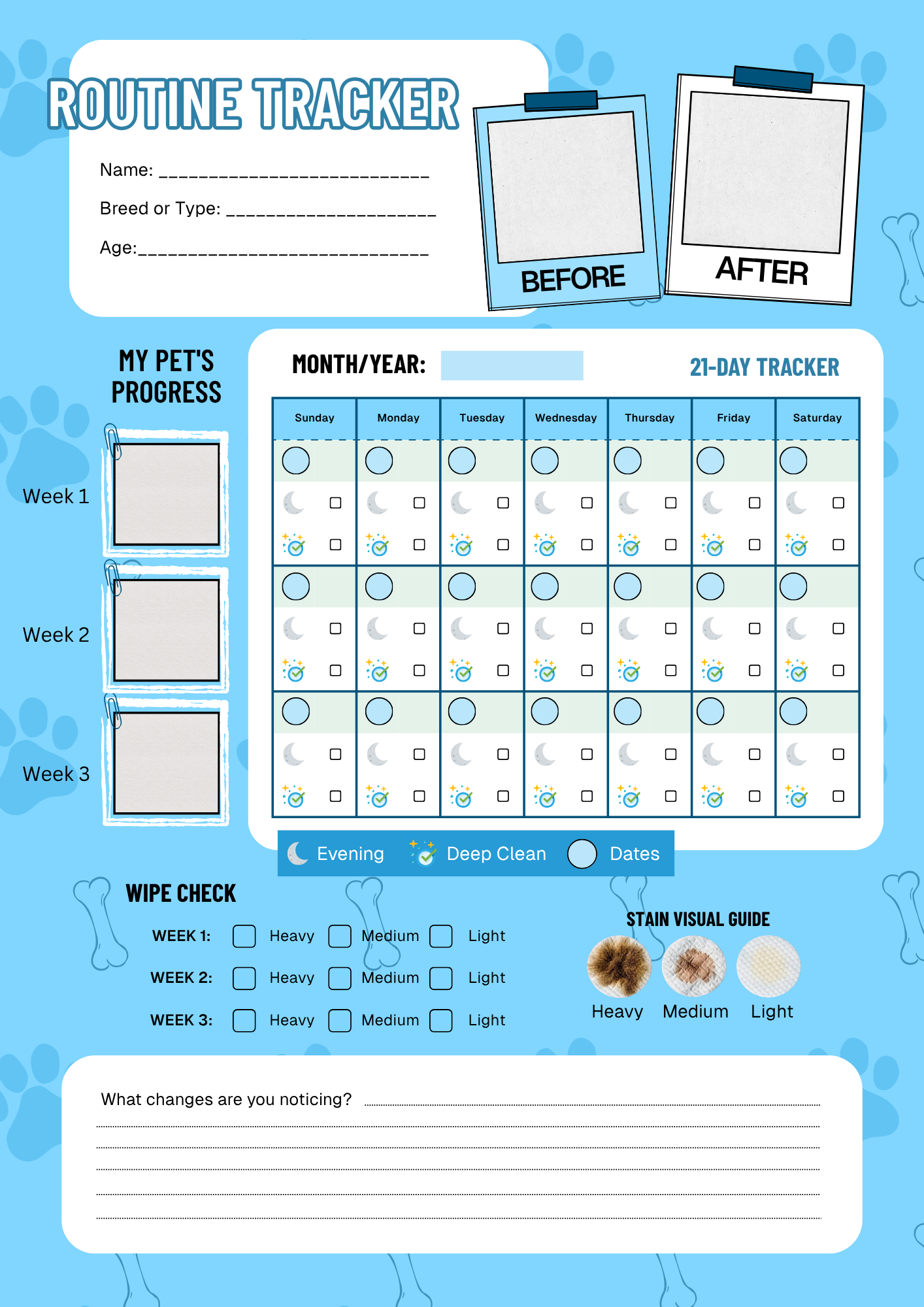
- Start a short daily routine. Wiping the outer surfaces of the teeth along the gumline, back to front, removes soft plaque before it hardens. Even a few teeth on day one counts.
- Use dog-safe products only. The Merck Veterinary Manual says human toothpaste should not be used on dogs.
- Keep a note. If the smell has not improved after a couple of weeks of routine, or it changes, tell your vet.
- Book a dental check. Tartar, once hardened, cannot be wiped away. It needs a professional cleaning.
Looking for a step-by-step on the wipe routine? Read our guide on how to clean your dog’s teeth without a toothbrush.
How FreshWipes fit into the routine
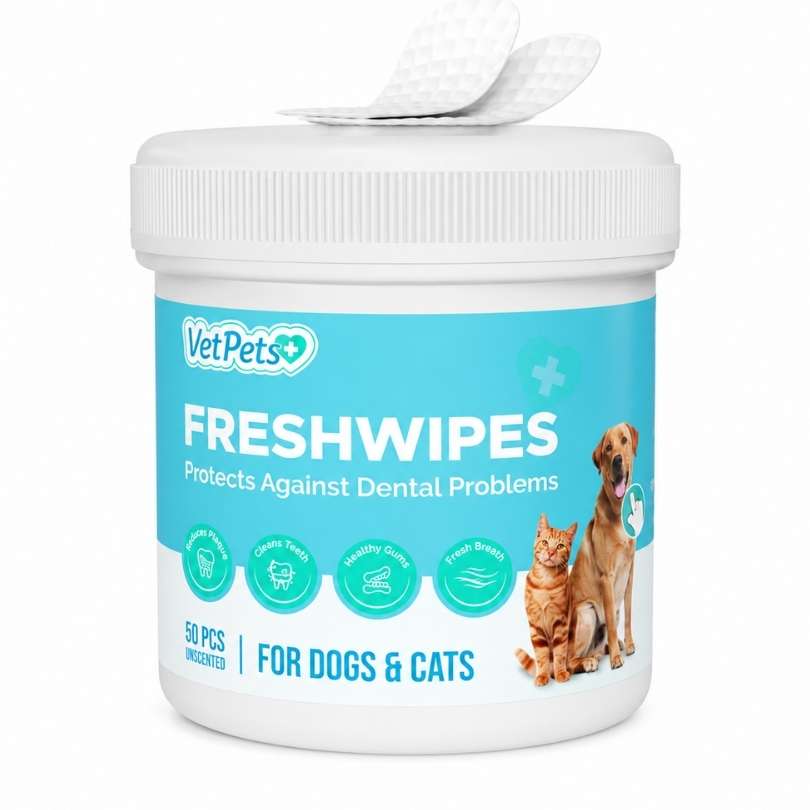
If plaque is behind the smell, FreshWipes can be part of the routine. They are a textured finger wipe that fits over one finger, no toothbrush needed, and are used to physically scrub plaque and food debris off the teeth and along the gumline. They are fragrance-free, alcohol-free, fluoride-free and pH-balanced, and are suitable for dogs and cats of all sizes. Each container holds 50 wipes.
FreshWipes are part of a daily-care routine. They do not treat dental or other disease, they are not a substitute for professional veterinary dental cleaning, and they do not remove hardened tartar. If your dog’s breath stays bad, see your vet. Follow the directions on the pack for how often to use them.
Prefer to see everything in one place? Browse the finger wipes collection.
When to see your vet
PDSA advises contacting your vet if you notice a change in your dog’s breath, especially if they seem to be in pain. Cornell lists these signs of dental disease as reasons to call:
- Difficulty eating or decreased appetite
- Bad breath that does not go away
- Bleeding from the mouth
- Swelling on the jaw or face
- Drooling
- Nasal discharge, which can be bloody
- A dog that seems unwell or stops eating
Talk to your vet before starting any new dental product, especially for puppies, seniors and dogs with existing mouth problems.
Frequently asked questions
Is bad breath normal in dogs?
No. PDSA, the UK veterinary charity, says bad breath is not normal, even in older dogs, and advises contacting your vet if you notice a change in your dog’s breath, especially if they seem to be in pain.
What is the most common cause of bad breath in dogs?
Dental disease. PDSA calls it the most common cause of halitosis in dogs, and Cornell’s Riney Canine Health Center says bad breath is often the first thing owners notice when a dog has dental disease.
What does it mean if my dog’s breath smells sweet or like ammonia?
PDSA lists sweet-smelling breath (like pear drops or nail polish remover) as a possible sign of diabetes and ammonia-like breath as a possible sign of kidney disease. Only a vet can tell. Book an appointment if you notice either.
Can FreshWipes cure my dog’s bad breath?
No. FreshWipes are a textured finger wipe for the daily routine: they physically scrub plaque and food debris from the teeth and gumline. They do not treat disease or remove hardened tartar, and breath that stays bad needs a vet check.
Can I use human toothpaste to freshen my dog’s breath?
No. The Merck Veterinary Manual says toothpastes made for people should not be used on dogs. Use a pet-specific product.
How do I know when bad breath is an emergency?
Contact your vet promptly if the smell comes with drooling, trouble eating, bleeding from the mouth, swelling on the face, or if your dog seems unwell or in pain.
Sources
- Cornell University College of Veterinary Medicine: Dental disease and home dental care
- Merck Veterinary Manual: Dental Disorders of Dogs
- PDSA: Bad breath in dogs
Reviewed by the VetPets Care Team. This guide is educational and does not replace advice from your veterinarian.
Make it a 30-second part of their day.
One wipe, a little praise, done. Every order is covered by our 100-Day Money-Back Guarantee.
Explore the daily routine