


How to Clean Your Dog’s Ears at Home (Safely)
What to use, what to leave alone, a calm step-by-step routine, and the signs that mean the ear needs your vet instead.
The short answer
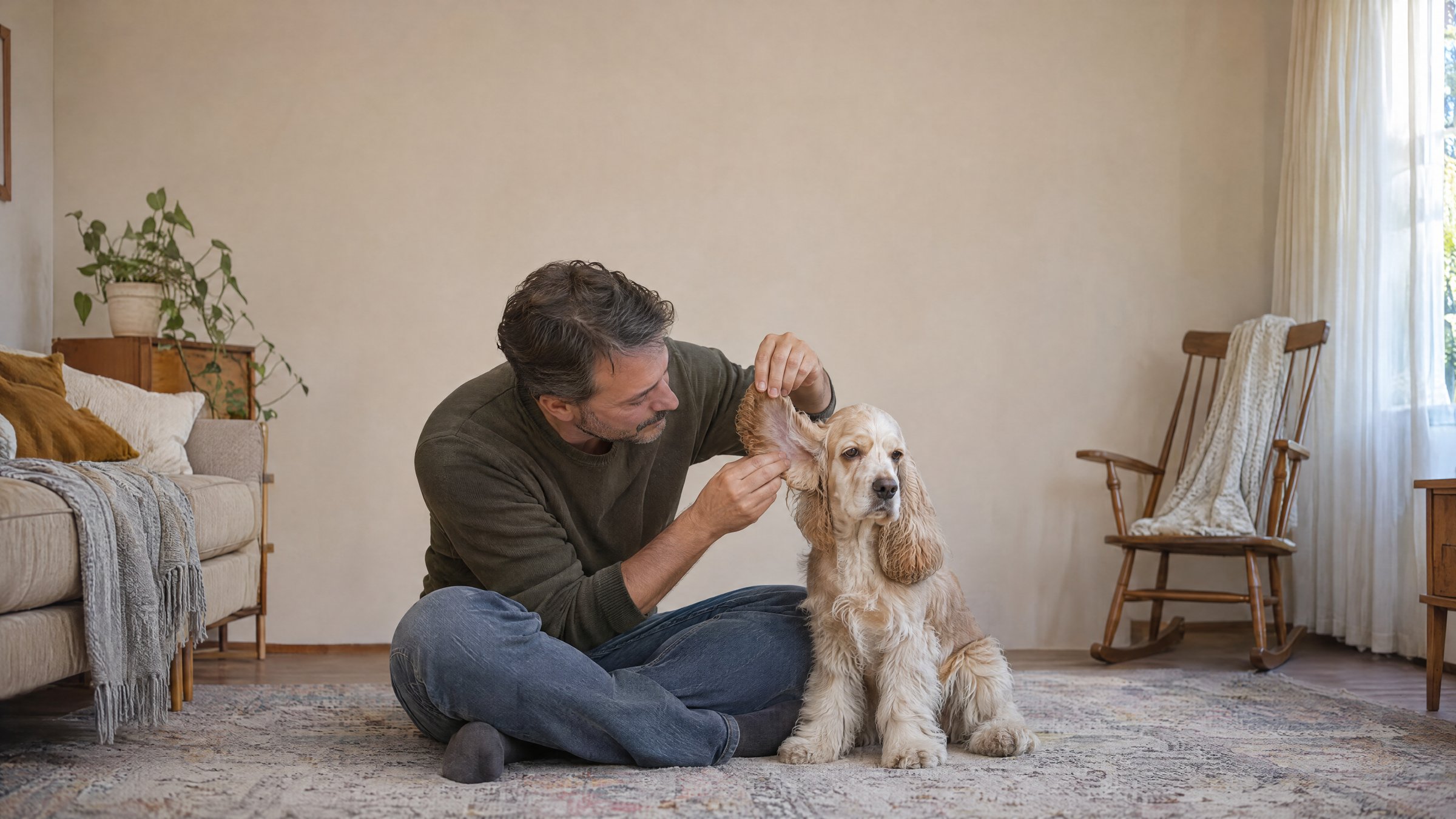
Clean a healthy dog’s ears by lifting the flap, applying a dog-specific ear cleaner, massaging the base of the ear, then wiping out what you can see with cotton or gauze. Never use cotton swabs, hydrogen peroxide or alcohol, and only clean as far into the ear as your finger reaches. If the ear is red, painful, smelly or full of discharge, skip the cleaning and call your vet.
Key takeaways
- Clean when you see wax or debris, and check the ears about once a month. There is no single schedule for every dog.
- Use a dog-specific ear cleaner. Avoid cotton swabs, hydrogen peroxide, alcohol and household products.
- Only clean the ear flap and the part of the canal you can reach with a finger.
- Too much cleaning can irritate the ear, so more is not better.
- Redness, pain, discharge or a bad smell are vet topics, not home-care topics.
In this guide
Why your dog’s ears need a look
A dog’s ear canal is long and L-shaped, so wax, moisture and dirt do not simply fall out on their own. A quick look and a gentle clean of the part you can reach keeps the ear tidy and lets you spot a change early. A healthy ear is clean, pale pink and has little or no smell.
Because cleaning can also cause problems when it is done too often or when the ear is already sore, Dogs Trust advises talking to your vet about a plan that suits your dog before you start.
Which dogs need more ear care
PetMD lists dogs that swim or bathe often, have long, floppy or hairy ears, make a lot of wax, play in dirt, or have allergies or a history of ear infections as the ones that may need routine cleaning. Dogs Trust adds droopy-eared breeds such as spaniels and beagles, since floppy ears can trap moisture.
If your dog is one of these, a regular look is a normal part of care. It does not mean something is wrong. Our guides on eye discharge and tear stains follow the same idea for the eyes, and the dog dental care hub covers the mouth.
What to use, and what to avoid
| Use | Avoid |
|---|---|
| A dog-specific ear cleaner, ideally one your vet recommends | Hydrogen peroxide, alcohol, essential oils and household products |
| Cotton balls, gauze or damp cotton pads | Cotton swabs, which can push debris deeper and injure the canal |
| A towel, treats and a calm spot | Pushing the bottle tip or anything else deep into the ear |
| A finger wipe for the flap and outer opening | Cleaning a red, sore or painful ear |
VCA says cleaners that contain hydrogen peroxide or alcohol can irritate the ear canal, especially if it is inflamed. Dogs Trust adds that ear cleaners vary in strength, so household substances are not a safe swap.
How to clean your dog’s ears, step by step
- Check the ear first. If it is red, painful or full of discharge, stop and call your vet.
- Get your dog comfortable. VCA suggests a small dog on your lap, a medium dog between your legs on the floor, and a large dog sitting with its side against a wall.
- Lift the ear flap straight up and fill the canal with a dog ear cleaner. Keep the bottle tip from touching the ear.
- Massage the base of the ear for about 30 seconds, until you hear a soft squishing sound.
- Let your dog shake its head. This moves the loosened debris toward the outer ear. Stand back, it can fly.
- Wipe the flap and outer opening with cotton or gauze, only as deep as your finger reaches. Repeat until the cotton comes away clean.
- Praise and reward, then do the other ear.
If your dog flinches, cries or pulls away, stop. Pain during cleaning is a reason to ask your vet to look first.
How often should you clean your dog’s ears?
It depends on the dog. Some dogs with healthy, clean ears never need cleaning, while others need it regularly. PetMD’s advice is to clean when you notice wax or debris and to check the ears about once a month, for example during baths, brushing or nail trims. VCA and Dogs Trust both warn that over-cleaning can irritate the ear.
The simplest habit is a monthly look, tied to something you already do, plus a clean when you see buildup. Ask your vet for a schedule if your dog is prone to ear problems.
How EarWipes fit into the routine
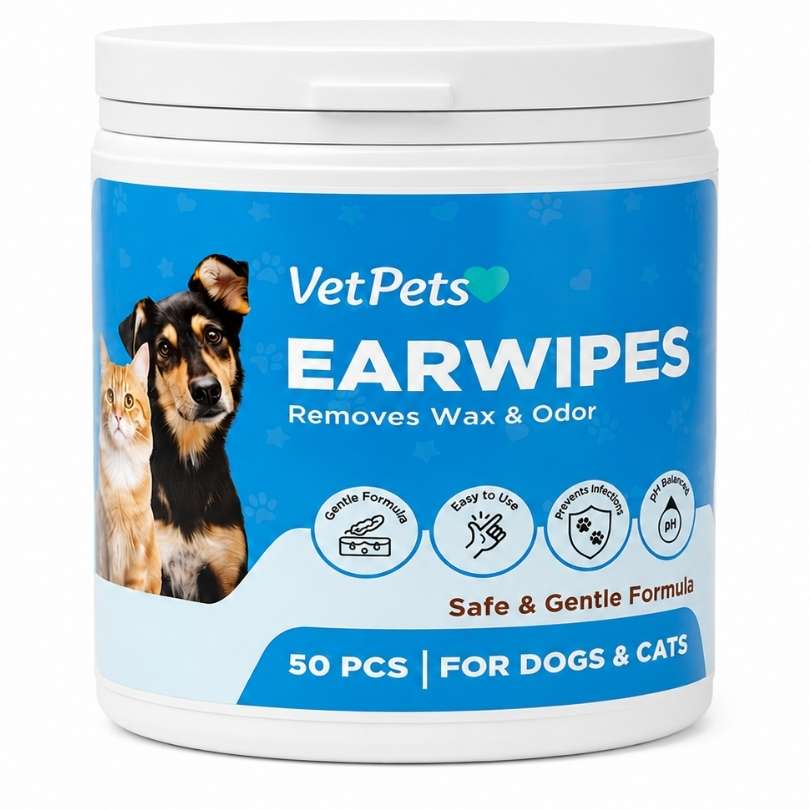
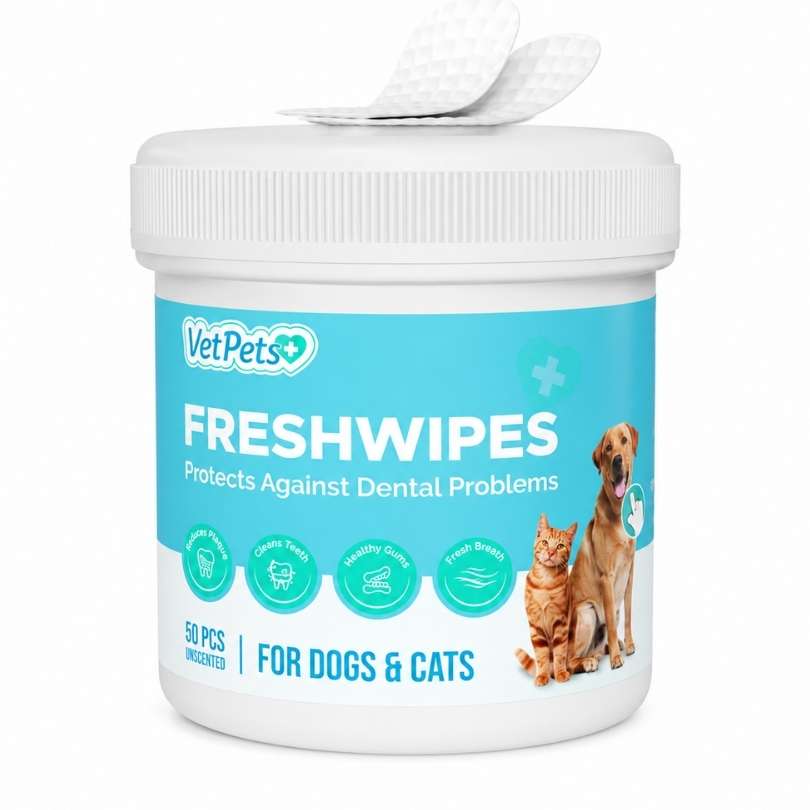
EarWipes are a finger wipe made for the outer ear. You slip one over a finger and wipe the ear flap and the part of the ear you can reach, to remove wax, buildup, debris and odor, with no liquid to pour and no head-shaking spray. The pack holds 50 wipes and is made for dogs and cats.
EarWipes are part of a routine care. They do not reach the deep ear canal, they are not a treatment for an ear infection, and they do not replace a vet exam. Follow the directions on the pack.
When to see your vet
Do not clean the ear first if you see these signs. Cleaning a sore ear can make it worse, so call your vet:
- Redness inside the ear
- Pain, or flinching when you touch the ear
- Discharge
- A bad or unusual smell
- Lots of wax or debris that keeps coming back
- Head shaking or scratching at the ear
- A swollen or hot ear flap
Medicated ear drops are prescribed by a vet and are separate from cleaning. If your dog has ear medication, ask your vet when to clean and when to apply it. Talk to your vet before starting any new ear product, especially for puppies and dogs with ear problems.
Frequently asked questions
How often should I clean my dog’s ears?
There is no one schedule. PetMD says to clean when you notice a buildup of wax or debris, and to check the ears about once a month, for example at bath time. Dogs that swim, have floppy or hairy ears or a history of ear problems may need more regular care, and over-cleaning can irritate the ear, so ask your vet what suits your dog.
Can I use a cotton swab to clean my dog’s ears?
No. VCA and Dogs Trust both warn against cotton swabs, because they can push wax and debris deeper and may injure the canal or eardrum. Clean only the ear flap and the part of the canal your finger can reach.
What should I not put in my dog’s ear?
Avoid hydrogen peroxide, alcohol and household products. VCA says peroxide and alcohol can irritate the canal, especially if it is already inflamed, and Dogs Trust advises using only a dog-specific cleaner recommended by your vet.
Is a smelly ear normal?
Not usually. Dogs Trust lists redness, discharge, a bad smell and lots of wax as reasons to tell your vet. Cleaning can remove surface wax, but an odor that comes back needs a vet to look at the ear.
Should I clean my dog’s ears if I think there is an infection?
No, check with your vet first. PetMD says a dog with a painful, red or inflamed ear, a damaged eardrum or an active infection may need professional cleaning, and home cleaning could make it worse.
Which dogs need ear care most often?
PetMD lists dogs that swim or bathe often, have long, floppy or hairy ears, produce a lot of wax, play in dirt, or have allergies or past ear infections. Dogs Trust adds droopy-eared breeds such as spaniels and beagles, because floppy ears can trap moisture.
Sources
- VCA Animal Hospitals: Ear Cleaning in Dogs
- Dogs Trust: How to clean your dog’s ears
- PetMD: How to Keep Dog Ears Clean
Reviewed by the VetPets Care Team. This guide is educational and does not replace advice from your veterinarian.
A quick look. A gentle wipe. Done.
Keep ears tidy as part of the weekly routine. Every order is covered by our 100-Day Money-Back Guarantee.
Explore EarWipes