


Dog Dental Care: Guides and Routines
Everything you need to keep your dog’s teeth and gums comfortable: what plaque and tartar are, what causes bad breath, and a routine that fits real life.

The short answer
Healthy dog teeth come down to a routine you can actually keep: regular removal of the soft plaque film at home, safe chewing, and a yearly dental check with your vet. Brushing is the most effective home method. If your dog refuses it, a short wipe routine is a realistic next step. Hardened tartar and sore gums always need a vet.
In this guide
Dental care basics
Plaque is a soft, sticky film of bacteria that forms on the teeth. Cornell’s veterinary college says minerals in saliva can begin to harden plaque into tartar in as short as 24 hours, which is why small, frequent efforts work better than an occasional big one.
Why it matters
The Merck Veterinary Manual describes untreated gum disease as the major reason for tooth loss in dogs. Keeping plaque under control at home is one part of looking after the whole mouth.
What home care looks like
Cornell calls brushing the most effective method of home care. Merck adds that for dogs that do not allow a toothbrush, wiping the outer tooth surfaces with gauze at least every 2–3 days can remove plaque. Dental diets, chews, water additives and gels are extra support, and your vet can tell you which are worth using.
Our dental care guides
Each guide answers one question in full. Start with the one that sounds most like your dog.
How to clean your dog’s teeth without a toothbrush
For dogs that clamp their mouth shut: the options compared, plus a step-by-step wipe routine you can build into the day.
Why does my dog’s breath smell?
The common causes of bad breath, what you can do at home, and which signs mean it is time to call the vet.
Plaque vs tartar in dogs
What separates a soft film you can wipe away from hardened tartar that needs a professional cleaning.
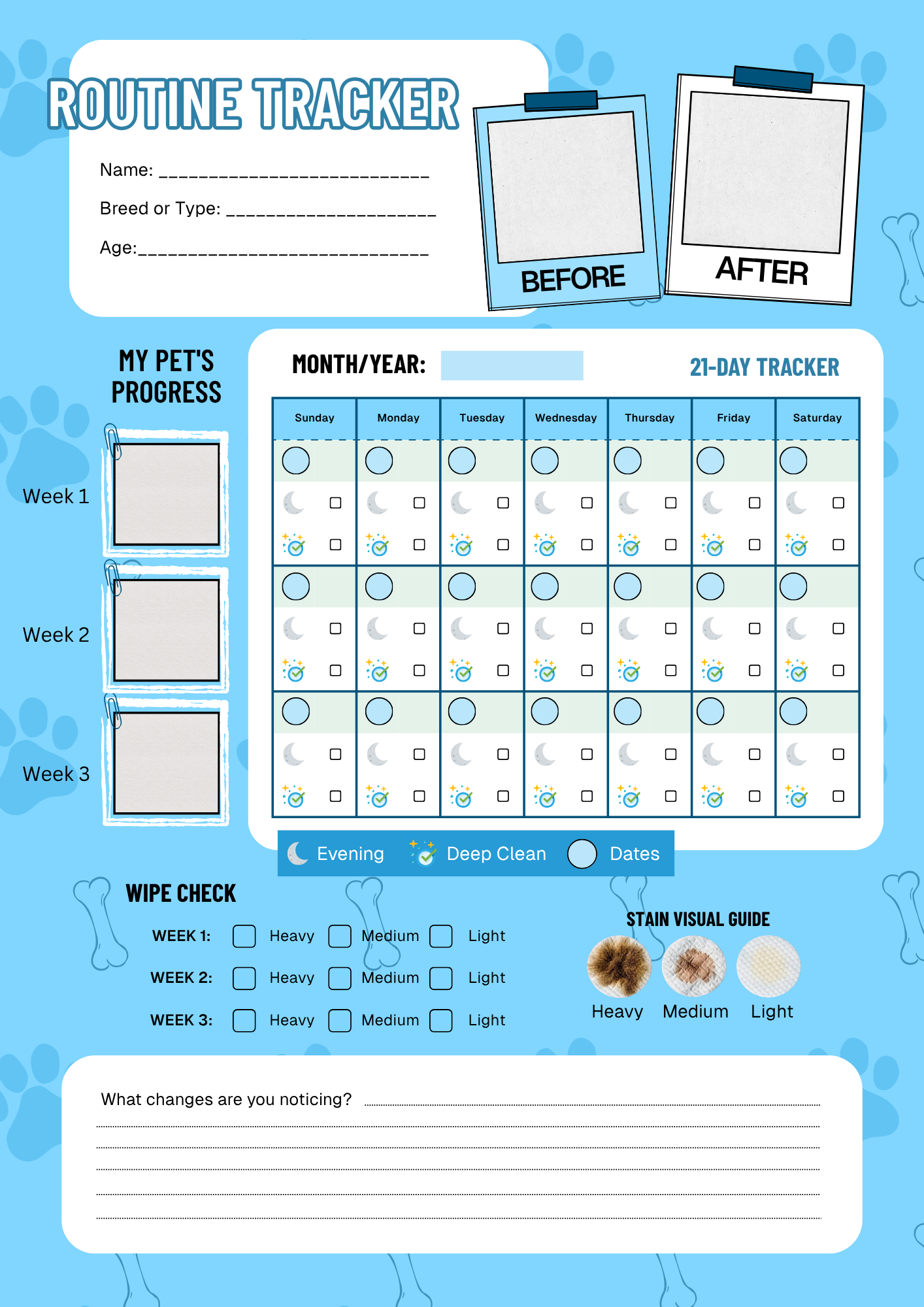
A simple routine you can keep
- Pick a daily anchor. Right after the evening walk or just before breakfast.
- Clean the outer tooth surfaces. A brush works best; a textured finger wipe or gauze is the realistic option for dogs that refuse a brush.
- Keep it short and calm. Stop while it is still pleasant and finish with praise.
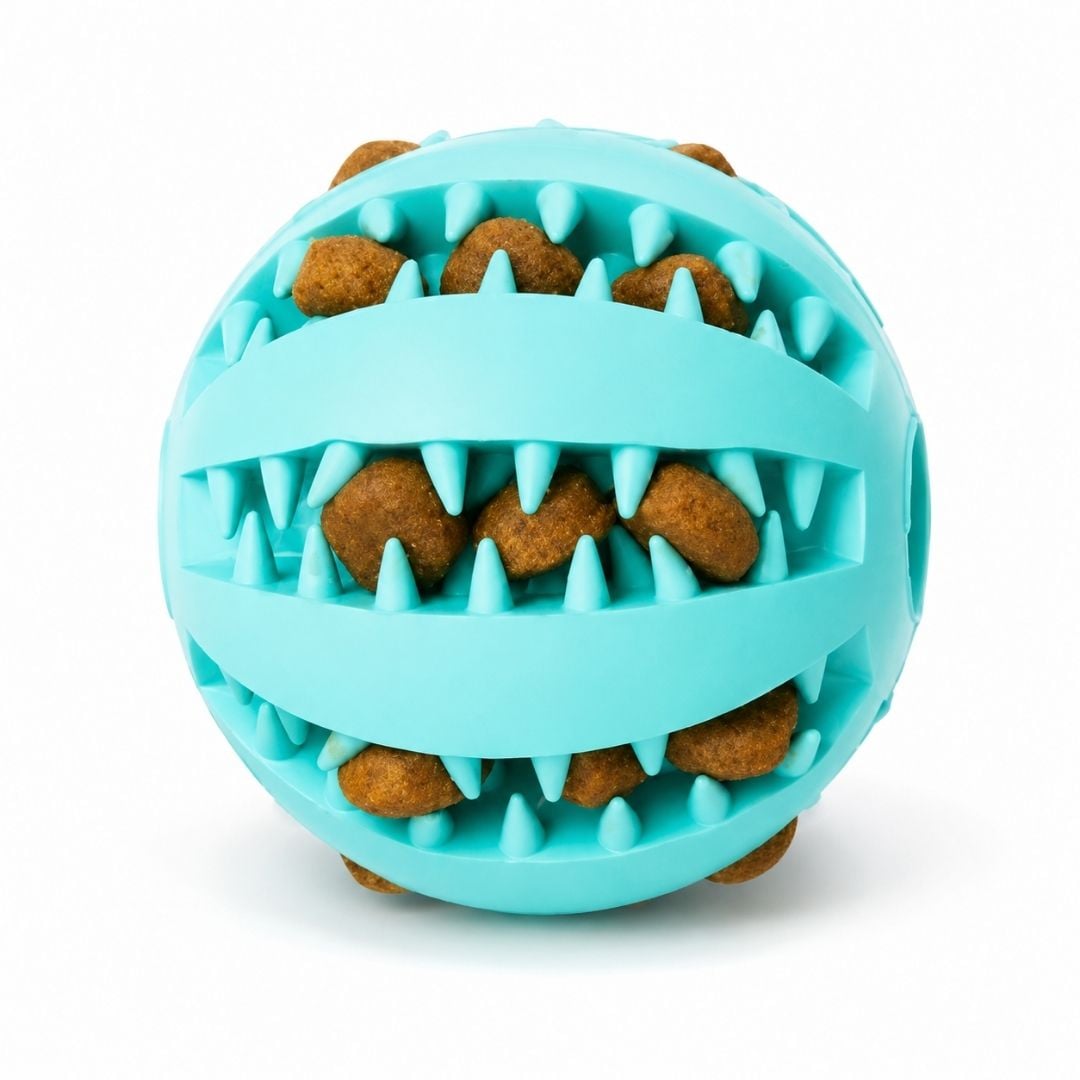
- Choose chews carefully. Cornell warns that bones, antlers, hooves and rawhide can wear or fracture teeth. Ask your vet what suits your dog.
- Book a yearly dental check. Your vet may suggest more often based on age, breed and dental history.
Where FreshWipes fit into the routine
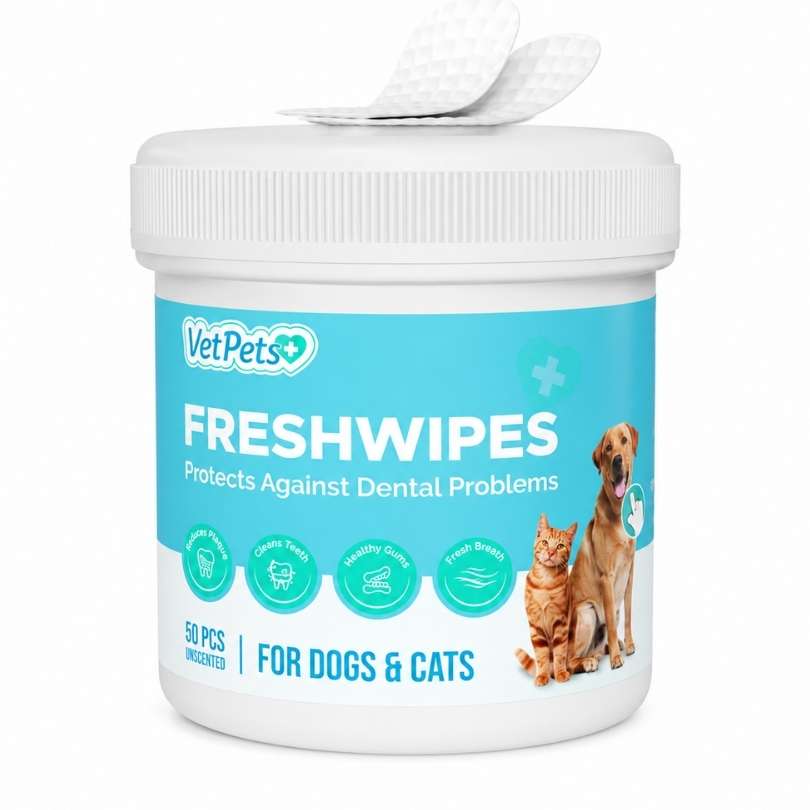
FreshWipes are a textured finger wipe made for the daily tooth-wipe step: they fit over one finger, no toothbrush needed, and are used to physically scrub plaque and food debris off the teeth and along the gumline. They are fragrance-free, alcohol-free, fluoride-free and pH-balanced, and are suitable for dogs and cats of all sizes. Each container holds 50 wipes.
FreshWipes are part of a daily-care routine. They are not a substitute for professional veterinary dental cleaning and they do not remove hardened tartar. Follow the directions on the pack. Prefer to see everything in one place? Browse the finger wipes collection.
When to see your vet
Home care keeps the surface clean. It cannot treat gum disease or fix a damaged tooth. Cornell advises contacting your vet if your dog shows:
- Difficulty eating or decreased appetite
- Bad breath
- Bleeding from the mouth
- Swelling of the jaw or face
- Drooling
- Nasal discharge
Talk to your vet before starting any new dental product, especially for puppies, seniors and dogs with existing mouth problems.
Frequently asked questions
What is the best way to care for my dog’s teeth at home?
Cornell calls brushing the most effective method of home care. If your dog will not allow it, Merck says wiping the outer tooth surfaces with gauze at least every 2–3 days can remove plaque. Ask your vet for a plan that suits your dog.
Can I use human toothpaste on my dog?
No. The Merck Veterinary Manual says toothpastes made for people should not be used on dogs. Use a pet-specific product.
How quickly does plaque harden into tartar?
Cornell’s veterinary college says minerals in saliva can begin hardening plaque into tartar in as short as 24 hours. Once it is hard, it needs a professional cleaning.
How often should my dog have a dental check?
Cornell says your vet examines your dog’s mouth at annual visits, and may suggest exams more often based on age, breed, dental health and medical history.
Can FreshWipes remove tartar?
No. Tartar is hardened and needs a vet. FreshWipes are a textured finger wipe for the daily routine: they physically scrub plaque and food debris from the teeth and gumline.
Sources
- Cornell University College of Veterinary Medicine: Dental disease and home dental care
- Merck Veterinary Manual: Dental Disorders of Dogs
Reviewed by the VetPets Care Team. This page is educational and does not replace advice from your veterinarian.


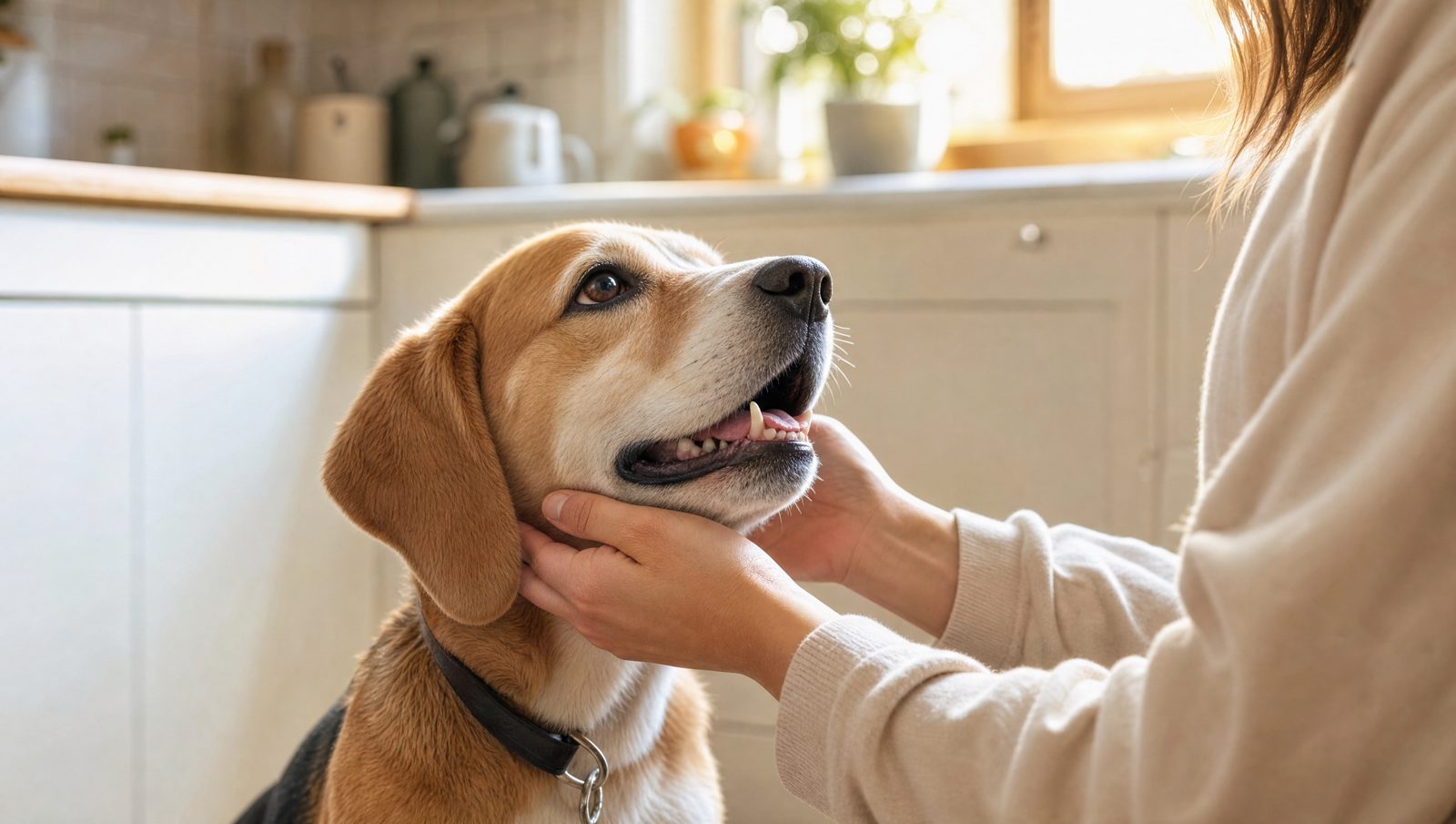
Make it a 30-second part of their day.
One wipe, a little praise, done. Every order is covered by our 100-Day Money-Back Guarantee.
Explore the daily routine