



How to Clean Your Dog’s Eyes Safely
What to use, how to wipe without touching the eye itself, what to keep away from it, how often to do it, and the signs that mean it is time to call your vet.
The short answer
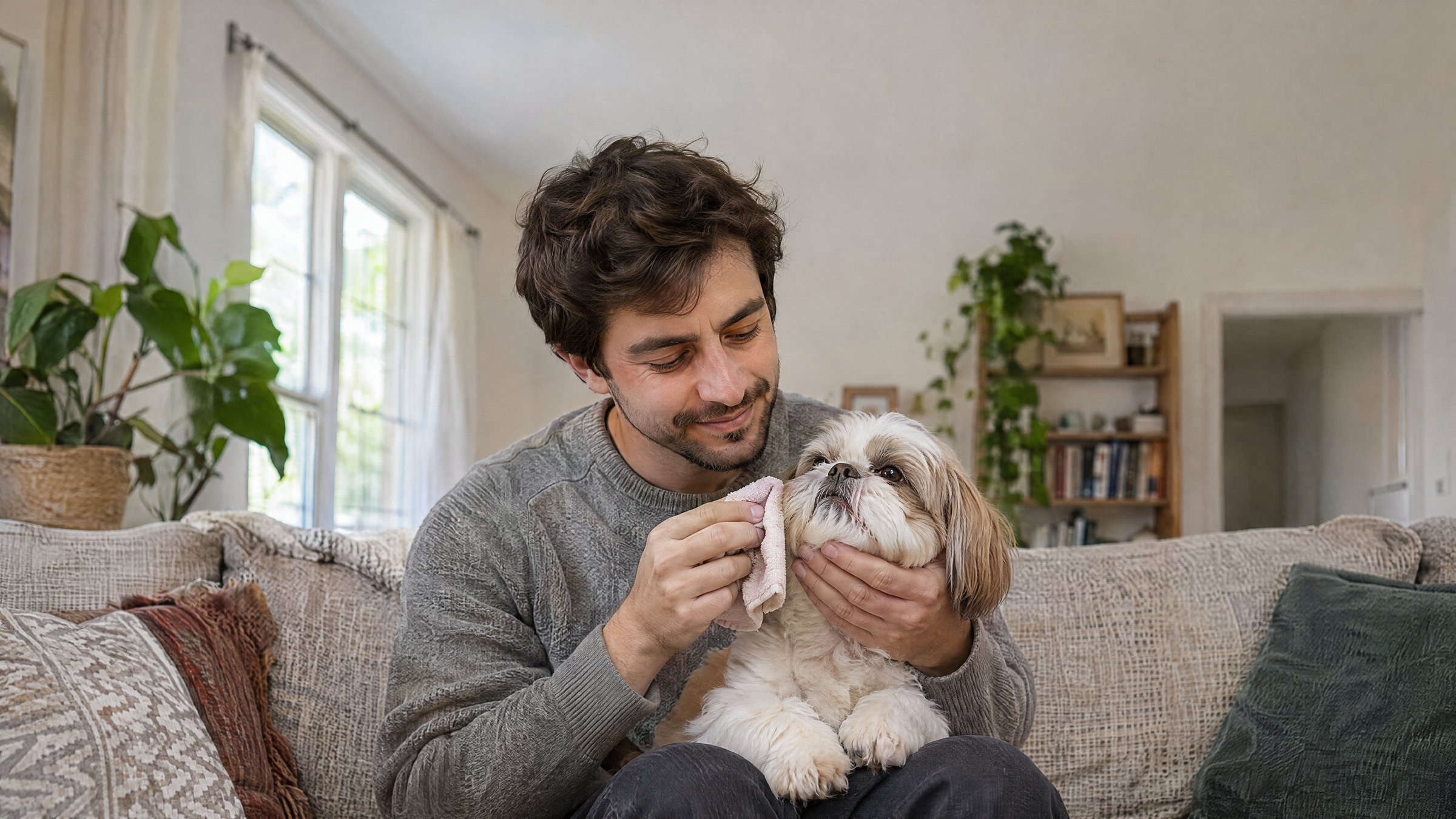
Dampen a clean cloth or cotton ball with sterile saline, a vet-recommended eye wipe or cooled boiled water, then wipe gently from the inner corner outward along the eyelid, using a fresh piece for each eye. Never hold the eye open or touch its surface, and skip alcohol, peroxide and homemade remedies. Discharge that is thick, colored, smelly or paired with redness or squinting needs your vet.
Key takeaways
- Use a clean, soft cloth or pad with sterile saline, a vet-recommended eye wipe or cooled boiled water.
- Wipe the eyelid and the skin around the eye. Do not hold the eye open or touch its surface.
- Use a fresh cloth, pad or section for each eye.
- Keep alcohol, hydrogen peroxide, cotton swabs, essential oils and homemade remedies away from the eyes.
- Redness, squinting or thick, colored or smelly discharge is a vet topic, not a home-care topic.
In this guide
What to use to clean your dog’s eyes
The American Kennel Club (AKC) names three safe options: vet-recommended eye wipes, plain sterile saline with no additives, or cooled water that was brought to a rolling boil for at least one minute. FirstVet adds that warm, sterile water is usually enough to clean the surface area, and that you should check with your vet before using a commercial eye cleaner.
Pair it with a soft cloth, gauze or cotton ball. The AKC warns against rough cloths and cotton swabs near the eye.
A quick table
| Option | Verdict | Why |
|---|---|---|
| Sterile saline, no additives | Good | Named as safe by the AKC; also used to flush dust |
| Cooled boiled water | Good | Boiled for at least one minute, then cooled |
| Vet-recommended eye wipe | Good | Convenient and pre-moistened; check the label |
| Alcohol or hydrogen peroxide | Avoid | Can irritate or damage the eye |
| Cotton swabs, rough cloths | Avoid | Easy to scratch the delicate area |
| Essential oils, soaps, homemade mixes | Avoid | May irritate, damage the eye or be toxic |
How to clean your dog’s eyes, step by step
- Wash your hands and choose a calm, quiet moment, such as after a walk.
- Dampen a clean cloth or cotton ball with your solution or cooled boiled water.
- Steady your dog’s head gently with your free hand under the chin. Do not hold the eye open.
- Wipe along the eyelid toward the ear in one soft stroke, as the AKC describes.
- Use a new cloth, pad or section for the other eye so nothing is carried across.
- Repeat until the discharge is gone, then finish with praise or a treat.
If the crust is hard and dry, hold the damp cloth over the spot for a few seconds to soften it, then wipe gently. For minor irritation from dust or a small particle, the AKC says sterile saline can be used to flush the eye. If the irritation persists or worsens, it may be an injury or a foreign object, so call your vet.
Long hair around the eyes
The AKC notes that trimming long hair around the eyes with blunt-nose scissors can reduce irritation and buildup, and keeps your dog’s view clear. If your dog will not hold still, a groomer or vet can do it safely.
Curious what the goop is in the first place? Read dog eye boogers: normal or not, and for reddish-brown marks see how to remove tear stains on dogs.
What to avoid
- Alcohol-based products and hydrogen peroxide. The AKC lists both as things to avoid.
- Human products with additives. Including makeup removers and eye drops made for people, unless your vet approves them.
- Cotton swabs and rough cloths. Too easy to scratch around the eye.
- Essential oils, soaps and homemade remedies. The AKC says these may irritate, damage the eye or be toxic.
- Pressure. FirstVet warns that forceful application of eye cleaners can cause problems. Keep it light.
How often should you clean your dog’s eyes?
FirstVet says cleaning about once a week should be enough for many pets, and that flat-faced breeds such as Shih Tzus, Pugs and French Bulldogs, which produce discharge faster, may need it more often. FirstVet also notes that removing discharge promptly matters, because dried debris can lead to inflammation or abrasion.
Many owners prefer a short daily habit, which keeps each session small and easy. Ask your vet what rhythm suits your dog, especially if your dog has a history of eye problems. The same short, calm approach works for mouth care too: see the dog dental care hub.
How EyeWipes fit into the routine
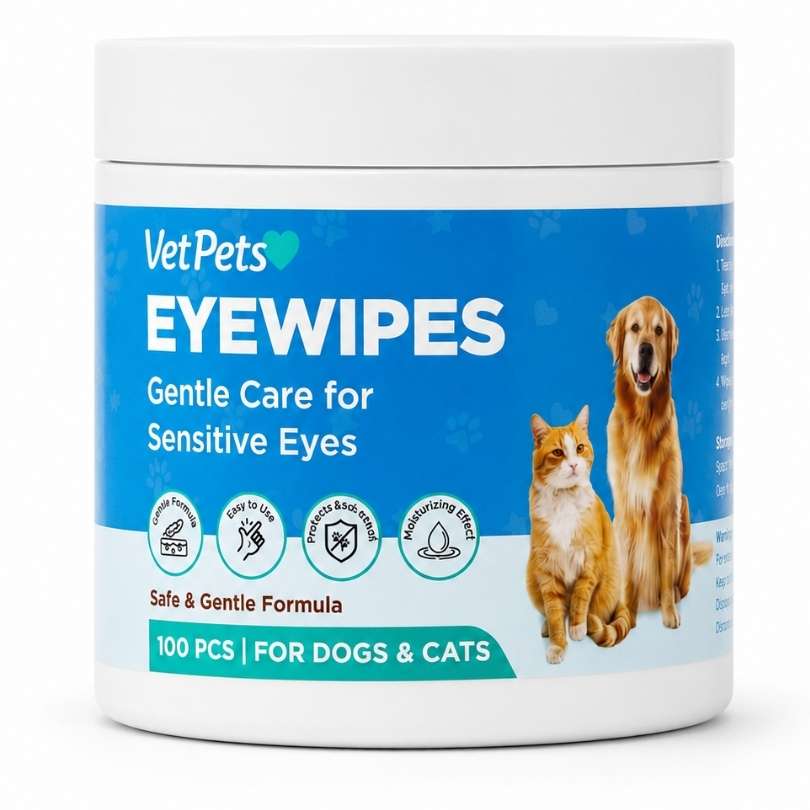
EyeWipes are a textured round pad that you hold directly to the eye area to remove tear residue, dirt, discharge and buildup. The formula is pH-balanced and fragrance-free, free from alcohol, parabens and sulfates, and is suitable for dogs and cats. A session takes about 30 seconds, and each container holds 100 wipes, roughly 6–7 weeks of daily use for one dog.
EyeWipes are part of a daily-care routine. They are not a treatment for any eye condition and do not replace a vet exam. Follow the directions on the pack.
When to see your vet
Cleaning keeps the area tidy. It cannot tell you why discharge or irritation appeared. Contact your vet if you notice:
- Excessive, thick, smelly or discolored discharge
- Redness of the white of the eye or swelling
- Heavy buildup of gunk
- Irritation that persists or gets worse
- Squinting, blinking a lot or holding the eye shut
- Pawing or rubbing at the eye or face
FirstVet also lists vision problems, such as bumping into objects, as a reason to see your vet straight away. Talk to your vet before starting any new eye product, especially for puppies and dogs with existing eye problems.
Frequently asked questions
What can I use to clean my dog’s eyes?
The American Kennel Club names vet-recommended eye wipes, plain sterile saline with no additives, or cooled water that was boiled for at least one minute. Apply it with a clean cloth or cotton ball.
How often should I clean my dog’s eyes?
FirstVet says about once a week is enough for most pets, and more often for flat-faced breeds such as Shih Tzus, Pugs and French Bulldogs, which produce discharge faster. Ask your vet what suits your dog.
Should I hold my dog’s eye open to clean it?
No. The AKC advises against holding the eye open. Wipe along the eyelid and the skin around the eye, and avoid touching the surface of the eye itself.
What should I never use near my dog’s eyes?
The AKC says to avoid alcohol-based products, hydrogen peroxide, products with additives, rough cloths, cotton swabs, essential oils, soaps and homemade remedies, which may irritate or damage the eye.
How do I remove hard, dried crust?
The AKC suggests holding a damp cloth over the area briefly to soften the crust, then wiping gently. Do not scrub.
When should I see a vet instead of cleaning at home?
See your vet for excessive, thick, smelly or discolored discharge, redness or swelling, squinting, heavy blinking, frequent rubbing at the eye, or irritation that lasts or gets worse.
Sources
- American Kennel Club: How to Clean Your Dog’s Eyes
- FirstVet: How to clean and care for your pet’s eyes at home
Reviewed by the VetPets Care Team. This guide is educational and does not replace advice from your veterinarian.
Keep the corners of their eyes clean in 30 seconds.
One gentle wipe, a little praise, done. Every order is covered by our 100-Day Money-Back Guarantee.
Explore EyeWipes