





Why Is My Dog’s Eye Watering? Epiphora Causes Explained
Why some dogs always seem to be crying, what is behind the extra tears, how to keep the face clean and dry, and the signs that mean a vet visit.
The short answer
A dog’s eye waters when it makes too many tears or when the tears cannot drain away. The medical word is epiphora. It is a symptom, not a disease: causes range from allergies and irritants to eyelid shape, a blocked tear duct or an eye injury. Your vet needs to find the cause, and at home you can keep the face clean and dry.
Key takeaways
- Epiphora means tears overflowing the eye. It comes from too many tears or poor drainage.
- Flat-faced breeds and dogs with long facial hair are more likely to have it.
- Watering that lasts more than two or three days, gets worse or comes with other signs needs a vet.
- No staining remedy is proven 100 percent effective. A clean, dry, trimmed face helps.
- Never use hydrogen peroxide near the eyes.
In this guide
What epiphora actually is
VCA Animal Hospitals explains that your dog normally makes a thin film of tears to keep the eyes lubricated. The extra fluid drains through small tear ducts in the corner of the eye next to the nose, down into the back of the sinuses and throat. Epiphora happens when the eye makes too many tears, or when the drainage system cannot keep up.
Owners usually see a constantly damp face, wet fur beneath the eyes, and sometimes tears rolling off the face. VCA also lists reddish-brown staining, odor, skin irritation and skin infection as signs.
Why your dog’s eye is watering
Too many tears
VCA lists conjunctivitis (viral or bacterial), allergies, eye injuries, abnormal eyelashes, corneal ulcers, eye infections, rolled-in or rolled-out eyelids and glaucoma among the causes of extra tear production. All About Vision names infections, allergies and dry eyes as common reasons for watery eyes and discharge.
Tears that cannot drain
According to VCA, some breeds have flat or squished-in faces that stop the tear film draining properly, so tears roll off the face. In other dogs, hair around the eyes blocks the opening of the tear duct, or debris or a foreign body forms a plug inside it.
| Cause | Type | Who sorts it out |
|---|---|---|
| Allergies or irritants | Too many tears | Your vet |
| Conjunctivitis or eye infection | Too many tears | Your vet |
| Eyelid or eyelash problems | Too many tears | Your vet |
| Eye injury or corneal ulcer | Too many tears | Your vet, promptly |
| Flat-faced anatomy | Poor drainage | Your vet, then daily care |
| Hair blocking the duct opening | Poor drainage | Trimming, with your vet or groomer |
| Blocked tear duct | Poor drainage | Your vet |
Breeds that tend to have more
All About Vision names Boston Terriers, Boxers, Bulldogs, Pugs, Pekingese and French Bulldogs as breeds with flat faces and shallow eye sockets that are more prone to eye discharge.
What your vet will do
VCA says the first step is to look for an underlying cause for the extra tears. A vet will examine the eyes, the tear ducts and nearby tissues. One simple test places a drop of fluorescein stain in the eye and watches whether it appears at the nose within a few minutes. If it does not, that does not prove a blockage, but it means more investigation is needed.
If a blocked duct is suspected, VCA describes flushing the duct under anesthesia. When another eye problem is behind the tearing, treatment targets that cause. Do not use any product without talking to your vet first.
What you can do at home
VCA says many remedies have been suggested for tear staining and none has proven 100 percent effective, some over-the-counter products have not been shown to work in studies, and some may harm the eyes. Its advice is simple: keep the area as clean and dry as possible, remove buildup, and trim the fur short around the eyes.
- Check the eye first. If it is red, swollen, squinting or painful, skip the cleaning and call your vet.
- Use a clean, soft, damp pad and wipe gently from the inner corner outward. Use a fresh pad for the other eye.
- Pat the fur dry. Damp fur is what lets staining and skin irritation build up.
- Keep the hair short around the eyes so it does not wick tears onto the face or block the duct opening. Ask a groomer or your vet to do this safely.
- Repeat daily so buildup never gets a chance to set.
Avoid anything containing hydrogen peroxide near the eyes, as VCA warns it can cause severe damage if splashed in. For staining in particular, our guide on how to remove tear stains on dogs goes deeper, and how to clean your dog’s eyes safely shows the technique. If the crust is the main issue, read dog eye boogers: normal or not?
How EyeWipes fit into the routine
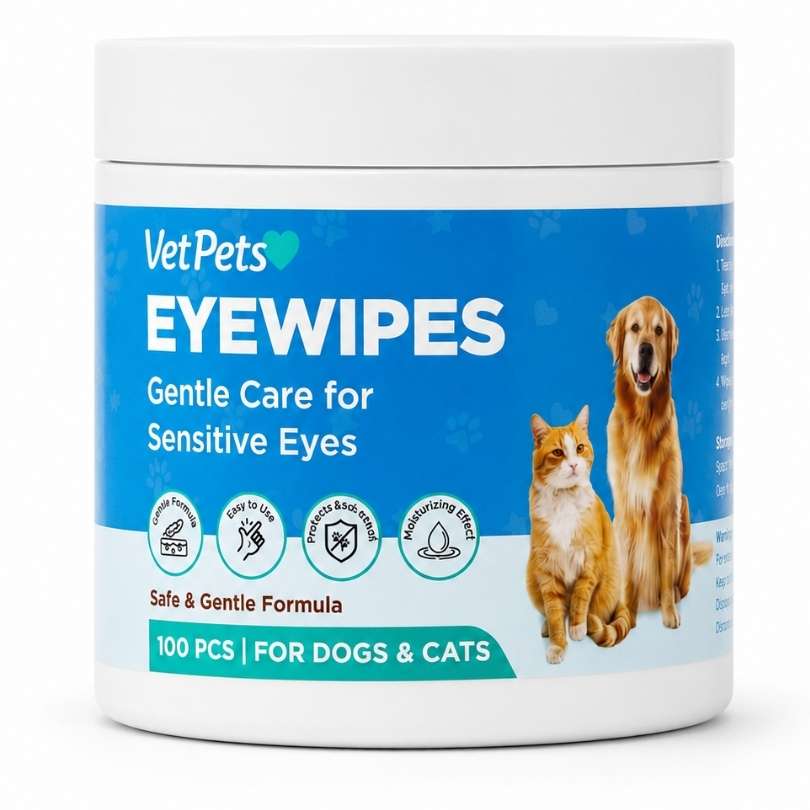
EyeWipes are a textured round pad that you hold directly to the eye area to remove tear residue, dirt, discharge and buildup. The formula is pH-balanced and fragrance-free, free from alcohol, parabens and sulfates, and is suitable for dogs and cats. A session takes about 30 seconds, and each container holds 100 wipes.
EyeWipes are part of a daily-care routine. They are not a treatment for epiphora or any eye condition and do not replace a vet exam. Follow the directions on the pack.
When to see your vet
Daily cleaning keeps the face tidy. It cannot tell you why the eye is watering. Contact your vet if you notice:
- Watering that lasts more than two or three days
- Discharge that is yellow, green, thick or bloody
- Redness, swelling or a cloudy-looking eye
- Squinting, blinking a lot or holding the eye shut
- Pawing or rubbing at the eye or face
- Odor or sore, irritated skin under the eyes
- Tearing that started suddenly in one eye
- Any sign of injury
All About Vision warns that eye problems can worsen quickly and lead to severe damage and vision loss. If in doubt, call your vet. Talk to your vet before starting any new eye product, especially for puppies and dogs with existing eye problems.
Frequently asked questions
What is epiphora in dogs?
VCA Animal Hospitals defines epiphora as an overflow of tears from the eyes. It is a symptom rather than a specific disease, and it can come from too much tear production or from tears that do not drain properly.
What causes a dog’s eye to water?
VCA lists conjunctivitis, allergies, eye injuries, abnormal eyelashes, corneal ulcers, eye infections, rolled-in or rolled-out eyelids and glaucoma as causes of extra tears. Flat faces, hair blocking the tear duct opening and a blocked duct can stop tears draining.
Is a watering eye an emergency?
Not always, but it can be. All About Vision advises seeing a vet if watering lasts more than two or three days, gets worse or comes with new symptoms, because eye problems can worsen quickly. Squinting, a swollen eye or a sudden change should be seen straight away.
Why do flat-faced dogs have watery eyes?
VCA explains that flat-faced (brachycephalic) breeds have a face shape that does not let the tear film drain properly, so tears roll off the face instead. All About Vision lists Boston Terriers, Boxers, Bulldogs, Pugs, Pekingese and French Bulldogs among the breeds more prone to discharge.
Can I stop the tear staining at home?
VCA says no remedy has proven 100 percent effective. Keeping the area as clean and dry as possible, removing buildup and trimming the fur short around the eyes can help. Check with your vet before using any product, and avoid anything containing hydrogen peroxide near the eyes.
Will my dog’s epiphora ever go away?
VCA says that unless an underlying cause is found and treated, most dogs with epiphora have episodes throughout their life, and some degree may persist if facial anatomy prevents drainage. Often the staining is only cosmetic. Your vet will advise on your dog.
Sources
- VCA Animal Hospitals: Eye Discharge (Epiphora) in Dogs
- All About Vision: Eye discharge in dogs and puppies
Reviewed by the VetPets Care Team. This guide is educational and does not replace advice from your veterinarian.
Keep the face clean and dry in 30 seconds.
One gentle wipe, a little praise, done. Every order is covered by our 100-Day Money-Back Guarantee.
Explore EyeWipes