






What Causes Tear Stains in Dogs? Breeds and Causes
Why the fur under a dog’s eyes turns reddish-brown, why flat-faced and small breeds get it more, what a vet should rule out, and how to keep the area clean.

The short answer
Tear stains appear when tears spill onto the fur instead of draining away, and a pigment in the tears, porphyrin, leaves the red-brown color. The spill-over comes from too many tears or from tears that cannot drain properly. Breed shape, blocked tear ducts and eye irritation are the usual reasons, so a vet should check any dog with constant wetness.
Key takeaways
- PetMD says the red-brown staining is caused by a pigment in tears called porphyrin, and it shows most on light-colored coats.
- VCA says epiphora, the overflow of tears, comes from excess tear production or from tears not draining properly.
- Flat faces, prominent eyes, hair over the duct opening and blocked ducts can all stop tears draining.
- VCA says that in many cases the staining is cosmetic, but allergies, eye injuries, abnormal eyelashes and glaucoma are among the causes a vet should rule out.
- VCA says keeping the area clean and dry, removing build-up and trimming the fur short around the eyes can help.
In this guide
Why tear stains happen
Every dog makes tears. VCA explains that a thin film of tears lubricates the eye, and the extra fluid drains through the tear ducts in the corner of the eye next to the nose, then down into the back of the sinuses and throat. When that system keeps up, the fur stays dry.
When it does not, tears roll onto the face. PetMD says the reddish-brown color that follows is caused by a pigment in tears called porphyrin, and that it is most visible on lighter coats. That is why tear stains are the classic complaint of white and cream dogs, even though dogs of every color can have the same wetness underneath. VCA lists the other signs of epiphora as dampness under the eyes, odor, skin irritation and skin infection.
Too many tears or poor drainage
VCA says epiphora can be caused either by insufficient drainage through the tear ducts or by excessive production of tears. Separating the two is the first job of a vet exam, and it changes what can be done.
| Route | Examples listed by VCA, PetMD and Merck | Who sorts it out |
|---|---|---|
| Too many tears | Conjunctivitis, allergies, eye injuries, abnormal eyelashes, corneal ulcers, rolled-in or rolled-out eyelids, glaucoma | Your vet finds and treats the cause |
| Poor drainage | Flat face, shallow eye sockets, hair over the duct opening, a plugged or blocked tear duct, a duct opening that never formed | Your vet checks drainage; some causes are fixed with flushing or surgery |
Our guide to why a dog’s eye waters walks through epiphora in more detail.
Why some breeds get tear stains more
Looks and anatomy matter. PetMD says that in some breeds epiphora is normal because of genetics, even without disease, and names Poodles, Shih Tzus and Pekingese among the breeds more commonly affected. It also lists shallow eye sockets, seen in breeds with prominent eyes, as a reason tears overflow.
VCA adds that some breeds have flat or squished-in faces that do not allow the tear film to drain properly: the tears fail to enter the duct and simply roll off the face. In other dogs, the hair around the eyes physically blocks the entrance to the nasolacrimal duct. Merck Veterinary Manual describes a rarer case in young dogs: imperforate lacrimal puncta, where the tear duct openings are missing from birth, which a vet can open surgically. PetMD says this is more common in Cocker Spaniels.
None of this means a short-nosed or small dog will definitely have stains, only that the odds are higher and that a steady routine is worth starting early.
What a vet should rule out first
VCA is clear that the first step is to determine whether there is an underlying cause for excess tear production. PetMD notes that eyelash abnormalities such as ingrown eyelashes, extra eyelashes and eyelashes growing inside the eyelid can irritate the eye, as can eyelid problems like entropion, ectropion and a prolapsed third eyelid known as cherry eye. Merck lists cherry eye as common in young dogs and certain breeds, including American Cocker Spaniels, Lhasa Apsos, Beagles, Pekingese and English Bulldogs.
If those are cleared, the vet checks drainage. VCA describes a simple test: a drop of fluorescein stain goes into the eye, the head is held slightly downward, and the vet watches for the dye to appear at the nose within a few minutes. If the duct is blocked, it can be flushed under anesthesia. Treatment of the underlying cause is a vet decision and sometimes needs surgery.
What to do at home
- Get a baseline exam. Ask your vet to check the eyes, eyelids and tear drainage, especially if the staining is new or only on one side.
- Keep the area clean and dry. VCA says keeping the area as clean and dry as possible and removing build-up can help. Wipe gently along the eyelid, using a fresh piece for each eye.
- Trim the hair, carefully. VCA says trimming the fur short around the eyes can help. Ask a groomer or your vet to show you rather than using scissors near the eye yourself.
- Be cautious with stain products. VCA says some over-the-counter products have not been proven effective in research trials and some may harm the eyes. Never use anything with hydrogen peroxide near the eyes, and check any product with your vet first.
- Watch for change. Note any redness, squinting, pawing or colored discharge and call your vet if you see them.
For a step-by-step method, read how to remove tear stains on dogs and how to clean your dog’s eyes safely. The dog eye care hub collects everything in one place.
How EyeWipes fit into the routine
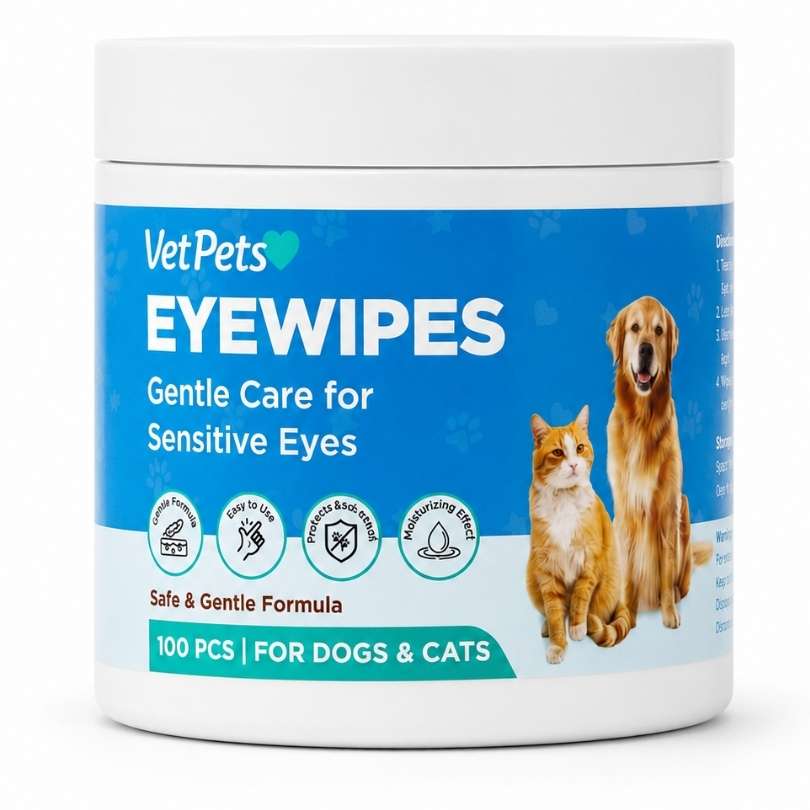
EyeWipes are a textured round pad that you hold directly to the eye area to remove tear residue, dirt, discharge and buildup. The formula is pH-balanced and fragrance-free, free from alcohol, parabens and sulfates, and is suitable for dogs and cats. A session takes about 30 seconds, and each container holds 100 wipes, roughly 6–7 weeks of daily use for one dog.
EyeWipes are part of a daily-care routine. They are not a treatment for any eye condition or for the cause of tearing, and they do not replace a vet exam. Follow the directions on the pack.
When to see your vet
Staining alone is often cosmetic, but contact your vet if you notice:
- Yellow or green discharge, or squinting (PetMD says this can point to infection or injury)
- Redness, swelling, or pawing and rubbing at the eye
- Constant tearing, or a wet face that is new or only on one side
- Odor, sore or irritated skin under the eyes
- A red swollen mass at the inner corner of the eye
Your vet can find the cause and tell you whether staining is simply part of your dog’s build.
Frequently asked questions
What causes tear stains in dogs?
Tear stains happen when tears spill onto the fur instead of draining away. PetMD says the red-brown color comes from a pigment in tears called porphyrin, and it shows most on light coats. The spill-over itself comes from either too many tears or poor drainage, which VCA lists as the two routes to epiphora.
Which breeds get tear stains most?
PetMD names Poodles, Shih Tzus and Pekingese as breeds commonly affected, and VCA notes that flat-faced breeds can have tears that fail to enter the drainage duct and roll off the face. Prominent eyes in shallow sockets are another reason tears overflow.
Are tear stains harmful?
On their own they are often cosmetic. VCA says that in many cases no significant problems arise and the staining may be cosmetic. The cause still matters: staining that comes with redness, squinting, a smell, skin irritation or colored discharge needs a vet exam.
Can tear stains be cured?
Not always. VCA says that if a dog’s facial anatomy prevents tears draining, some degree of epiphora is likely to persist despite treatment, and that no remedy for the staining has proven 100% effective. Finding and treating a treatable cause, then keeping the area clean and dry, gives the best chance.
Is it a blocked tear duct?
It can be. VCA says debris or a foreign body can plug the nasolacrimal duct, and Merck Veterinary Manual says blocked ducts cause watering eyes. Only a vet can check drainage, for example with a fluorescein dye test, so a dog with constant wet staining under both eyes should be examined.
Which products are safe to use near my dog’s eyes?
VCA says some over-the-counter stain products have not been proven effective in research trials and some may harm the eyes, so check with your vet before using one. It also warns against any product containing hydrogen peroxide near the eyes. Plain daily cleaning to remove build-up is the routine VCA describes.
Sources
- VCA Animal Hospitals: Eye Discharge (Epiphora) in Dogs
- PetMD: Epiphora in Dogs: Causes and Treatment
- Merck Veterinary Manual: Disorders of the Nasal Cavity and Tear Ducts in Dogs
Reviewed by the VetPets Care Team. This guide is educational and does not replace advice from your veterinarian.


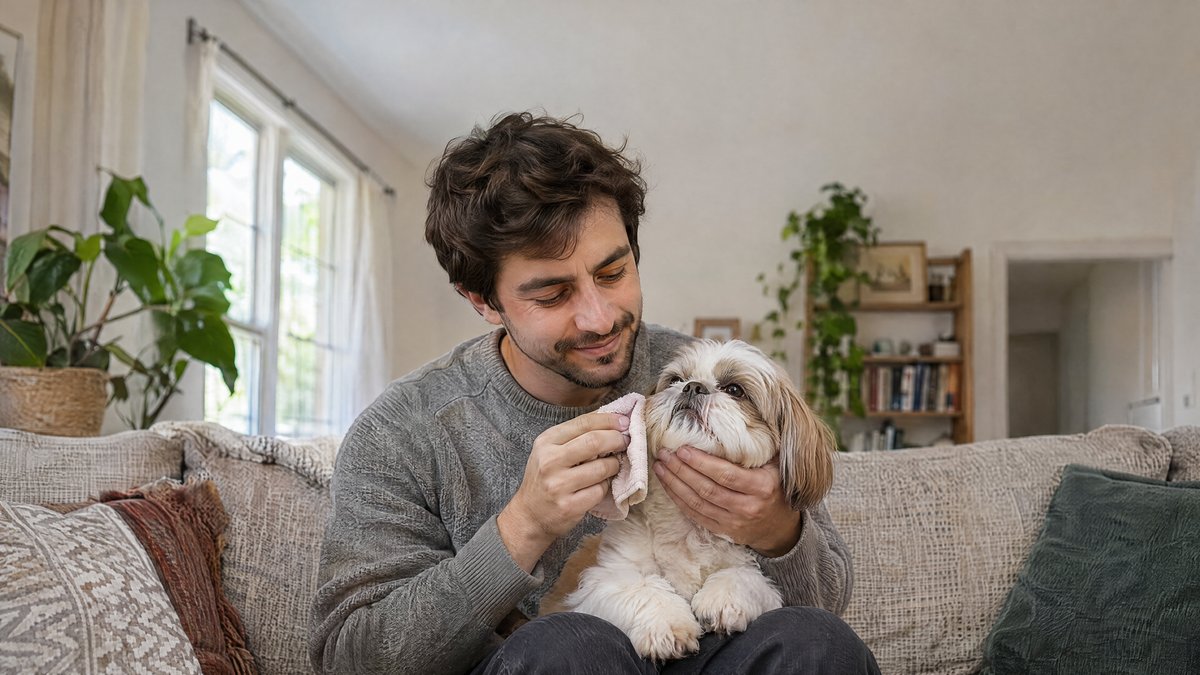
A 30-second daily eye routine.
Keep the area around your dog’s eyes clean, every day. Every order is covered by our 100-Day Money-Back Guarantee.
See EyeWipes