





Blocked Tear Duct in Dogs: Signs, Causes and Vet Options
What a blocked tear duct is, why it makes one eye overflow, how vets confirm it, what they can do about it and how to keep the face clean in the meantime.

The short answer
A blocked tear duct (a lacrimal duct obstruction) stops tears draining from the eye to the nose, so they spill onto the face and leave wet fur and reddish staining. Only a vet can confirm the cause, and depending on it the options range from medication and flushing to surgery. At home, a clean, dry face keeps the skin comfortable while you wait for answers.
Key takeaways
- Tears drain through a duct from the eye to the nose. When it is blocked, tears overflow onto the face.
- The signs are mostly cosmetic: constant watering and reddish staining under the eye.
- A vet can confirm a blockage with a simple dye test and may flush the duct.
- Causes include head shape, a defect from birth, inflammation, infection, tumors and foreign material.
- Untreated, the constant moisture raises the risk of skin infection around the eyes.
In this guide
How a dog’s tears normally drain
VCA Animal Hospitals describes the nasolacrimal system as a series of narrow tubes that let tears drain from the eye. It starts with two small openings in the eyelids, one on the upper lid and one on the lower, near the nose. These join into a single, larger nasolacrimal duct that runs down to the nasal passages. That is why a dog’s nose can get a little damp when it cries or when its eyes are irritated: the extra tears drain away to the nose and mouth.
Merck Veterinary Manual adds that the tear gland, at the top outer edge of the eye, makes the watery part of tears, and that the ducts let tears drain from each eye into the nose. When something interrupts that path, the tears have nowhere to go.
VCA says the lower part of the duct is the part most often affected, and a blockage there causes the more visible effects.
Why a tear duct blocks
There is no single cause, and the cause decides the treatment. VCA and Merck describe these main ones:
Head and muzzle shape
VCA says that in some dogs the blockage is related to the shape and size of the head and muzzle.
A defect from birth
Some puppies are born without an opening where the duct meets the pink tissue around the eye. Merck calls this imperforate lacrimal puncta and describes it as an infrequent cause of watering eyes in young dogs. VCA notes it commonly affects cocker spaniels, though other breeds can be affected.
Inflammation, infection or debris
VCA explains that a blockage can also develop after birth: inflammation or infection in the eye or duct can cause swelling that closes it. Merck says inflammation of the tear sac is usually caused by inflammatory debris, foreign objects or masses pressing on the duct, and may bring watering eyes and conjunctivitis that is hard to clear.
Tumors or foreign material
VCA lists tumors along the duct and foreign material lodged in it as further causes.
| Cause | When it shows up | Who sorts it out |
|---|---|---|
| Head and muzzle shape | Often lifelong | Your vet |
| Missing duct opening (imperforate puncta) | Young dogs | Your vet, sometimes surgery |
| Inflammation or infection | Any age | Your vet |
| Tumor or foreign material | Any age | Your vet |
A watering eye does not always mean a blocked duct. Extra tears can also come from allergies, irritants or eye injuries. Our guide on why a dog’s eye waters covers the other causes, and what causes tear stains explains why some breeds stain more.
Signs of a blocked tear duct
VCA says the signs are largely cosmetic. Most affected dogs have excessive watering of the eyes, or reddish-colored tear staining on the face. Watch for:
- A constantly wet patch under one or both eyes.
- Reddish-brown staining on the fur that does not go away.
- A foul smell from the face. In chronic or severe cases, VCA says bacteria can grow in the moist hair around the eyes.
- Sore skin below the eyes: redness, itching, swelling or hair loss can mean a skin infection.
Because the signs look like ordinary tear staining, it is easy to assume it is just how your dog is. If the watering is new, one-sided or does not settle, it is worth asking your vet.
How your vet finds out
According to VCA, a blocked duct is often diagnosed with fluorescein, a dye that glows under a black light. A few drops go into the eyes and, in a dog with a working duct, the dye travels down and becomes visible at the nose or mouth. If it does not appear in the nasal cavity within 5 to 10 minutes, a blockage is likely.
In a sedated dog, the vet may look at the eye under magnification to check that a duct opening is visible. If it is, a thin tube can be inserted and saline flushed through. VCA says this can clear a mild obstruction and also helps diagnose more severe ones. Depending on the case, the vet may add imaging such as X-ray, CT or MRI to rule out tumors, or a bacterial culture to look for infection.
Merck says that if a duct obstruction is suspected, the vet may try to unblock it by flushing with sterile water or saline, and X-rays after injecting dye can show where a long-term blockage sits and what is causing it.
Treatment options
Treatment follows the cause, and it is always your vet’s call. VCA describes two broad routes:
Medication
When inflammation causes the blockage, anti-inflammatory medicine and antibiotics may clear it. VCA stresses using every medication as directed and going back for all rechecks. Merck says the usual therapy for tear sac inflammation is keeping the duct unblocked and using antibiotic eye drops.
Surgery
VCA says surgery may enlarge the opening to the duct, remove tumors pressing on it or remove foreign material. In more severe cases, a stent may be placed so tears can flow. For a missing duct opening at birth, Merck says therapy consists of surgically opening the blocked duct and keeping it open with a tube or suture during healing.
What happens if nothing is done
VCA says an untreated blocked duct keeps causing tear staining, and dogs have a higher likelihood of skin infection around the eyes because of the constant moisture. That is the main reason not to shrug it off.
Daily care at home while you wait for answers
Home care does not unblock a duct, and it is not a substitute for the vet. What it can do is keep the skin under the eye cleaner and drier, which matters because moisture is what leads to odor and irritation.
- Look at the eye first. If it is red, swollen, cloudy, squinting or painful, skip the cleaning and call your vet.
- Use a clean, soft pad and wipe gently from the inner corner outward. Use a fresh pad for the other eye.
- Dry the fur. Pat the area dry so damp fur does not sit against the skin.
- Check the skin under the eyes for redness, hair loss or a sour smell, and tell your vet if you see any.
- Repeat daily so buildup never sets.
For the full technique, see how to clean your dog’s eyes safely. All our eye guides sit together in the dog eye care hub.
How EyeWipes fit into the routine
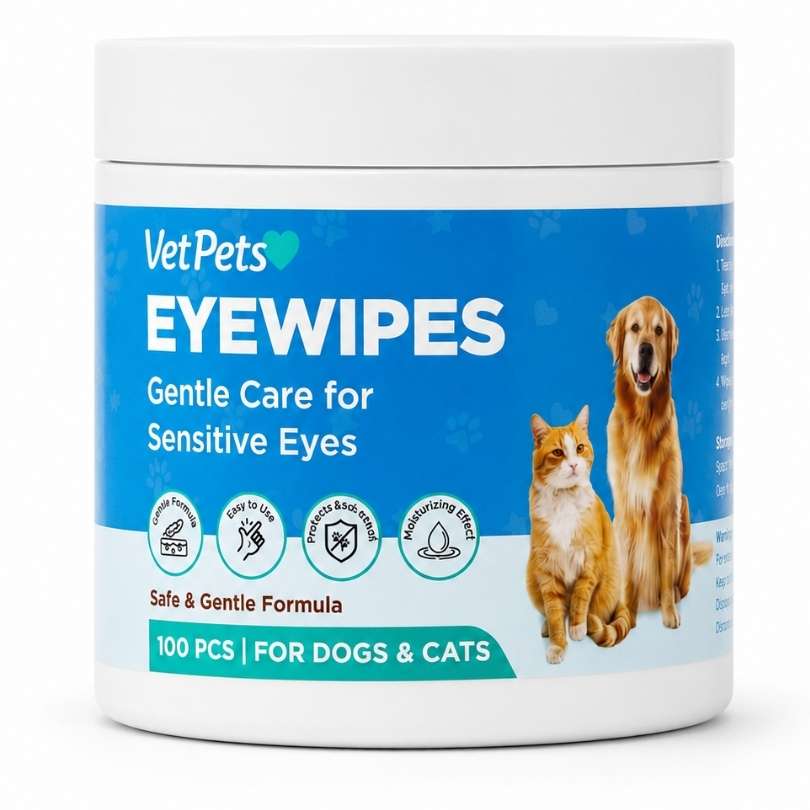
EyeWipes are a textured round pad that you hold directly to the eye area to remove tear residue, dirt, discharge and buildup. The formula is pH-balanced and fragrance-free, free from alcohol, parabens and sulfates, and is suitable for dogs and cats. A session takes about 30 seconds, and each container holds 100 wipes.
EyeWipes are part of a daily-care routine. They do not unblock a tear duct, are not a treatment for any eye condition and do not replace a vet exam. Follow the directions on the pack.
When to see your vet
A blocked duct needs a vet to confirm it and find the cause. Book a visit if you notice:
- Watering that is new, constant or only in one eye
- Staining that keeps coming back however often you clean
- A foul smell from the face
- Red, itchy, swollen or hairless skin under the eyes
- Yellow, green or bloody discharge
- Redness, swelling or a cloudy-looking eye
- Squinting, pawing at the eye or holding it shut
- A swelling or draining spot near the inner corner of the eye
Eye problems can get worse quickly, so if in doubt, call your vet. Talk to your vet before starting any new eye product, especially for puppies and dogs with existing eye problems.
Frequently asked questions
What is a blocked tear duct in a dog?
VCA Animal Hospitals explains that tears normally drain from the eye through small openings in the eyelids into a nasolacrimal duct that leads to the nose. If that duct is blocked, tears cannot drain and overflow onto the face, which can lead to wet fur and tear staining.
What are the signs of a blocked tear duct?
VCA says the signs are largely cosmetic: excessive watering of the eyes or reddish tear staining on the face. In chronic or severe cases, bacteria can grow in the moist fur, causing a foul smell and skin that is red, itchy, swollen or losing hair.
How does a vet check for a blocked tear duct?
VCA describes placing fluorescein dye in the eyes. The dye should appear at the nose or mouth. If it does not show up within 5 to 10 minutes, a blocked duct is likely. In a sedated dog the vet may also flush the duct with saline, and imaging or a bacterial culture is sometimes recommended.
Can a blocked tear duct be fixed?
It depends on the cause. VCA says inflammation-related blockages may respond to anti-inflammatory medicine and antibiotics, while other cases need surgery to open the duct, remove a mass or foreign material, or place a stent. Your vet will advise what suits your dog.
Are some dogs born with blocked tear ducts?
Yes. Merck Veterinary Manual describes imperforate lacrimal puncta, where the tear duct opening is missing at birth, as an infrequent cause of watering eyes in young dogs. VCA notes it commonly affects cocker spaniels, although other breeds can be affected.
What happens if a blocked tear duct is not treated?
VCA says an untreated blockage keeps causing tear staining, and dogs also have a higher chance of a skin infection around the eyes because of the constant moisture.
Sources
- VCA Animal Hospitals: Lacrimal Duct Obstruction in Dogs
- Merck Veterinary Manual: Disorders of the Nasal Cavity and Tear Ducts in Dogs
Reviewed by the VetPets Care Team. This guide is educational and does not replace advice from your veterinarian.
Keep the face clean and dry in 30 seconds.
One gentle wipe, a little praise, done. Every order is covered by our 100-Day Money-Back Guarantee.
Explore EyeWipes