



A Teeth Cleaning Routine for Dogs That Hate Brushing
Why many dogs refuse the brush, a slow routine that builds trust, and what to do instead when brushing just isn’t happening.

The short answer
Dogs that hate brushing usually need a slower start, not more force. Build up in tiny steps: touch the muzzle, lift a lip, let your dog taste a pet-safe product, then add a tool, rewarding every step. If a brush is still a no, veterinary sources say wiping the teeth with gauze at least every 2–3 days is the next-best option.
Key takeaways
- Resistance is common and usually fixable with short, calm, reward-based sessions.
- Plaque can begin hardening into tartar in as little as 24 hours, so a gentle routine you keep beats a battle you skip.
- Merck Veterinary Manual: daily brushing is best, but wiping with gauze at least every 2–3 days helps in dogs that refuse a brush.
- Never use human toothpaste on a dog.
- A dog that suddenly hates mouth handling may be in pain. Book a vet check.
In this guide
Why dogs hate brushing
Think about it from your dog’s side. A hand holds the muzzle, something unfamiliar goes into the mouth, and there is no way to say “stop”. For many dogs that feels like restraint, not care. Add a flavor they have never tasted and a session that goes on too long, and refusal makes sense.
Three things usually sit behind it:
- No introduction. The first brushing happened all at once, with no warm-up.
- Handling sensitivity. Some dogs dislike having their face or muzzle held, however gentle you are.
- Discomfort. Sore gums or a painful tooth make mouth handling unpleasant. If your dog used to tolerate it and now will not, ask your vet to look.
What you are up against
Plaque is the soft, sticky film that builds on teeth. Cornell University’s College of Veterinary Medicine says that within as short as 24 hours, minerals in saliva begin to harden plaque into tartar. Once it is tartar, a brush or wipe will not remove it; that is a job for your vet. For the detail, read our guide on plaque vs tartar in dogs.
That is why it is worth the patience. A few calm seconds of cleaning most days does more than an occasional wrestling match. Merck Veterinary Manual states that daily toothbrushing is best, so it is the goal to work toward, even if you begin with something much smaller.
Not sure how often is right for your dog? Our guide on how often to clean your dog’s teeth covers it.
The gentle routine: seven small steps
Spend a few days on each step, longer if your dog needs it. Keep every session to a minute or two, in a calm spot, with a small treat your dog loves. Move on only when your dog is relaxed.
- Pair your hands with good things. Sit together, stroke your dog’s shoulder and chest, and give a treat. No mouth contact yet.
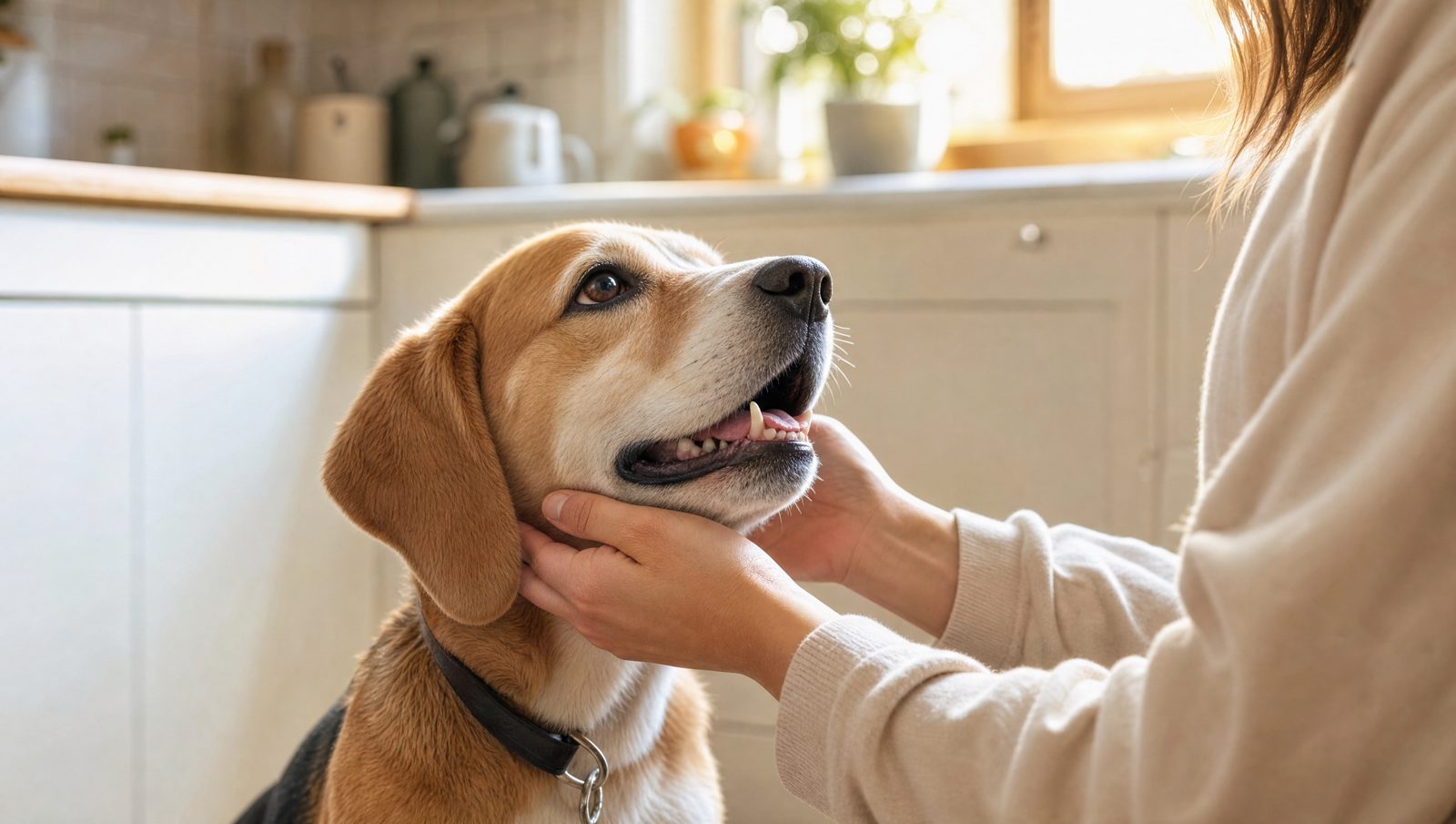
- Touch the muzzle. Rest a finger on the side of the muzzle for a second, then reward. Build to stroking along the cheek.
- Lift a lip. Gently raise the lip on one side for a moment so you can see the teeth. Reward straight away and release. Do not hold on.
- Let them taste. Offer a pet-safe dental product from your finger so your dog learns the taste and the texture are fine. Never use human toothpaste.
- Touch a tooth. With a finger or a soft wipe over your finger, touch the outer surface of one front tooth. Stop. Reward.
- Make one slow pass. Wipe along the outer surfaces of the teeth on one side, then reward. Next session, do the other side.
- Build the routine. Add a few teeth at a time until you can do the outer surfaces on both sides, and keep it at the same time of day.
If your dog pulls away, tenses or licks lips repeatedly, go back one step and make it easier. Ending on a calm success matters more than finishing the list.
If brushing still isn’t happening
Plenty of dogs never accept a toothbrush, and that is okay. Merck Veterinary Manual says that for dogs that do not allow toothbrushing, wiping the teeth with a gauze at least every 2–3 days can remove plaque. A textured finger wipe follows the same idea and is often easier to introduce because it is small and sits on your own finger. We cover the whole approach in how to clean your dog’s teeth without a toothbrush.
Cornell also lists dental diets, chews and treats, water additives, oral gels and sprays as options when brushing is not possible. Two cautions:
- Chewing hard objects can wear or fracture teeth. Skip bones, antlers and hooves.
- The Veterinary Oral Health Council (VOHC) lists dental products it has accepted. Check that list before you buy.
Mistakes that set you back
- Holding your dog down. It teaches your dog that mouth handling means trouble.
- Going too long. Ten calm seconds beat two stressful minutes.
- Starting with the back teeth. Begin at the front, on the outer surfaces, where it is easiest.
- Skipping the reward. The treat is how your dog learns that this is a good part of the day.
- Using human toothpaste. It is not made for dogs.
- Ignoring pain signs. Flinching, pawing at the mouth or refusing food all deserve a vet visit.
How FreshWipes fit into the routine
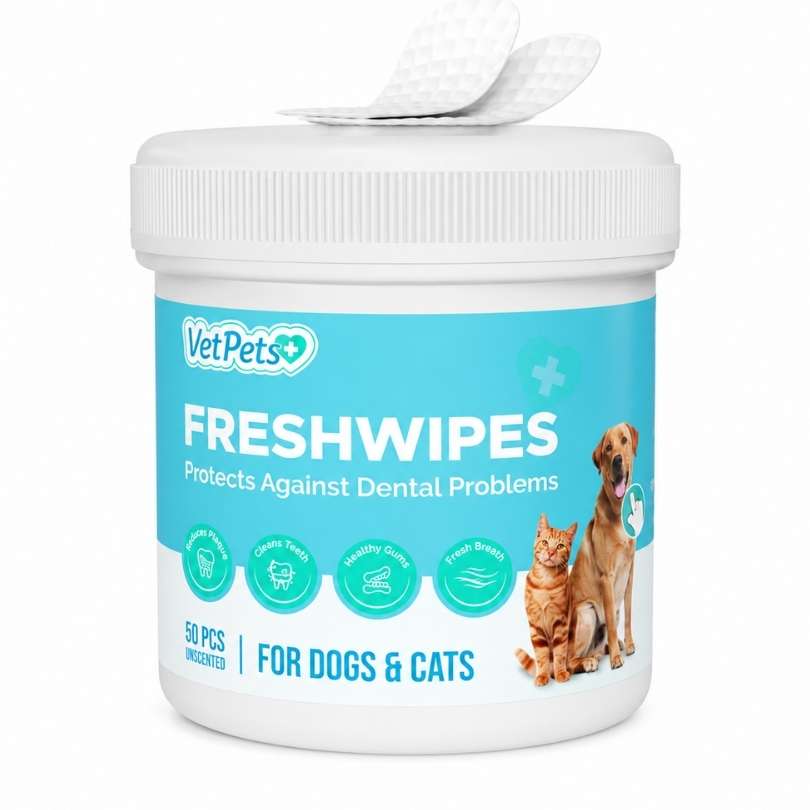
For dogs that will not tolerate a brush, FreshWipes are a practical middle step. They are a textured finger wipe: slip one over a finger and wipe the teeth and gumline, so there is no handle or bristles to worry about. They are fragrance-free, alcohol-free, fluoride-free and pH-balanced, and are suitable for dogs and cats of all sizes. Each container holds 50 wipes.
FreshWipes are part of a daily-care routine. They are not a substitute for professional veterinary dental cleaning and they do not remove hardened tartar. Follow the directions on the pack for how often to use them.
Prefer to see everything in one place? Browse the finger wipes collection, or read more in our dog dental care hub.
When to see your vet
A cleaning routine keeps the surface clean. It cannot treat gum disease or fix a damaged tooth. Contact your vet if you notice:
- Difficulty eating or reduced appetite
- Bad breath that does not go away
- Red, swollen or bleeding gums
- Drooling
- Swelling of the jaw or face
- Discolored, loose or broken teeth
- A sudden refusal to let you touch the mouth
Many dogs hide pain. Talk to your vet before starting any new dental product, especially for puppies, seniors and dogs with existing mouth problems.
Frequently asked questions
Why does my dog hate having its teeth brushed?
Most dogs simply are not used to having a hand, a tool and a taste in their mouth. Mouths are sensitive, and restraint can feel threatening. Going slowly and pairing each step with a reward usually helps. A dog that suddenly resists, or flinches when you touch one spot, may have a sore mouth, so mention that to your vet.
What can I do if my dog will not accept a toothbrush at all?
Merck Veterinary Manual says daily toothbrushing is best, but wiping the teeth with gauze at least every 2–3 days can remove plaque in dogs that do not allow brushing. A textured finger wipe works the same way and is often easier to introduce.
How long does it take to get a dog used to tooth cleaning?
It varies by dog. Some accept it within days; others need several weeks of short, relaxed sessions. Move on to the next step only when your dog is calm at the current one.
Can I use human toothpaste to make it taste better?
No. Merck Veterinary Manual says toothpastes made for people should not be used on dogs. Use a pet-specific product, and ask your vet if you are unsure.
Do dental chews replace cleaning?
They can be part of the picture. Cornell notes that dental chews and treats are options when brushing isn’t possible, but hard objects can wear or fracture teeth. Look for products on the Veterinary Oral Health Council (VOHC) accepted list and supervise chewing.
When should I see a vet?
See your vet if you notice bad breath that does not go away, red or bleeding gums, drooling, trouble eating, a loose, broken or discolored tooth, or swelling on the face.
Sources
- Cornell University College of Veterinary Medicine: Dental disease and home dental care
- Merck Veterinary Manual: Dental Disorders of Dogs
- Veterinary Oral Health Council (VOHC)
Reviewed by the VetPets Care Team. This guide is educational and does not replace advice from your veterinarian.


Make it a 30-second part of their day.
One wipe, a little praise, done. Every order is covered by our 100-Day Money-Back Guarantee.
Explore the daily routine