



Ear Care for Floppy-Eared Dogs: A Practical Routine
Long, heavy ears are lovely, but they need a little extra attention. What to look for, a quick weekly check, a gentle cleaning routine and when to call your vet.
The short answer
Floppy-eared dogs need a quick look at their ears every week, a gentle clean when you see dirt, wax or a change in smell, and a clean after swimming or bathing. AKC lists long-eared breeds such as Basset Hounds and Cocker Spaniels among those at highest risk of ear infections, so a steady routine matters. Red, smelly or painful ears are a job for your vet, not for home cleaning.
Key takeaways
- Cornell says dogs with floppy ears may need ear cleaning more often than other dogs.
- Healthy ears are pink, clean and free of odor, per AKC. Clean when something changes, not on autopilot.
- Over-cleaning can irritate the ear, so more is not better.
- Avoid cotton swabs, alcohol and hydrogen peroxide.
- Clean the ears after swimming or a bath, and keep water out of the canal.
- Do not clean an ear that looks inflamed or smells yeasty. Call your vet instead.
In this guide
Why floppy ears need extra care
AKC says dogs with long ears, such as Basset Hounds and Cocker Spaniels, are among those with the highest risk of ear infections, though every breed can develop them. Cornell’s Riney Canine Health Center lists ear conformation, allergies and ear mites as common underlying causes of the bacterial and yeast infections vets treat in dogs.
Cornell also notes that dogs with a history of allergies, recurrent ear infections or floppy ears may need their ears cleaned more frequently than other dogs. Our dog ear care hub collects the full set of ear guides. So the goal for a floppy-eared dog is not heavy cleaning. It is a regular, calm look, and a light clean when the ear tells you it needs one.
What a healthy ear looks like
AKC describes a clean, healthy ear as pink, odorless and free of dirt or inflammation. It should not smell yeasty or stinky. That is your baseline: once you know what normal looks and smells like on your dog, changes stand out quickly.
AKC adds that a dog who enjoys having their ears rubbed when healthy but pulls away when you touch them may have sensitive or sore ears. Gentle daily handling is an easy way to notice that early.
The weekly ear check
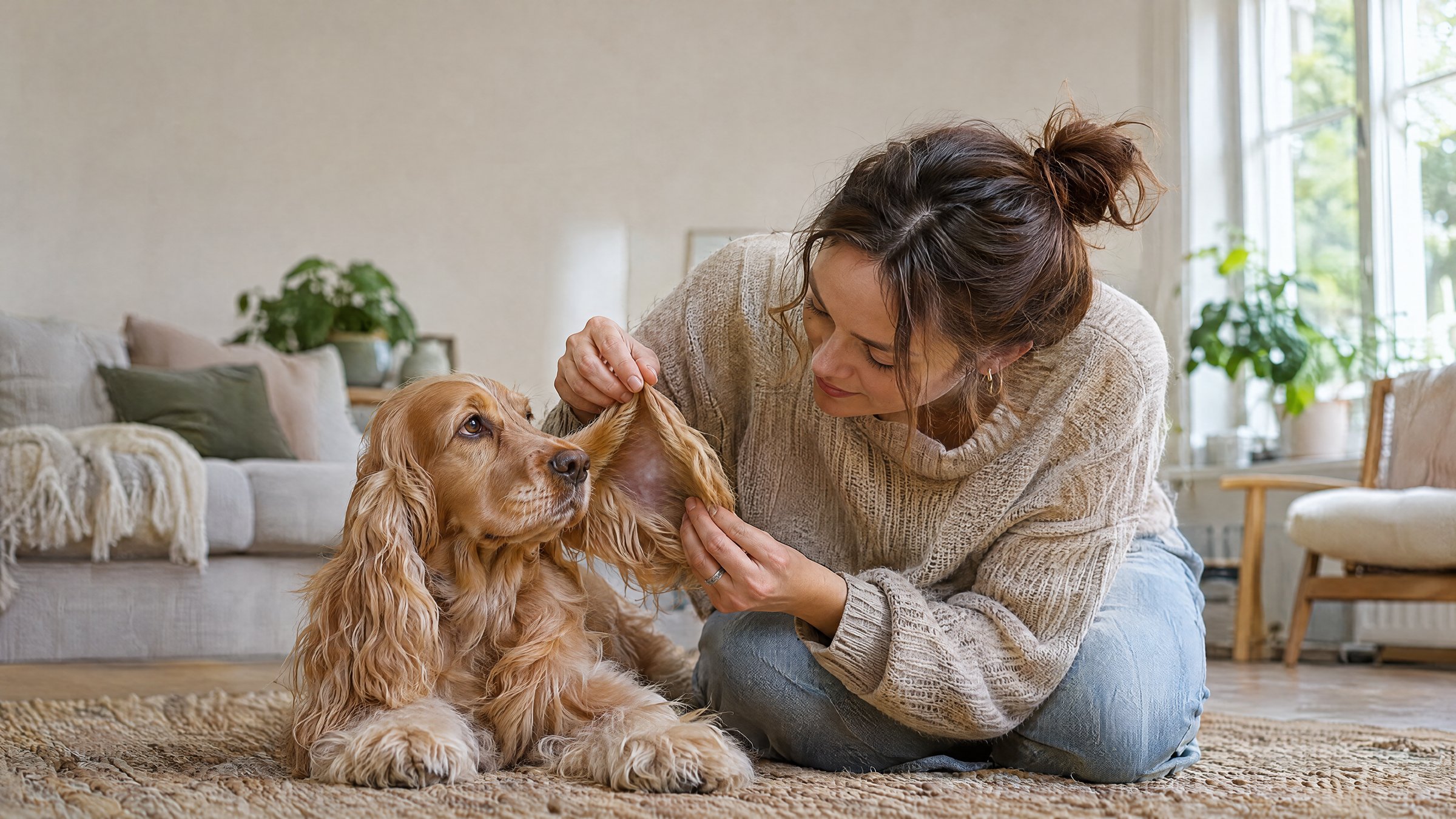
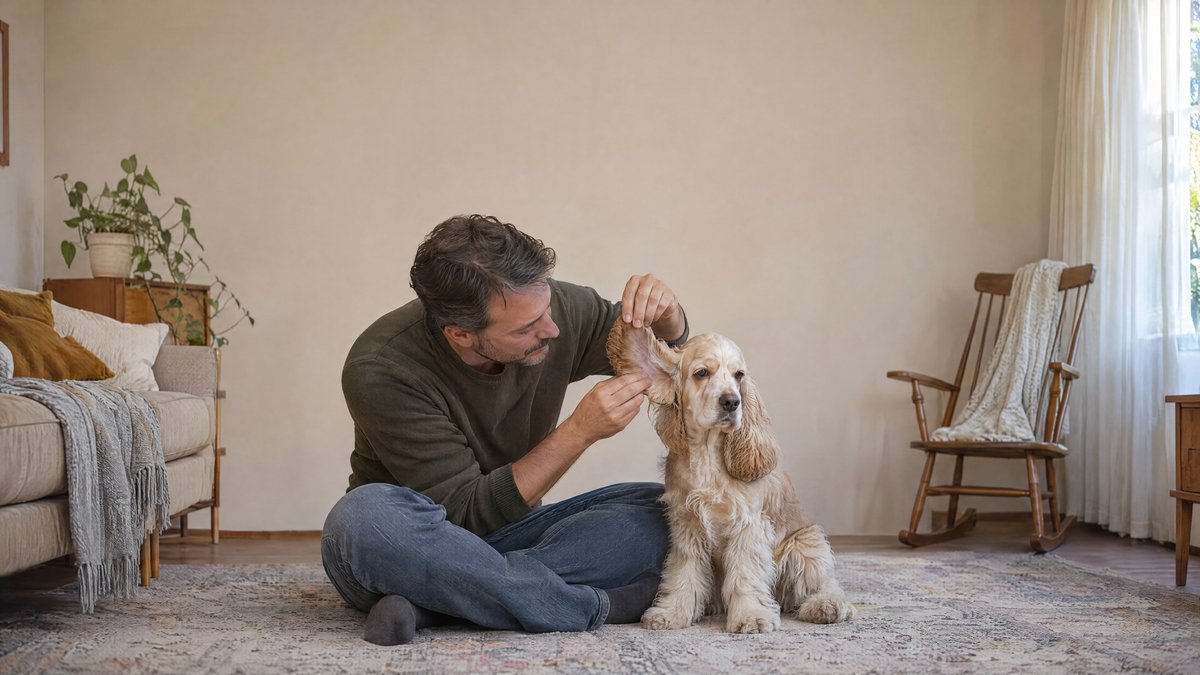
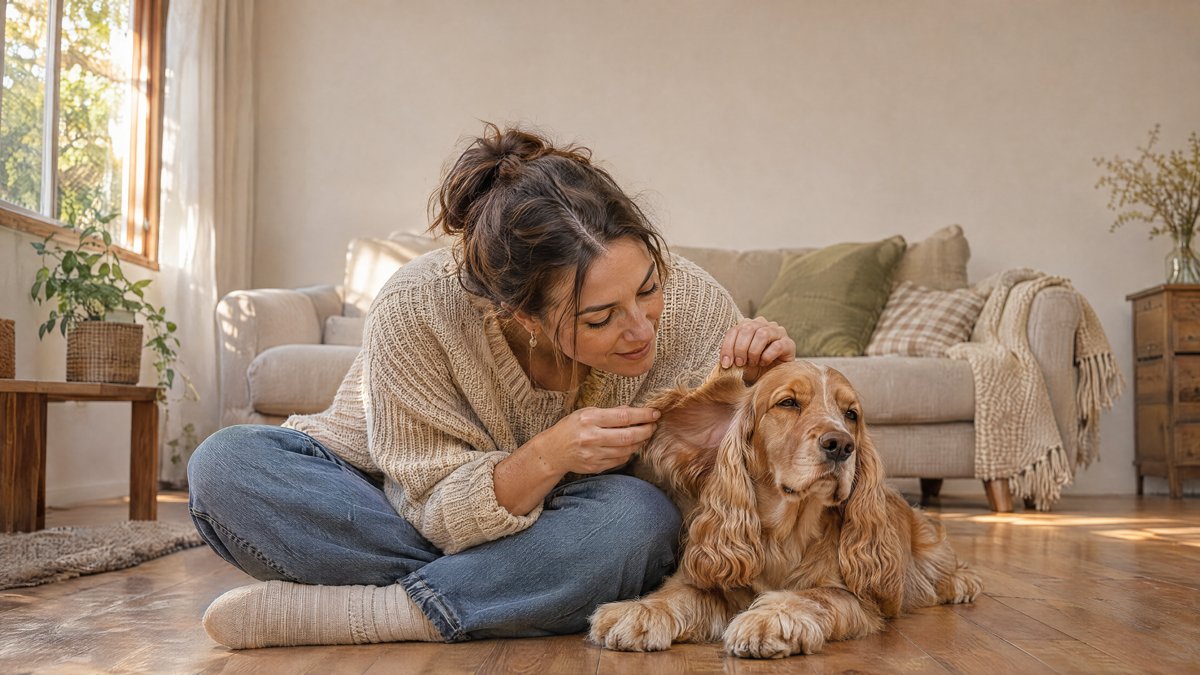
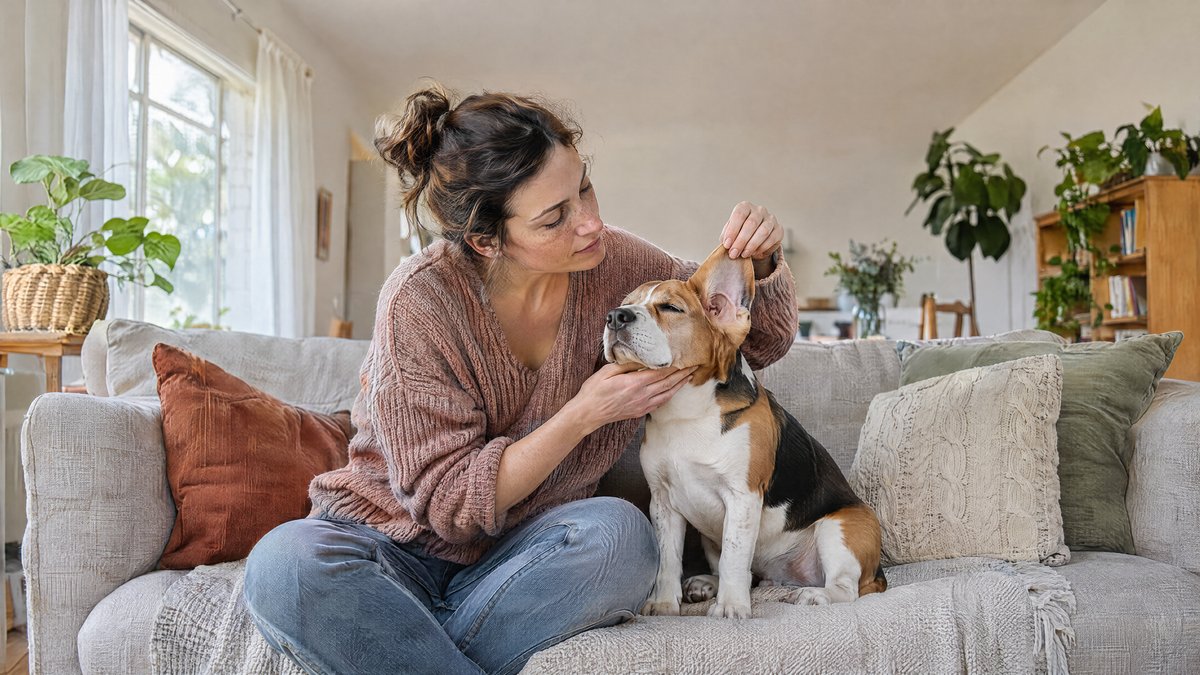
With a floppy-eared dog the ear flap covers the opening, so you have to lift it to see anything. Pick a calm moment, such as a cuddle on the sofa, and go through this list.
- Lift the ear flap gently and look at the inside of the flap and the visible opening.
- Check the color. Pink and clean is the target. Redness is a vet topic.
- Check for dirt or wax. A little visible debris on the flap can be wiped away. A lot of wax or discharge is worth a vet’s eyes.
- Smell the ear. A mild odor or more head shaking than usual means it is probably time for a clean, per AKC. A strong yeasty smell means call your vet.
- Watch your dog’s reaction. Pulling away, scratching or yelping are signs of discomfort.
- Reward calm behavior with a treat so the check stays a good moment.
How to clean a floppy-eared dog’s ears
Clean only when the check shows dirt or debris. Cornell and AKC both say over-cleaning can irritate the ear. When you do clean, keep it gentle.
| Do | Don’t |
|---|---|
| Use a pet-specific ear product your vet is comfortable with | Use products with alcohol or hydrogen peroxide (Cornell) |
| Use cotton pads, cotton balls or gauze | Use cotton swabs or anything pointed (Cornell, AKC) |
| Wipe only as far as your finger easily reaches, about one knuckle in, then out to the flap | Push deep into the canal |
| Stop and call your vet if your dog seems in pain | Clean an ear that looks inflamed or smells yeasty (AKC) |
Cornell’s own steps are to apply the cleaning solution, gently massage the base of the ear, let your dog shake its head, then wipe away loosened debris with cotton pads from the inside out. Do not squeeze liquid in forcefully or insert the bottle tip into the ear, because Cornell warns that this can create pressure inside the canal. Our full walkthrough is in how to clean your dog’s ears at home.
For timing, see how often to clean your dog’s ears. Cornell gives every 1–2 weeks as a typical maintenance range for dogs prone to ear trouble, and says a dog with normal ears only needs a clean when debris shows.
After swimming and baths
Cornell recommends a routine ear clean whenever the ears get wet, such as after swimming or bathing. AKC says to keep water from entering the ear canals during baths, and that dogs who swim a lot may need their ears cleaned more often. Dry the outer ear and the flap with a clean towel afterward. If a wet-ear dog shows redness, smell or head shaking, ask your vet about it rather than adding more products.
How EarWipes fit into the routine
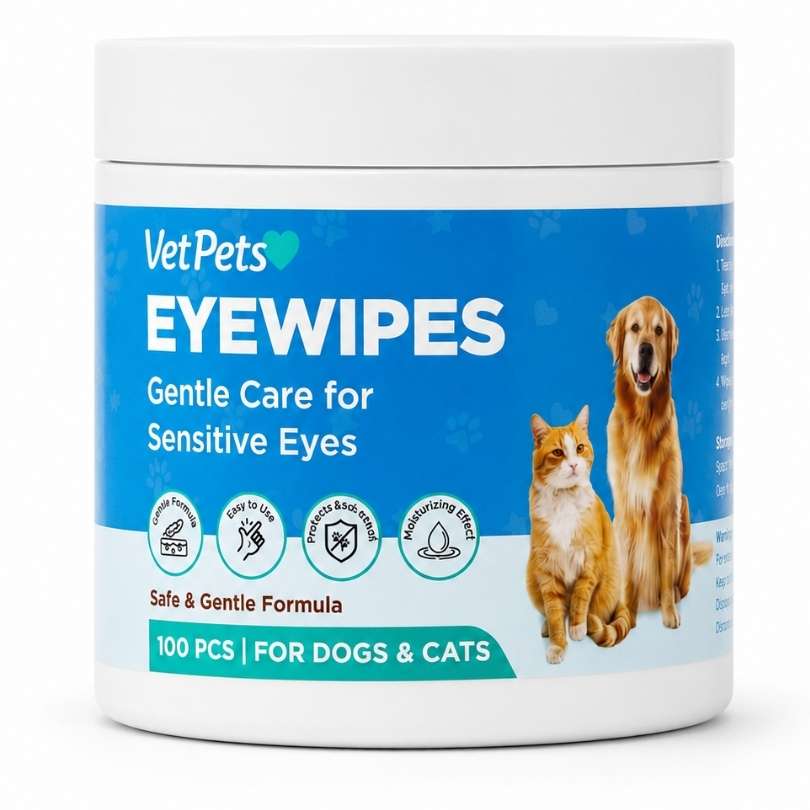
EarWipes are a finger wipe made for the outer ear. You slip one over a finger and wipe the ear flap and the part of the ear you can reach, to remove wax, buildup, debris and odor, with no liquid to pour. They suit the weekly check: look at the ear, and if there is visible dirt, wipe it away.
EarWipes are part of routine care. They do not reach the deep ear canal, they are not a treatment for an ear infection, and they do not replace a vet exam. Follow the directions on the pack for how often to use them.
When to see your vet
Home care keeps the outer ear tidy. It cannot diagnose or treat an infection. Contact your vet if you notice:
- Redness or swelling of the ear
- A yeasty or strong smell
- Discharge or a lot of wax
- Repeated head shaking or scratching at the ear
- Pulling away or crying when the ear is touched
- Ear trouble that keeps coming back
Cornell notes that these signs can also appear with allergic ear disease even when there is no infection, so only your vet can tell what is going on. Ask them how often your dog’s ears should be cleaned.
Frequently asked questions
Do floppy-eared dogs get more ear infections?
AKC says breeds with long ears, such as Basset Hounds and Cocker Spaniels, are among those with the highest risk of ear infections, but any dog can get one. Cornell adds that ear conformation, allergies and ear mites are common underlying causes.
How often should I clean a floppy-eared dog’s ears?
Cornell says dogs with floppy ears, allergies or past infections may need cleaning more often than other dogs, and gives every 1–2 weeks as a typical maintenance range. A dog with healthy ears only needs a clean when dirt or debris shows. Ask your vet what suits your dog.
Should I clean my dog’s ears after swimming or a bath?
Yes. Cornell recommends a routine ear clean when the ears get wet, such as after swimming or bathing, and AKC says to keep water from running into the ear canal during baths.
Can I use cotton swabs on my dog’s ears?
No. Both Cornell and AKC say to avoid cotton swabs, because they can push debris deeper into the canal. Clean only as far as your finger easily reaches, about one knuckle in.
Can I use hydrogen peroxide or alcohol?
Cornell says to avoid ear products containing alcohol or hydrogen peroxide, and AKC says hydrogen peroxide can irritate the sensitive tissue of the ear. Use a pet-specific product your vet is happy with.
When should I see a vet about my dog’s ears?
Contact your vet if the ear is red or inflamed, smells yeasty, has a lot of discharge or wax, or your dog shakes its head, scratches the ear or pulls away when you touch it. Do not clean an ear that may be infected, because AKC says that can do more harm than good.
Sources
- Cornell University College of Veterinary Medicine: How to Clean Your Dog’s Ears
- American Kennel Club: How to Clean a Dog’s Ears
Reviewed by the VetPets Care Team. This guide is educational and does not replace advice from your veterinarian.
A quick look and a quick wipe, every week.
One small habit for those lovely long ears. Every order is covered by our 100-Day Money-Back Guarantee.
See EarWipes