




Eye Care for Flat-Faced Dogs: Frenchies, Pugs and Bulldogs
Why flat-faced breeds are prone to eye trouble, a calm daily routine for the eye area and folds, and the signs that mean a same-day vet call.
The short answer
Flat-faced dogs such as French Bulldogs, Pugs and Bulldogs have shallow eye sockets, so the eyes sit forward and are harder to protect. A calm daily wipe around the eyes and folds keeps the area clean, but it does not replace vet care. Redness, squinting, cloudiness or a change in tearing in these breeds should get a prompt call to your vet.
Key takeaways
- The Kennel Club says shallow eye sockets mean many flat-faced dogs cannot fully blink, which dries parts of the cornea.
- Corneal ulcers are the most common problem. They are painful and can progress quickly.
- These dogs may react less to touch on the eye surface, so an ulcer can go unnoticed.
- ACVO recommends a veterinary eye exam at least once a year for flat-faced pets.
- Home care means keeping the skin around the eyes clean. Never put anything on the eye surface yourself.
In this guide
Why flat faces and eyes are a tricky mix
Brachycephalic means “short-headed”. In breeds like Pugs, Bulldogs, Shih Tzus and French Bulldogs, the skull shape leaves a shallow eye socket. The Kennel Club notes that this makes the eyes look prominent, or “bulging”, and that many of these dogs cannot blink completely. Parts of the cornea, especially in the center of the eye, can then dry out.
Two more features add to the load. Eyelid shape can differ, with lids that turn in (entropion) or out (ectropion), which can dry the cornea or let lashes touch it. And in some dogs the nasal fold rests against the eye, so skin or hairs rub the surface directly.
How common is it? A published study of 93 dogs with brachycephalic ocular syndrome found corneal ulcers in 44%, corneal pigmentation in 36%, corneal fibrosis in 25% and entropion in 22%. These were dogs seen at a clinic, so the numbers show how often problems appear together, not how likely any one dog is to get them.
Warning signs to watch every day
The Kennel Club says corneal ulcers are extremely painful and can develop and progress rapidly. Signs include a squinting or closed eye, excessive blinking, sensitivity to light and rubbing at the eye with a paw. ACVO adds redness, a cloudy or bluish haze, increased tearing or a change in discharge, and a “divot” on the eye surface.
Here is the catch: the Kennel Club notes that flat-faced dogs are often less responsive to touch on the eye surface, so they may not show the usual signs. A quick daily look when you clean the face is your best early warning. If anything looks different from yesterday, call your vet.
A gentle daily routine for the eye area
The goal is simple: keep tear residue and dirt from building up around the eyes, and spot changes early. It takes about a minute.
- Wash your hands. Choose a calm moment, such as after a walk or before a meal.
- Look first. Check both eyes for redness, cloudiness, squinting or new discharge. If something is off, stop and call your vet.
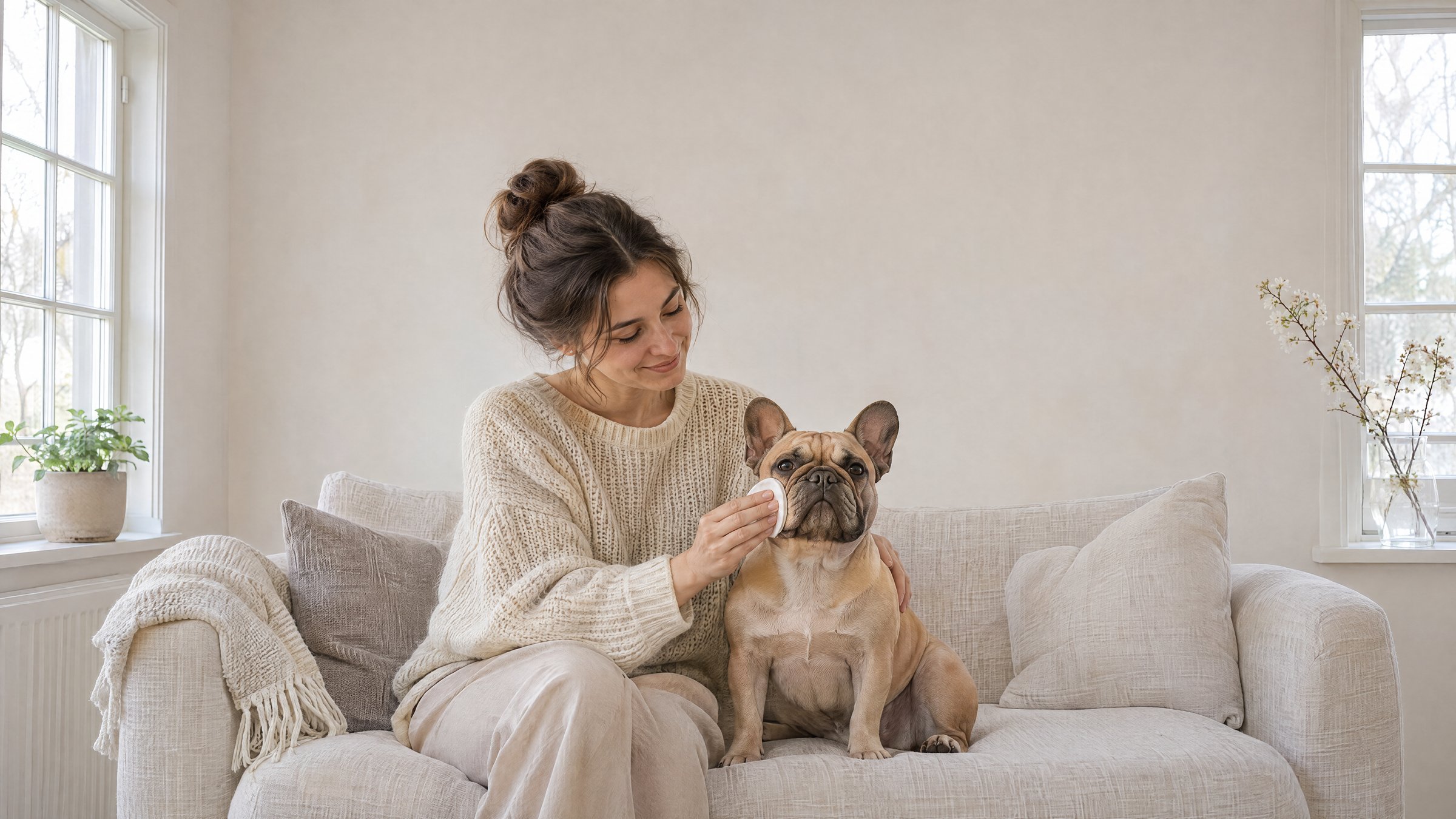
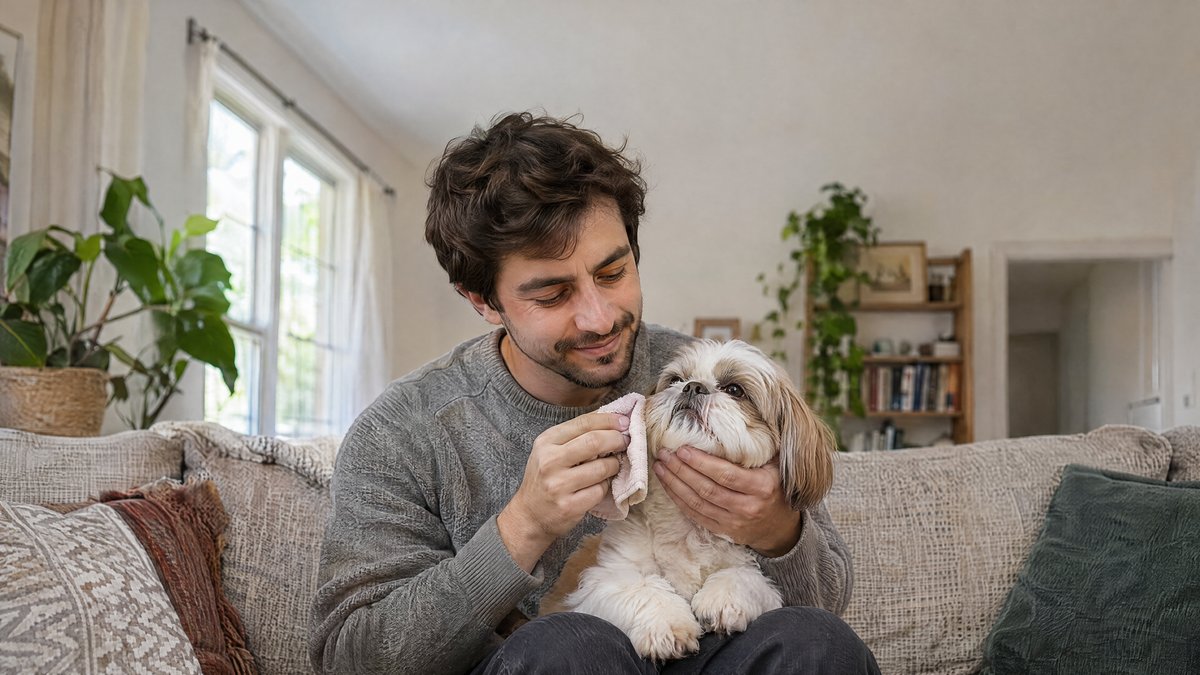
- Wipe the skin around each eye. Use a clean, soft, dog-safe pad and move from the inner corner outward. Use a fresh pad for each eye.
- Never touch the eye surface. Do not hold the eye open or use anything that could scratch.
- Dry the area gently. Damp skin stays irritated longer.
- Finish with praise or a treat so your dog stays happy to be handled.
Folds, tear stains and the skin under the eyes
Many flat-faced dogs have tear stains and creases close to the eyes. Tearing is a symptom, not a diagnosis: when tears do not drain well, they can spill over onto the face. Our guide to what causes tear stains in dogs explains the breeds and causes, and why a dog’s eye waters covers the vet side.
Daily wiping keeps residue from sitting on the skin. If the skin under the eyes looks red, sore or smells, or if the stains appear suddenly, that is a reason for a vet check rather than more cleaning. Our safe eye-cleaning guide shows the technique step by step, and the dog eye care hub links all the eye guides together.
What your vet will do
The Kennel Club says a vet will examine the eye and use a dye to check the cornea for an ulcer, may test tear production with a strip, and may swab for bacteria. Treatment can include pain relief, antibiotic eye drops and a collar to stop your dog pawing at the eye, and some dogs need long-term tear replacement drops. Deeper ulcers may need surgery.
ACVO describes lifelong lubricating drops for some dogs, and surgery to correct eyelid or fold problems for others. Early treatment reduces the risk of future ulcers. Your vet will choose what suits your dog.
How EyeWipes fit into the routine
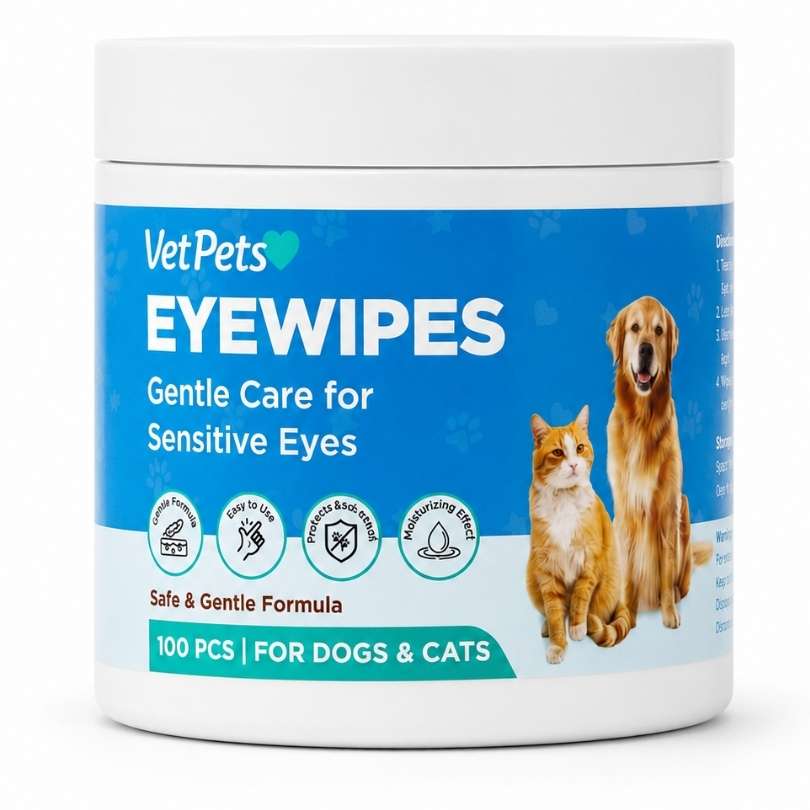
EyeWipes are a textured round pad that you hold directly to the eye area to remove tear residue, dirt, discharge and buildup. The formula is pH-balanced and fragrance-free, free from alcohol, parabens and sulfates, and is suitable for dogs and cats. A session takes about 30 seconds, and each container holds 100 wipes.
EyeWipes are part of a daily-care routine. They are not a treatment for any eye condition, including ulcers, and do not replace a vet exam. Follow the directions on the pack, and talk to your vet before starting any new eye product.
When to see your vet
In flat-faced breeds, do not wait and see. Contact your vet promptly if you notice:
- Redness, eye rubbing or squinting, even if mild
- An eye held closed or excessive blinking
- Cloudiness or a blue or hazy look
- More tearing, or discharge that changes color or thickness
- A dent or “divot” on the eye surface
- Pawing at the face or sensitivity to light
- Sore, red or smelly skin in the folds under the eyes
Both the Kennel Club and ACVO say ulcers can worsen fast and may threaten the eye. Book a yearly eye exam as well, even when everything looks fine.
Frequently asked questions
Why do flat-faced dogs have so many eye problems?
The Kennel Club explains that brachycephalic dogs have shallow eye sockets, so the eyes look prominent and many dogs cannot blink fully, which dries parts of the cornea. Eyelid abnormalities and prominent nasal folds can add rubbing and damage.
How often should a Frenchie, Pug or Bulldog see a vet for its eyes?
The American College of Veterinary Ophthalmologists (ACVO) says flat-faced pets should have a veterinary eye exam at least once a year. Your vet may suggest more often depending on your dog.
Can I clean my flat-faced dog's eyes every day?
A gentle daily wipe of the skin around the eyes and the nearby folds is a common part of a care routine. Never touch the eye surface itself, never hold the eye open, and stop and call your vet if the eye looks red, cloudy or painful.
Is my dog's squinting just a flat-face thing?
No. ACVO lists redness, eye rubbing or squinting, even if mild, as a reason to seek veterinary attention immediately in these breeds. The Kennel Club says squinting, an eye held closed, excessive blinking and pawing at the eye can all signal a painful ulcer.
Why can an eye ulcer be easy to miss in a flat-faced dog?
The Kennel Club says brachycephalic dogs are often less responsive to touch on the eye surface, so they may not show the usual signs of an ulcer. It can then deepen before an owner notices. That is why changes in tearing, color or clarity are worth a call to your vet.
Do EyeWipes treat eye problems in flat-faced dogs?
No. EyeWipes are part of a daily-care routine for the area around the eyes. They are not a treatment for any eye condition and do not replace a vet exam.
Sources
- The Kennel Club: Eye problems in brachycephalic dogs
- American College of Veterinary Ophthalmologists: Understanding Brachycephalic Ocular Syndrome (BOS)
- Clinical signs of brachycephalic ocular syndrome in 93 dogs (Irish Veterinary Journal, 2021)
Reviewed by the VetPets Care Team. This guide is educational and does not replace advice from your veterinarian.
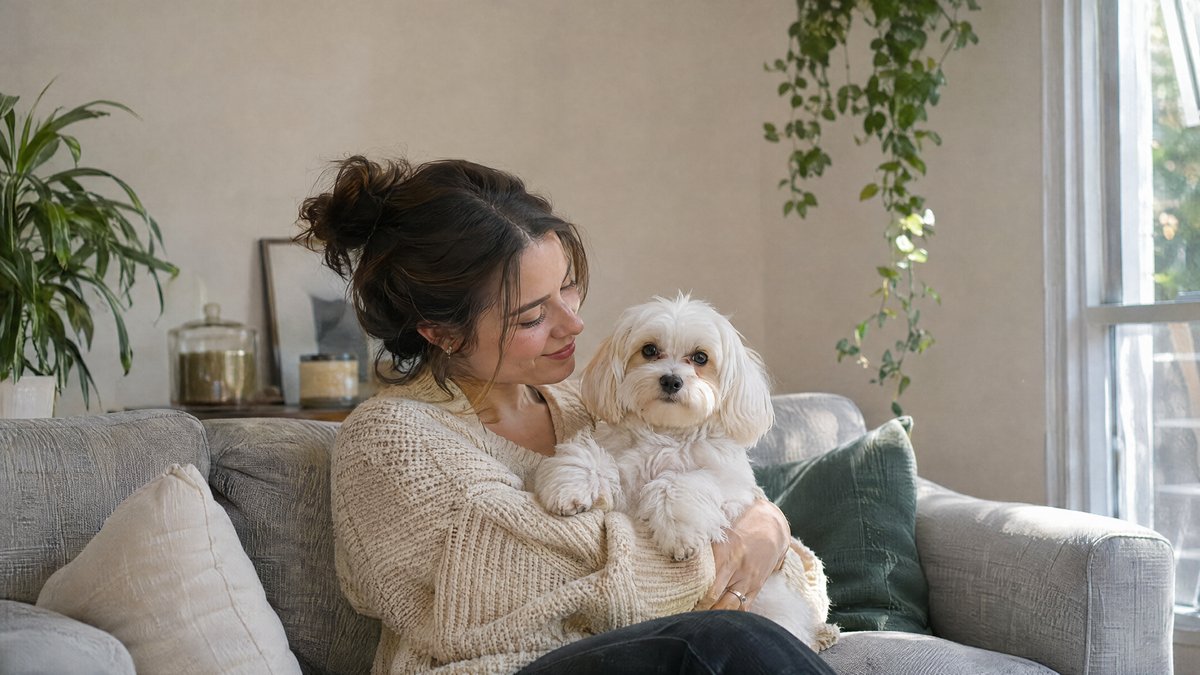
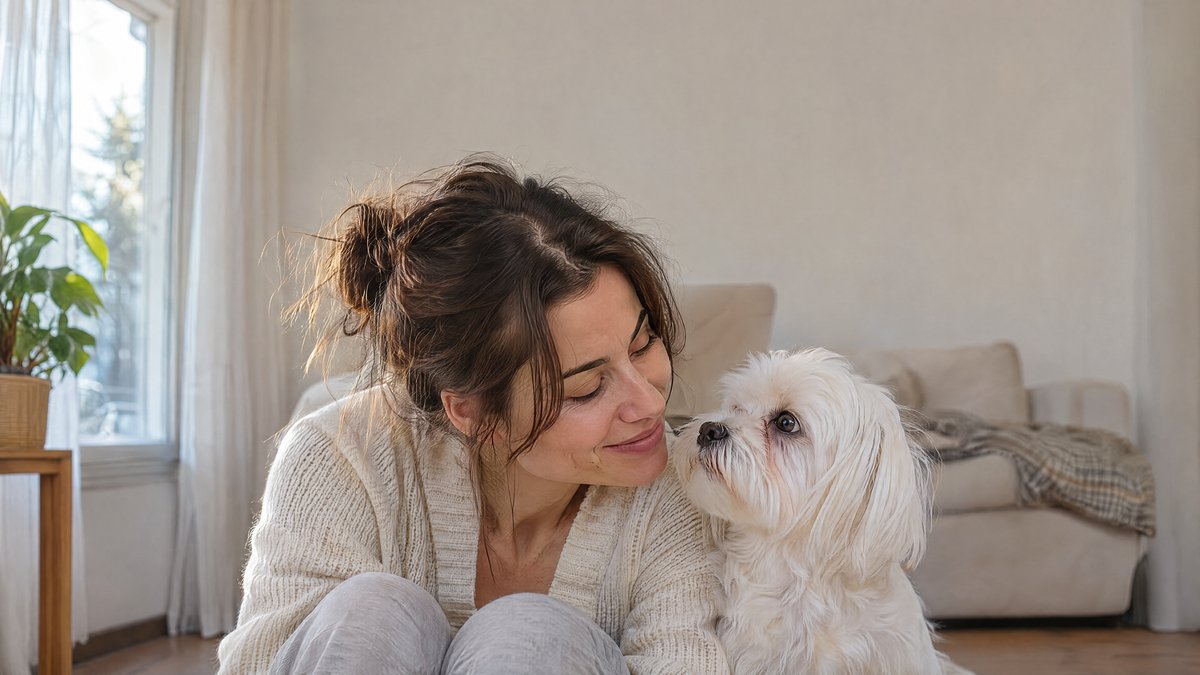
A calm minute a day, a vet check once a year.
One gentle wipe, a little praise, done. Every order is covered by our 100-Day Money-Back Guarantee.
Explore EyeWipes