


Puppy Teeth Care: When and How to Start
What to expect while baby teeth give way to adult teeth, how to build gentle mouth habits from the start, and when to ask your vet.

The short answer
You can start good mouth habits the day your puppy comes home: a few seconds of gentle lip-lifting and a treat. Baby teeth begin to fall out at around 12 weeks, and most puppies have all of their adult teeth by about 6 months. Keep chews soft enough to bend, check the mouth weekly, and call your vet if a baby tooth is still there when its adult tooth comes in.
Key takeaways
- Puppies have 28 baby teeth and up to 42 adult teeth. Swapping them takes roughly from 12 weeks to 6 months.
- Losing teeth, extra chewing and a little pink on a toy are normal. Heavy bleeding or a refusal to eat is not.
- Mouth handling is a training skill. Short, calm and rewarded sessions work best.
- Avoid chews that will not bend, such as nylon, bones and antlers.
- A baby tooth that stays when the adult tooth erupts usually needs your vet.
In this guide
The puppy teething timeline
According to VCA Animal Hospitals, puppies get their baby teeth from about 3 weeks of age, and all of them are in by around 6 weeks. These are the sharp “needle teeth” that make play-biting so memorable. Puppies have 28 of them and no baby molars.
Around 12 weeks the baby teeth begin to fall out as the permanent teeth push through. The Merck Veterinary Manual describes shedding as usually starting around 14 weeks with the upper central incisors, with baby teeth replaced by adult teeth over the following months. By about 6 months, VCA says, a puppy has all of its permanent teeth, up to 42 in total.
| Age | What is happening | What you can do |
|---|---|---|
| About 3–6 weeks | 28 baby teeth come in | Nothing yet; this usually happens with the breeder |
| 8–12 weeks | New home, baby teeth in place | Start gentle mouth handling with treats |
| About 12 weeks to 6 months | Baby teeth fall out, adult teeth erupt | Offer safe chews and check the mouth weekly |
| 6–7 months | Most adult teeth are in | Ask your vet to check the bite and any retained baby teeth |
What teething looks like at home
Teething shows up mostly as chewing. VCA describes intense chewing and mouthing as the main sign, and says some puppies lose teeth without you ever seeing them because they swallow them while eating. A little bleeding is common and is usually noticed only as slight red staining on a chew toy.
Expect a puppy that wants to chew everything within reach. That does not need treatment, but it does call for a plan: give your puppy things that are right to chew, and keep the rest out of reach.
- Normal: extra chewing, a few specks of blood on a toy, a missing tooth you never find.
- Worth a call to the vet: heavy bleeding, refusing food, a swollen face, or a baby tooth that is still firmly in place next to an adult tooth.
When to start dental care for a puppy
Start with habits, not tools. The Merck Veterinary Manual says daily brushing is best, and VCA recommends getting a puppy used to having things in its mouth early, because it makes teeth checks, and taking things out of the mouth, safer. Neither source gives a single starting age, so the practical answer is: as soon as your puppy is settled in your home, and only for a few seconds at a time.
Keep it light. Puppies are learning that hands near the mouth predict treats, not trouble. Brushing and wiping can come later, once your puppy relaxes into the handling. Your vet can show you the technique at a puppy visit, and VCA says most dogs learn to tolerate daily brushing.
Getting your puppy used to mouth handling
- Pick a calm moment. After play and a potty break, when your puppy is tired and relaxed.
- Touch the muzzle and lips, then give a treat. Repeat for a few days.
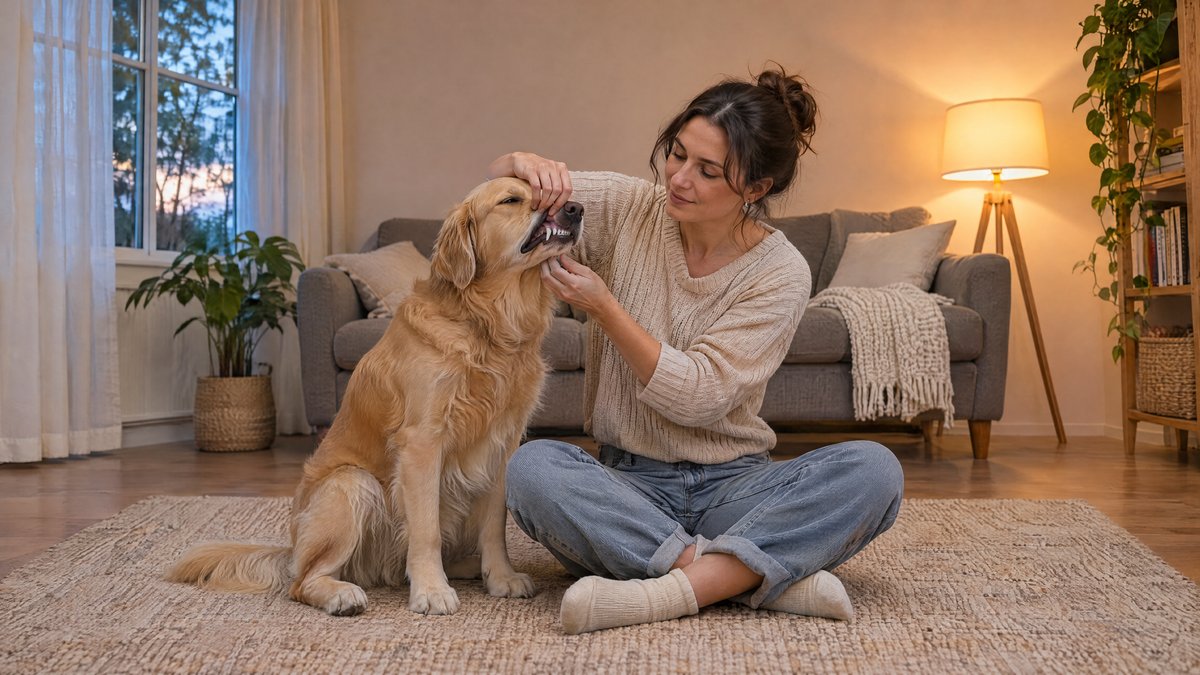
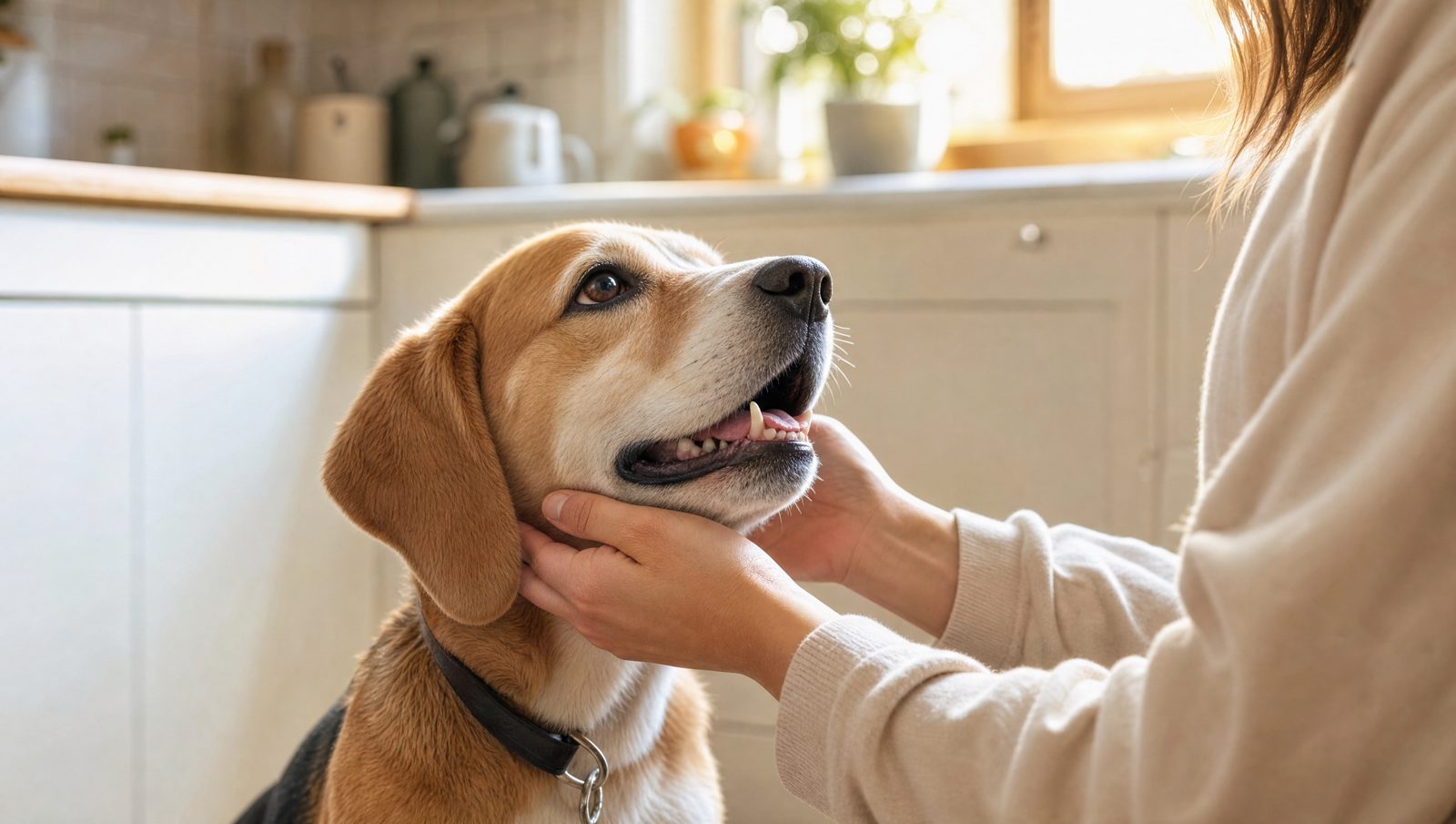
- Lift one lip for a second, look at the teeth, treat. Move from side to side.
- Let your puppy sniff and lick the brush or wipe before it touches the teeth. VCA says to introduce it gently and never force it.
- Stop while it is still fun. Ten calm seconds beat a minute of wriggling.
If your puppy mouths your hands, VCA suggests a high-pitched yelp, pulling your hand away and going to play elsewhere, so the puppy learns that hands are not toys. Ask the whole family to do the same, and do not let children roughhouse with the puppy.
Use a toothbrush and toothpaste made for dogs. The Merck Veterinary Manual says toothpaste made for people should not be used on dogs.
Safe chews for a teething puppy
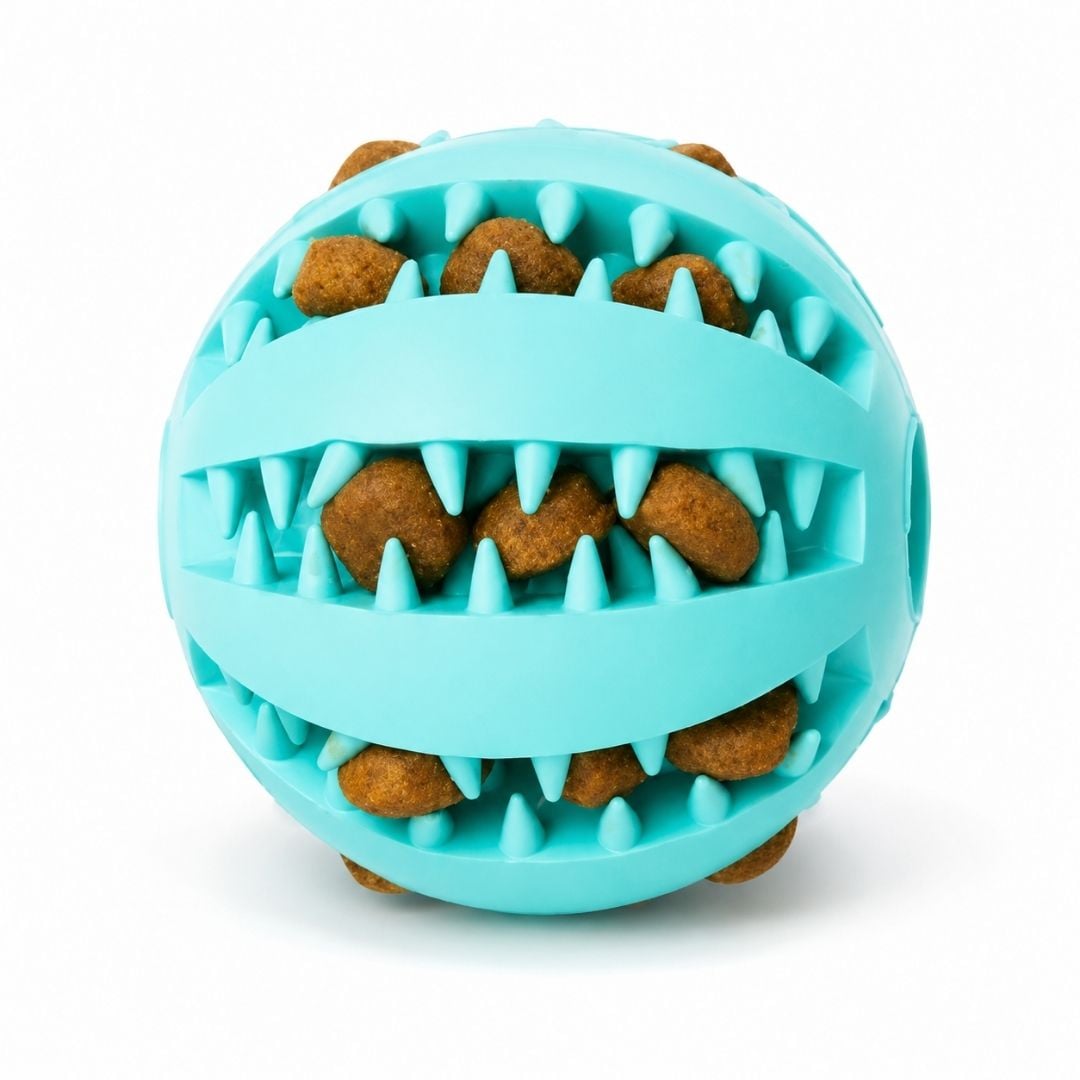
Chewing is how puppies cope, so give them somewhere to put it. VCA’s advice is to rotate a few toys, keep only some out at a time, use puzzle toys and feeders, and offer plenty of exercise and training. Remove tempting extras such as shoes and children’s toys.
What to avoid
- Anything that will not bend. VCA says dental specialists advise against nylon toys, bones and antlers, because hard items can break teeth.
- Rawhide, pig ears and bully sticks. VCA lists these among items that have caused intestinal blockages or choking in puppies.
- Unsupervised chewing. No toy is completely safe, so stay nearby, and ask your vet which chews suit your puppy’s size and age.
VCA adds that excessive chewing usually eases at around 18 months, although some chewing continues for life.
Baby teeth that do not fall out
Sometimes a baby tooth stays after the adult tooth comes in. VCA says this is most often a canine tooth, and is more common in small breeds and short-nosed breeds such as pugs, bulldogs and Boston terriers. The upper canines are the most commonly affected.
It matters because a retained tooth can push the adult tooth out of position. The Merck Veterinary Manual says removing retained baby teeth as soon as they are noticed usually prevents later complications, and VCA lists crowding, an abnormal bite and trapped food and plaque among the consequences of leaving them. VCA suggests checking your puppy’s mouth weekly until about 7 or 8 months. Your vet will decide when and how a tooth should come out.
How FreshWipes fit into the routine
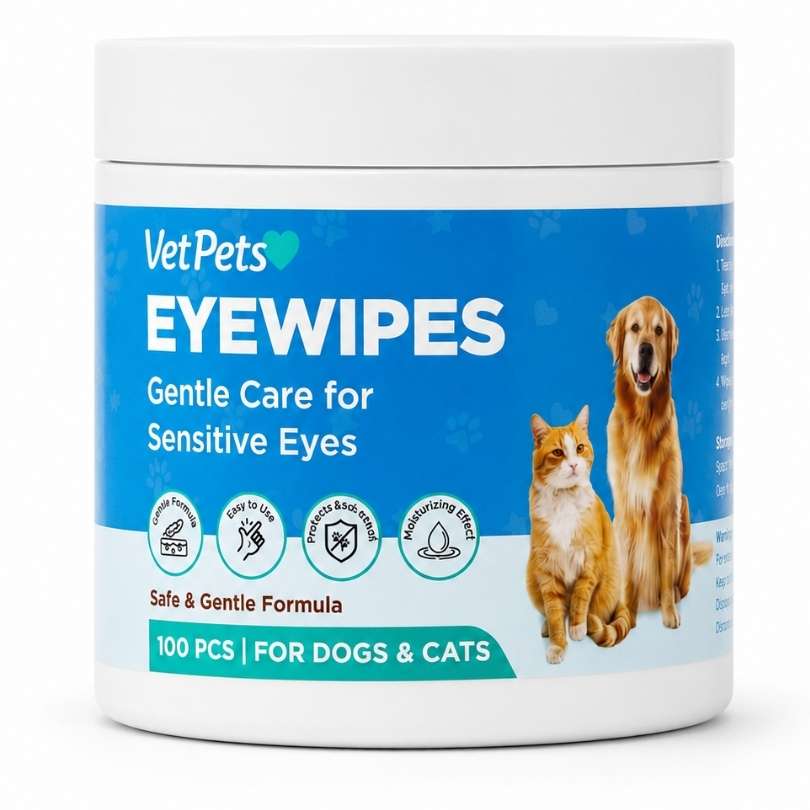
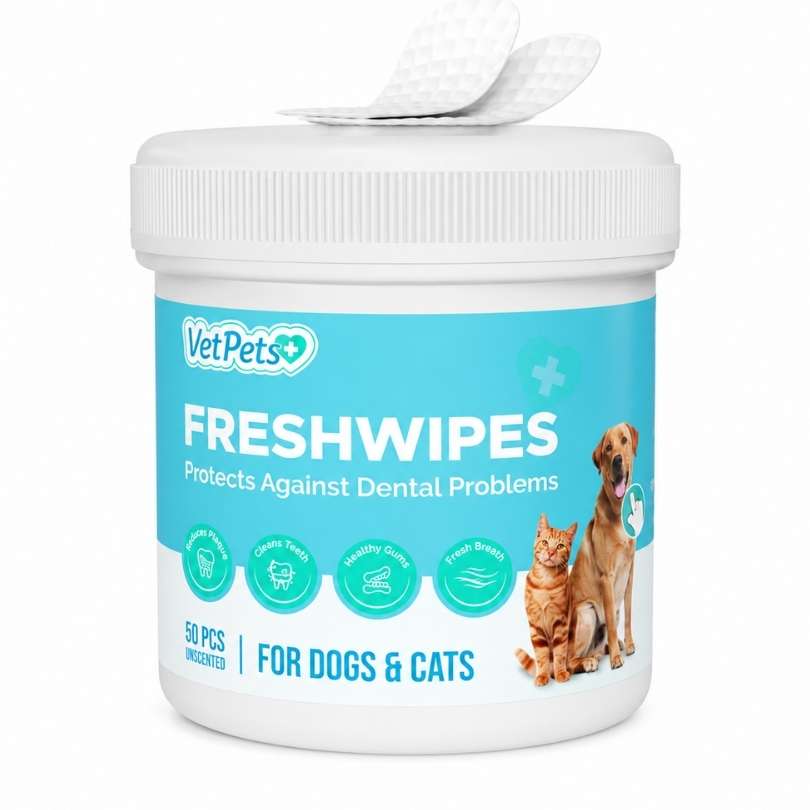
Once your vet is happy with your puppy’s mouth and the adult teeth are coming in, a daily wipe is an easy habit to build. FreshWipes are a textured finger wipe: they fit over one finger, need no toothbrush, and are used to physically scrub plaque and food debris from the teeth and along the gumline. They are fragrance-free, alcohol-free, fluoride-free and pH-balanced. Each container holds 50 wipes. Talk to your vet before starting any new dental product on a puppy.
FreshWipes are part of a care routine. They are not a substitute for veterinary dental care and they do not remove hardened tartar. Follow the directions on the pack. Prefer to see everything in one place? Browse the finger wipes collection, or read our dog dental care guide hub.
When to see your vet
Home habits keep things comfortable. They cannot judge a bite or fix a retained tooth. Contact your vet if you notice:
- A baby tooth still in place when the adult tooth erupts
- Heavy bleeding from the mouth
- Trouble eating or refusing food
- Swelling of the jaw or face
- Excessive or aggressive chewing
- An underbite, overbite or crowded teeth
- Bad breath that does not go away
- A broken or discolored tooth
Bring up your puppy’s teeth at every puppy visit. Your vet can check the bite, spot retained teeth early and show you how to brush.
Frequently asked questions
When do puppies start losing their baby teeth?
VCA reports that baby teeth start falling out at about 12 weeks, when the permanent teeth begin to erupt. Most puppies have all of their adult teeth by about 6 months.
How many teeth does a puppy have?
Puppies have 28 baby teeth and, as adults, up to 42 permanent teeth, according to VCA Animal Hospitals. Puppies do not have baby molars.
Is it normal for a puppy to swallow its baby teeth?
Yes. VCA notes that puppies often swallow baby teeth while eating, and that you may see a little red staining on a chew toy. If bleeding is heavy or your puppy seems in pain, call your vet.
What if my puppy’s baby teeth don’t fall out?
VCA says retained baby teeth most often affect the canine teeth of small and short-nosed breeds, and that they usually need to be removed. Ask your vet to check, and do not wait to see if it sorts itself out.
Can I use human toothpaste on a puppy?
No. The Merck Veterinary Manual says toothpaste made for people should not be used on dogs. Use a product made for dogs and ask your vet to show you the technique.
Which chew toys are safe for a teething puppy?
VCA advises against anything that will not bend, such as nylon toys, bones and antlers, because hard items can break teeth. Always supervise, rotate a few toys, and ask your vet which chews suit your puppy.
Sources
- VCA Animal Hospitals: Teeth, Teething and Chewing in Puppies
- VCA Animal Hospitals: Persistent Deciduous Teeth (Baby Teeth) in Dogs
- Merck Veterinary Manual: Dental Disorders of Dogs
Reviewed by the VetPets Care Team. This guide is educational and does not replace advice from your veterinarian.
Make it a calm part of their day.
One gentle wipe, a little praise, done. Every order is covered by our 100-Day Money-Back Guarantee.
Explore the daily routine