





Senior Dog Dental Care: A Gentle Daily Routine
Why older mouths need a little extra attention, the signs worth noticing, a calm daily routine you can keep up, and what to ask your vet.

The short answer
Senior dogs need dental care more, not less. Years of plaque and tartar add up, and gum disease that has taken hold is hard to reverse. Look in your dog’s mouth every week, keep up a gentle daily or near-daily cleaning habit, and ask your vet how often a professional cleaning makes sense, because older dogs may need one more than once a year.
Key takeaways
- Periodontitis usually begins at around 4 to 6 years of age and is irreversible once it starts, so earlier habits matter.
- Dental problems can cause loss of appetite and weight loss, especially in older dogs.
- Older or ill pets may need professional cleanings more often than once a year.
- Never use human toothpaste, and never scrape tartar from an awake dog.
- Go slowly. A calm, short, rewarded routine suits sore or stiff senior dogs best.
In this guide
Why older dogs need extra attention
Plaque is a soft film of bacteria that forms on teeth every day. Left in place it hardens into tartar, and tartar sits against the gums. VCA Animal Hospitals reports that over 80% of dogs over the age of three have active dental disease, and notes that most owners do not brush daily. By the time a dog is a senior, the mouth carries years of that buildup.
The Merck Veterinary Manual describes two stages. Gingivitis is inflammation of the gums only, and it can be reversed. Periodontitis also damages the ligaments and bone that hold the teeth, usually follows years of plaque, tartar and gingivitis, and “is irreversible and results in permanent loss of tooth support.” It usually begins at 4 to 6 years of age. The Merck Veterinary Manual also says small-breed dogs have more periodontitis than large breeds, and that the back teeth are affected more often than the front ones.
That is the good news hiding in the bad: you cannot undo what is already there, but a steady routine and regular vet checks can stop it from getting worse more quickly than it needs to.
Signs to watch for in a senior dog
Dogs hide mouth pain well. VCA says dental disease is often hidden, and that signs can include pawing at the mouth, head shaking or jaw chattering. A dog may also drop food, have trouble swallowing, drool heavily or have bad breath. VCA adds that dental problems can cause loss of appetite and weight loss, especially in older pets. For a senior dog, a change in eating is a reason to look at the mouth, not just to change the food.
The Merck Veterinary Manual says that in gingivitis the gums shift from coral-pink to red or purple, the gum edge swells, and the gums bleed when touched.
| What you see | What it might mean | What to do |
|---|---|---|
| Bad breath that lingers | Plaque and bacteria; sometimes more | Book a check-up; start a gentle routine |
| Dropping food or chewing on one side | Mouth discomfort | Call your vet |
| Red, swollen or bleeding gums | Gingivitis or worse | Call your vet |
| Eating less, losing weight | Dental pain, or another health issue | Call your vet soon |
Professional cleanings and older dogs
Home care keeps a clean mouth comfortable. It does not replace a veterinary cleaning. VCA says a full general anesthetic is required for dentistry, and that tartar removal on an awake dog is “cosmetic only” and does not diagnose or treat any dental disease that is present. A routine cleaning includes an oral exam, X-rays, and scaling and polishing above and below the gumline.
Many owners worry about anesthesia in an older dog, and that is a fair worry to bring to your vet. VCA says the vet will recommend pre-anesthetic testing, including bloodwork, to make sure there are no hidden health problems that could affect your pet’s ability to go through the procedure. VCA also says older or ill pets may need cleanings more often than once a year. The Merck Veterinary Manual adds that a dog that does not respond to gingivitis treatment should be checked for other conditions, such as immune problems and diabetes.
Your vet knows your dog’s heart, kidneys and history. Ask what the plan would be for your dog, how often to book, and how to prepare.
A gentle at-home routine for a senior dog
The Merck Veterinary Manual says daily toothbrushing is the best approach, and VCA recommends daily brushing with a soft brush. If your dog will not allow it, the Merck Veterinary Manual says wiping the teeth with gauze at least every 2 to 3 days can remove plaque, and only the outer tooth surfaces need cleaning. Here is a routine that suits an older dog.
- Choose the calmest time of day. After a walk and a meal, when your dog is relaxed.
- Get comfortable first. Sit on the floor or sofa so your dog does not have to stand or twist. Stiff joints make a long session uncomfortable.
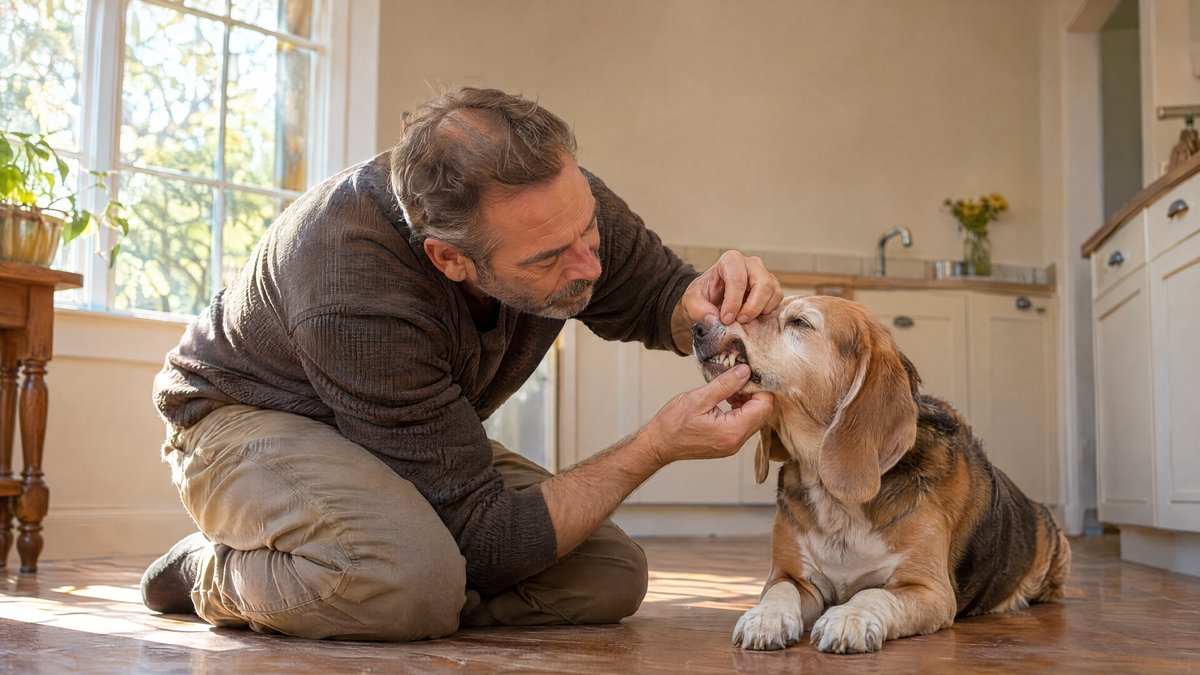
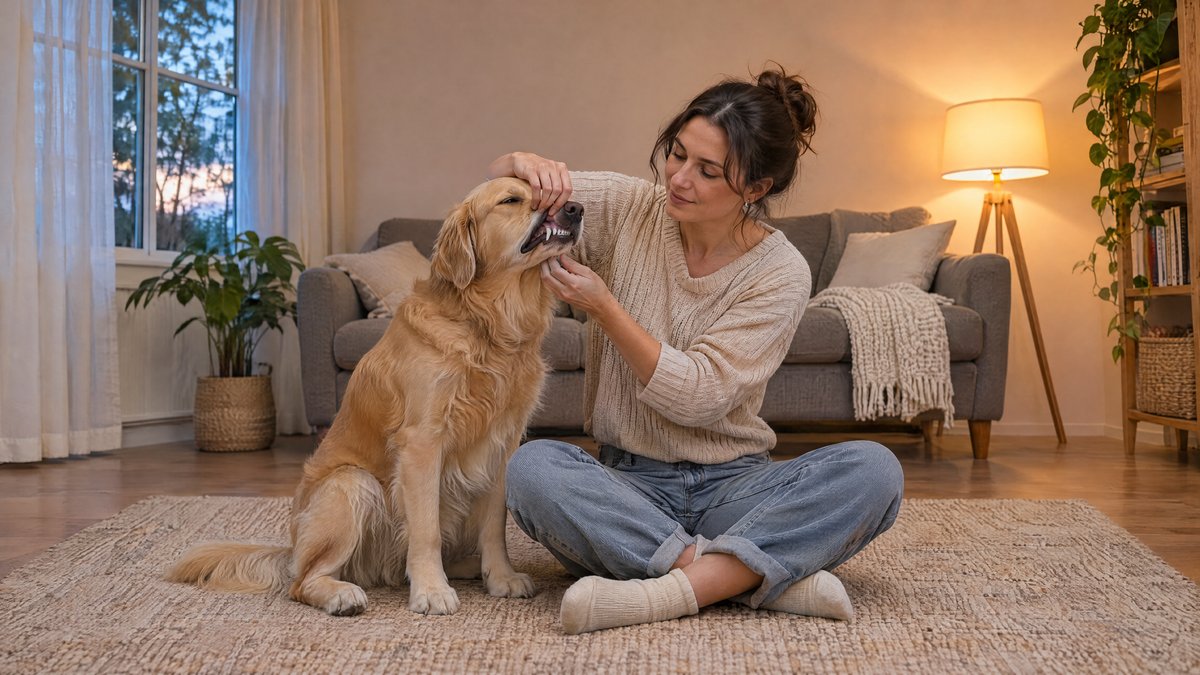
- Lift one lip, look, and praise. Check for red gums, loose or broken teeth and heavy tartar.
- Wipe the outer surfaces of the teeth, working along the gumline, one side at a time. Short and gentle beats thorough and stressful.
- Stop at the first sign of pain, growling or pulling away, and tell your vet.
- End with a reward. Praise or a favorite cuddle teaches your dog that the routine is safe.
Use a product made for dogs. The Merck Veterinary Manual says toothpaste made for people should not be used.
Making it comfortable
- Go slower than you think you need to. If your dog has never had its mouth handled, spend a week on touching the muzzle and lifting the lip before you add a wipe.
- Mind the neck and hips. Support the chin with a hand rather than tilting the head back.
- Skip the sore spot. If one area is red or tender, leave it and mention it to your vet.
- Keep it short. Thirty calm seconds every day is easier to keep up than five minutes now and then.
- Check chews with your vet. Hard chews can break teeth, and senior teeth may already be weakened.
How FreshWipes fit into the routine
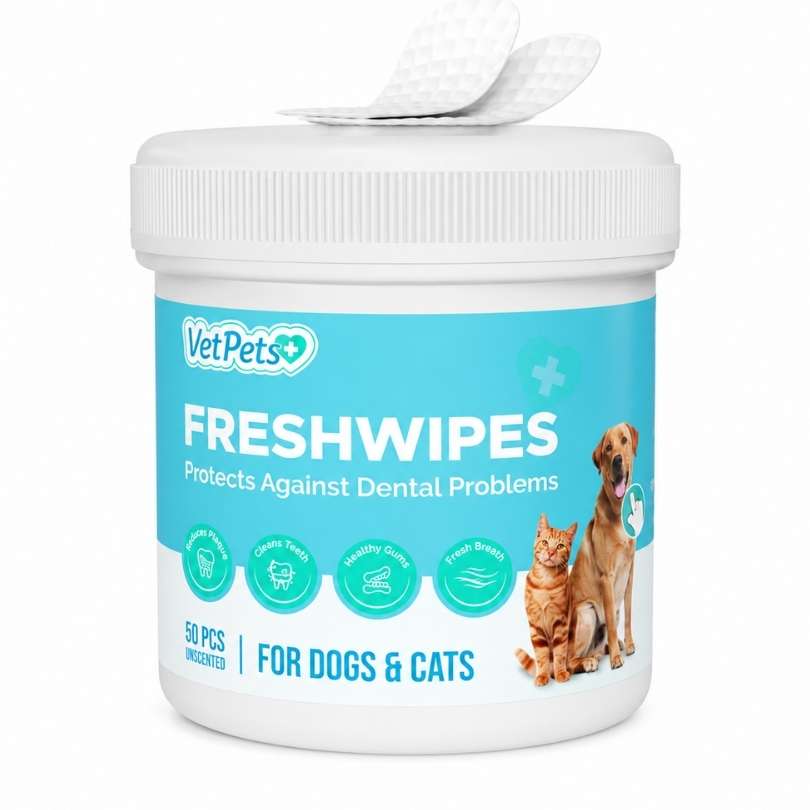
If brushing is a struggle for your senior dog, a finger wipe can be an easier habit. FreshWipes are a textured finger wipe: they fit over one finger, need no toothbrush, and are used to physically scrub plaque and food debris from the teeth and along the gumline. They are fragrance-free, alcohol-free, fluoride-free and pH-balanced, and each container holds 50 wipes. Talk to your vet before starting any new dental product on an older dog, and follow the directions on the pack.
FreshWipes are part of a care routine. They are not a substitute for veterinary dental care and they do not remove hardened tartar. Prefer to see everything in one place? Browse the finger wipes collection, or read our dog dental care guide hub.
When to see your vet
Home care keeps a mouth comfortable. It cannot diagnose or treat dental disease. Contact your vet if you notice:
- Bad breath that does not go away
- Dropping food or chewing on one side
- Pawing at the mouth, head shaking or jaw chattering
- Red, swollen or bleeding gums
- Heavy drooling or trouble swallowing
- Eating less or losing weight
- A loose, broken or discolored tooth
- Swelling of the face or jaw
Bring up your dog’s teeth at every senior check-up. Your vet can examine the mouth, advise on cleanings and rule out other causes.
Frequently asked questions
At what age is a dog considered a senior for dental care?
There is no single age. The Merck Veterinary Manual notes that periodontitis usually begins at about 4 to 6 years of age, so dental care matters well before your dog looks old. Ask your vet when your dog’s size and breed make senior check-ups sensible.
How often should a senior dog have a dental cleaning?
VCA says older or ill pets may need dental cleanings more frequently than once a year. Your vet will advise on the right schedule after examining your dog’s mouth.
Is anesthesia safe for an older dog’s dental cleaning?
VCA explains that a full general anesthetic is required for dentistry and that pre-anesthetic testing is recommended to check for hidden health problems. Your vet can weigh your dog’s age, health and bloodwork and talk you through the risks and benefits.
Can I just scrape tartar off an older dog’s teeth at home?
No. VCA says tartar removal on an awake dog is cosmetic only and does not diagnose or treat any dental disease that is present. Leave scaling to your vet, who can also check below the gumline.
What if my senior dog will not let me brush?
The Merck Veterinary Manual says that for dogs that will not allow brushing, wiping the teeth with gauze at least every 2 to 3 days can remove plaque. A textured finger wipe works in a similar way. Go slowly and stop if your dog is in pain.
Can I use human toothpaste on my dog?
No. The Merck Veterinary Manual says toothpastes made for people should not be used on dogs. Choose a product made for dogs, or ask your vet.
Sources
- VCA Animal Hospitals: Dental Disease in Dogs
- VCA Animal Hospitals: Dental Care Services
- Merck Veterinary Manual: Dental Disorders of Dogs
Reviewed by the VetPets Care Team. This guide is educational and does not replace advice from your veterinarian.
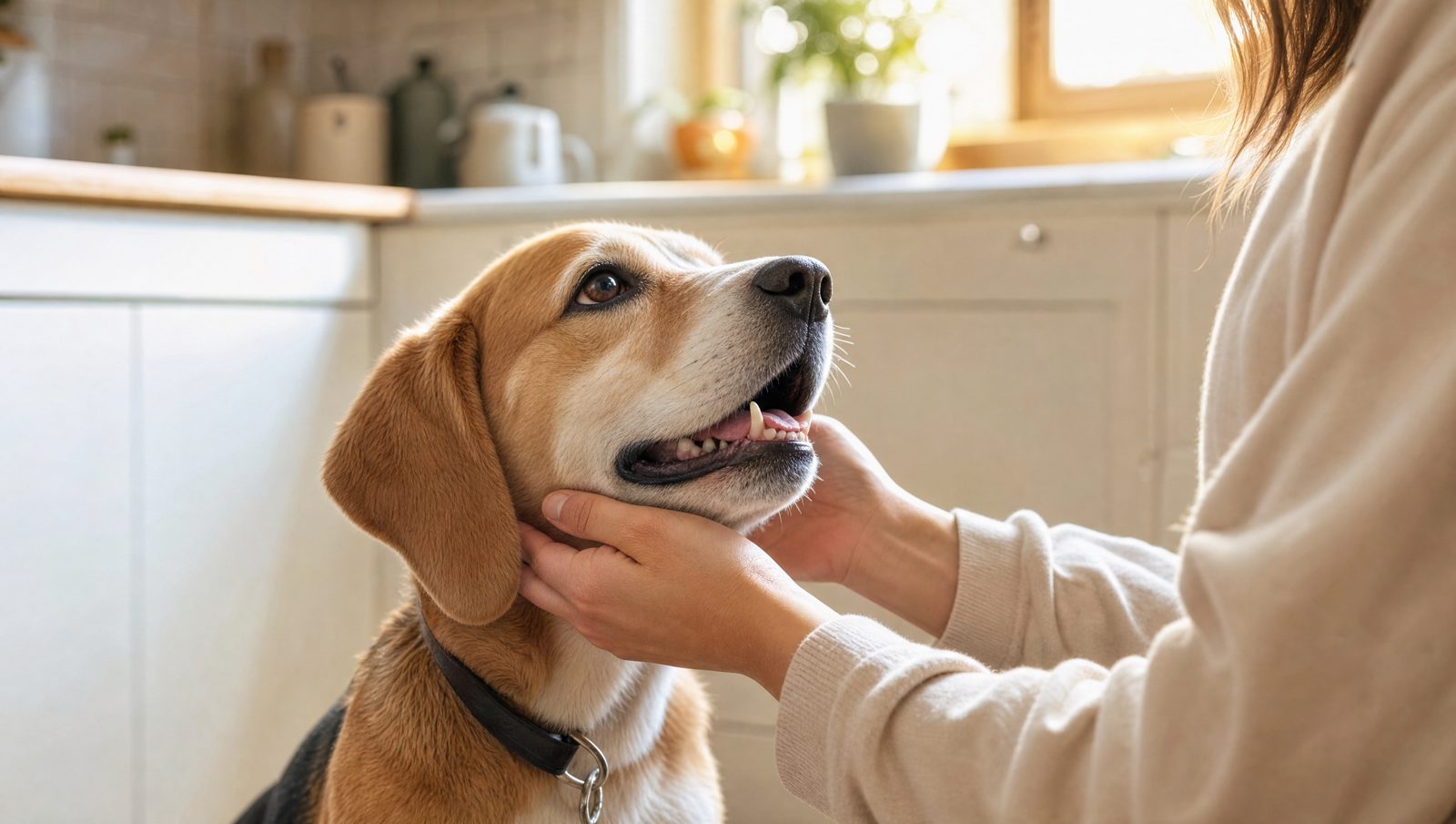
Make it a calm part of their day.
One gentle wipe, a little praise, done. Every order is covered by our 100-Day Money-Back Guarantee.
Explore the daily routine