






Signs of Dental Problems in Dogs
The early warning signs of dental trouble in dogs, what they can mean, and when to call your vet.
The short answer
The most common signs of dental problems in dogs are bad breath, red or swollen gums, visible tartar, dropping food or chewing on one side, and pawing at the mouth. Dogs hide pain well, so many show few signs at all. A weekly look at the teeth and gums helps you catch changes early, and any of these signs is a reason to book a vet visit.
Key takeaways
- VCA reports that over 80% of dogs over three have active dental disease, so it is worth checking even if your dog seems fine.
- Bad breath, red gums, tartar, drooling and dropping food are the signs owners notice first.
- Dogs mask pain, so a quiet dog is not proof of a healthy mouth.
- Gingivitis is the only truly reversible stage, so early action matters.
- Broken, loose or discolored teeth, facial swelling and refusing food need your vet.
In this guide
Quick checklist: what to look for
| What you notice | What it can point to | What to do |
|---|---|---|
| Bad breath | Plaque and gum irritation | Start a daily routine; mention it to your vet |
| Red or swollen gums | Gingivitis | Book a check; re-check if it does not improve |
| Brown buildup at the gumline | Plaque and tartar | Daily wiping; ask about a professional cleaning |
| Dropping food, chewing on one side | Mouth pain | See your vet |
| Broken or discolored tooth | Damage that may reach the pulp | See your vet |
Bad breath and drooling
Bad breath is the sign owners spot first. The Merck Veterinary Manual says bad breath is common with gingivitis, and VCA lists halitosis among the signs of dental disease. VCA also lists excessive drooling, sometimes with blood in the saliva.
A little dog breath after a meal is normal. Breath that is strong every day, new, or paired with drooling is worth raising with your vet. Our guide on why your dog's breath smells goes through the common causes.
Gum changes and tartar
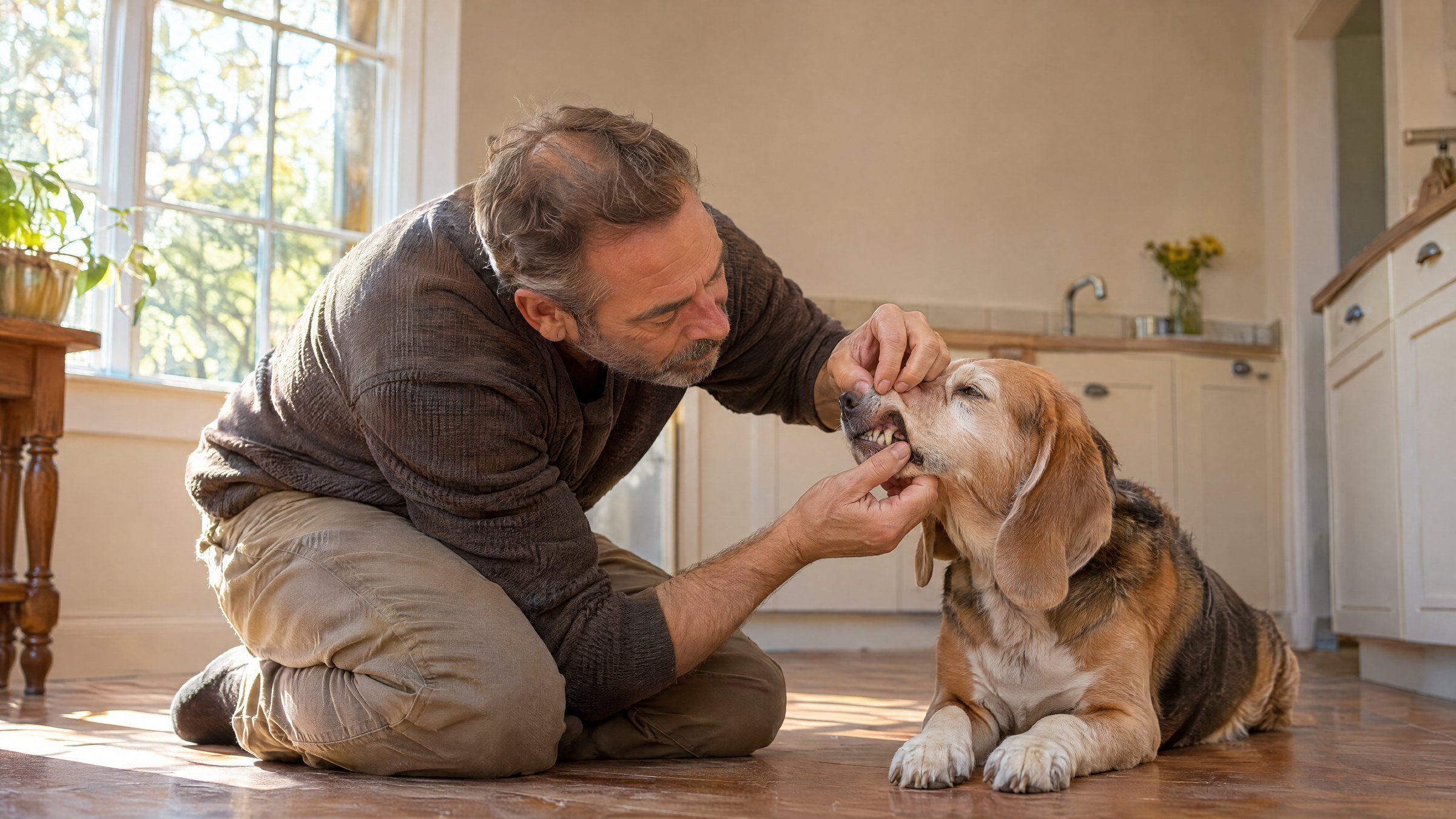
Healthy gums are coral-pink. Merck describes gingivitis as gums that change from coral-pink to red or purple, with a swollen edge, and says they may bleed when touched. Lift your dog's lip gently and look at the gumline in good light.
Brown or yellow buildup along the gumline is plaque turning into tartar. Merck links buildup at the gumline to gum disease and says the most important thing to remember is that gum disease will not develop around clean teeth. Read plaque vs tartar in dogs for how the two differ.
Changes in behavior
Because dogs hide pain, behavior is often the clue. VCA says few dogs show obvious signs of dental disease, and lists these possible ones:
- Pawing at the mouth or rubbing the face on furniture.
- Head shaking and jaw chattering.
- Discomfort while chewing, or dropping food.
- Difficulty swallowing.
Merck adds that a painful tooth may make a dog resist having its face touched or tapped, and that reduced appetite can be a sign too.
Teeth that look wrong
Merck describes a tooth that turns reddish-brown, purple or gray, a visible fracture, or a red or black hole on the crown as reasons for a closer look. It says fractured teeth should be inspected by a veterinarian to check for pulp damage. Facial swelling and, in advanced cases, draining tracts called fistulas also need a vet.
VCA warns that untreated disease can destroy the bone around the teeth, leading to loose teeth, abscesses and jaw fractures. That is why a small change is worth a call rather than a wait.
Why dental problems happen
Plaque builds up on teeth every day. Left in place it hardens into tartar and irritates the gums. VCA says gingivitis is always the first stage of periodontal disease and the only truly reversible one. Merck says gingivitis is often first noticed around 2 years of age and periodontitis usually begins at 4 to 6 years.
Small and short-nosed breeds are more at risk, according to VCA and Merck. Merck also says dogs that regularly eat hard kibble tend to develop fewer problems, and that regular professional cleanings and dental exams help. A professional cleaning needs a full general anesthetic, so it is done by your vet.
How to check your dog's mouth at home
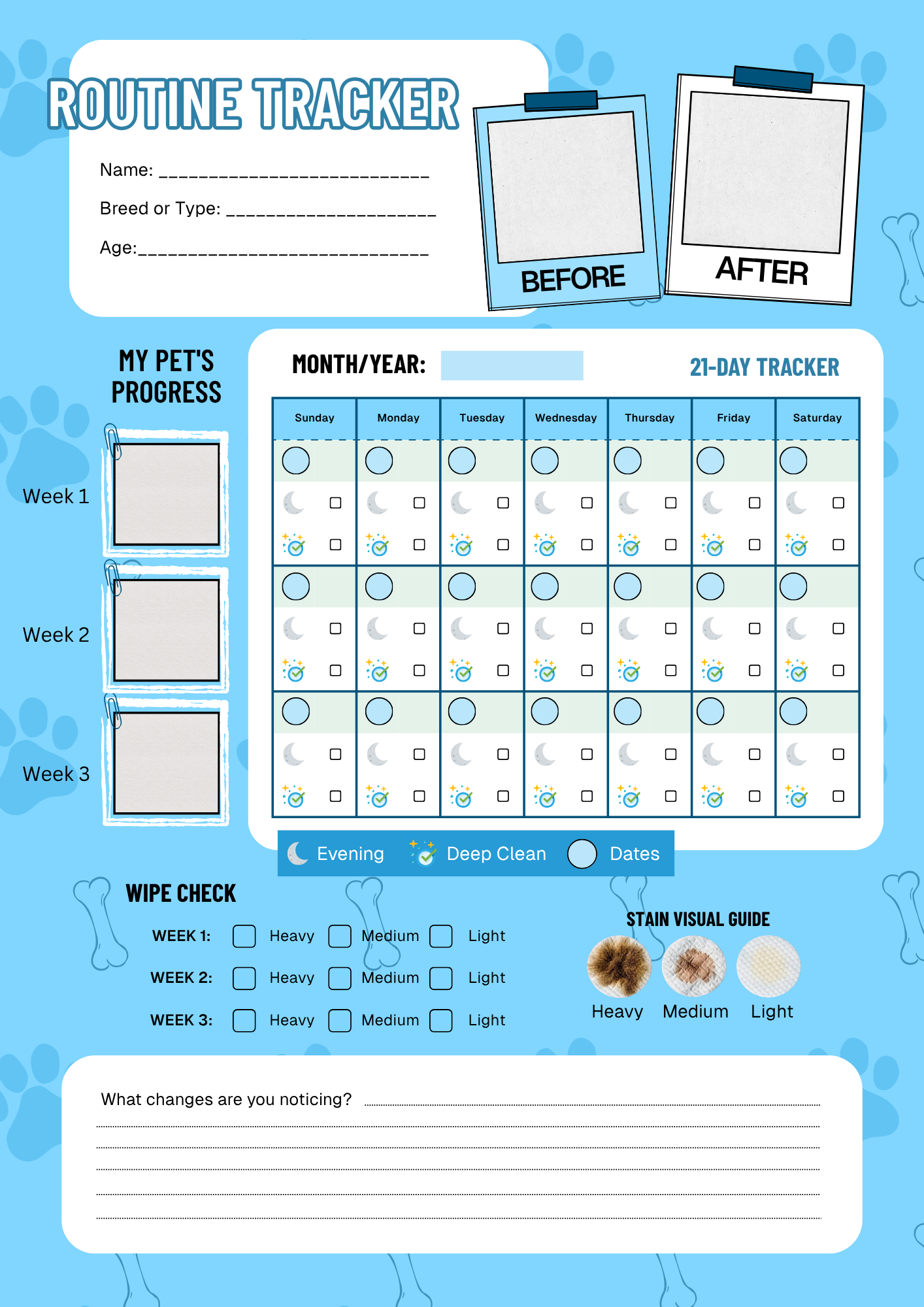
- Pick a calm moment, with good light and a few treats ready.
- Lift the lips gently on each side. Look at the gum color and the teeth.
- Note changes: red or swollen gums, brown buildup, a broken or discolored tooth, a bad smell.
- Stop if your dog pulls away or flinches. Pain is a reason to call your vet, not to push on.
- Repeat weekly so small changes stand out.
Merck says daily brushing is best, and that if brushing is not tolerated, wiping the outer tooth surfaces with gauze at least every 2 to 3 days can remove plaque. It also says toothpaste made for people should not be used on dogs.
How FreshWipes fit into the routine
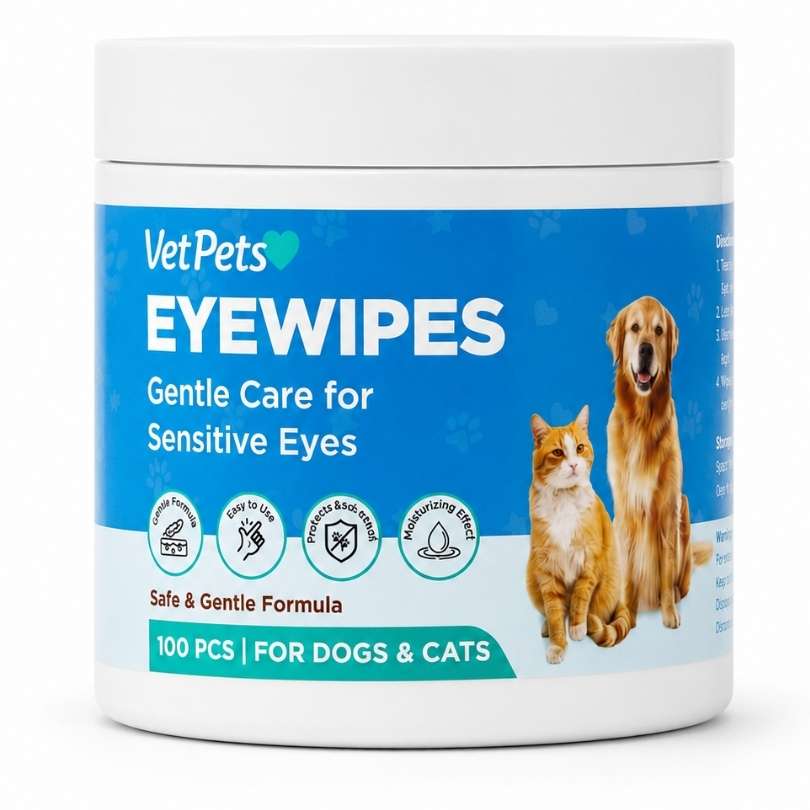
Once your vet has checked your dog’s mouth, a daily wipe is an easy habit to build and a good way to keep an eye on the gumline. FreshWipes are a textured finger wipe: they fit over one finger, need no toothbrush, and are used to physically scrub plaque and food debris from the teeth and along the gumline. They are fragrance-free, alcohol-free, fluoride-free and pH-balanced. Each container holds 50 wipes. Talk to your vet before starting any new dental product.
FreshWipes are part of a care routine. They are not a substitute for veterinary dental care and they do not remove hardened tartar. Follow the directions on the pack. Prefer to see everything in one place? Browse the finger wipes collection, or read our dog dental care guide hub.
When to see your vet
A home check is not a diagnosis. Contact your vet if you notice:
- Red, swollen or bleeding gums
- Bad breath that is new, strong or does not go away
- Dropping food, chewing on one side or refusing food
- Pawing at the mouth or pulling away when you touch the face
- A broken, loose or discolored tooth
- Swelling of the face or jaw
- Heavy drooling, especially with blood
Ask for a dental check at every yearly exam. Your vet can judge what is happening below the gumline and tell you whether a professional cleaning is needed.
Frequently asked questions
What are the first signs of dental problems in dogs?
Bad breath and red or swollen gums are often the earliest signs. Merck notes that in gingivitis the gums change from coral-pink to red or purple and the edge of the gum swells. Because dogs hide pain, VCA says few show obvious signs, so regular mouth checks matter.
How common is dental disease in dogs?
VCA Animal Hospitals reports that over 80% of dogs over the age of three have active dental disease, and calls periodontal disease the most common disease affecting pet dogs.
Can gum disease in dogs be reversed?
VCA says gingivitis is always the first stage of periodontal disease and the only truly reversible stage. Once the bone around the tooth is affected, the damage cannot be undone, so ask your vet early.
Is bad breath in dogs always a dental problem?
Not always. Dental disease is a common cause, but breath changes can come from other health issues. If bad breath is new, strong or does not go away, ask your vet to check.
Do dogs show pain from bad teeth?
Often they do not. Merck says most dogs mask their pain, so signs can be easy to miss. Watch for pawing at the mouth, dropping food or resisting a touch to the face.
Which dogs are more likely to have dental problems?
VCA says small and short-nosed (brachycephalic) breeds are more prone to periodontal disease, and Merck notes small breeds tend to have more periodontitis than large ones.
Sources
Reviewed by the VetPets Care Team. This guide is educational and does not replace advice from your veterinarian.

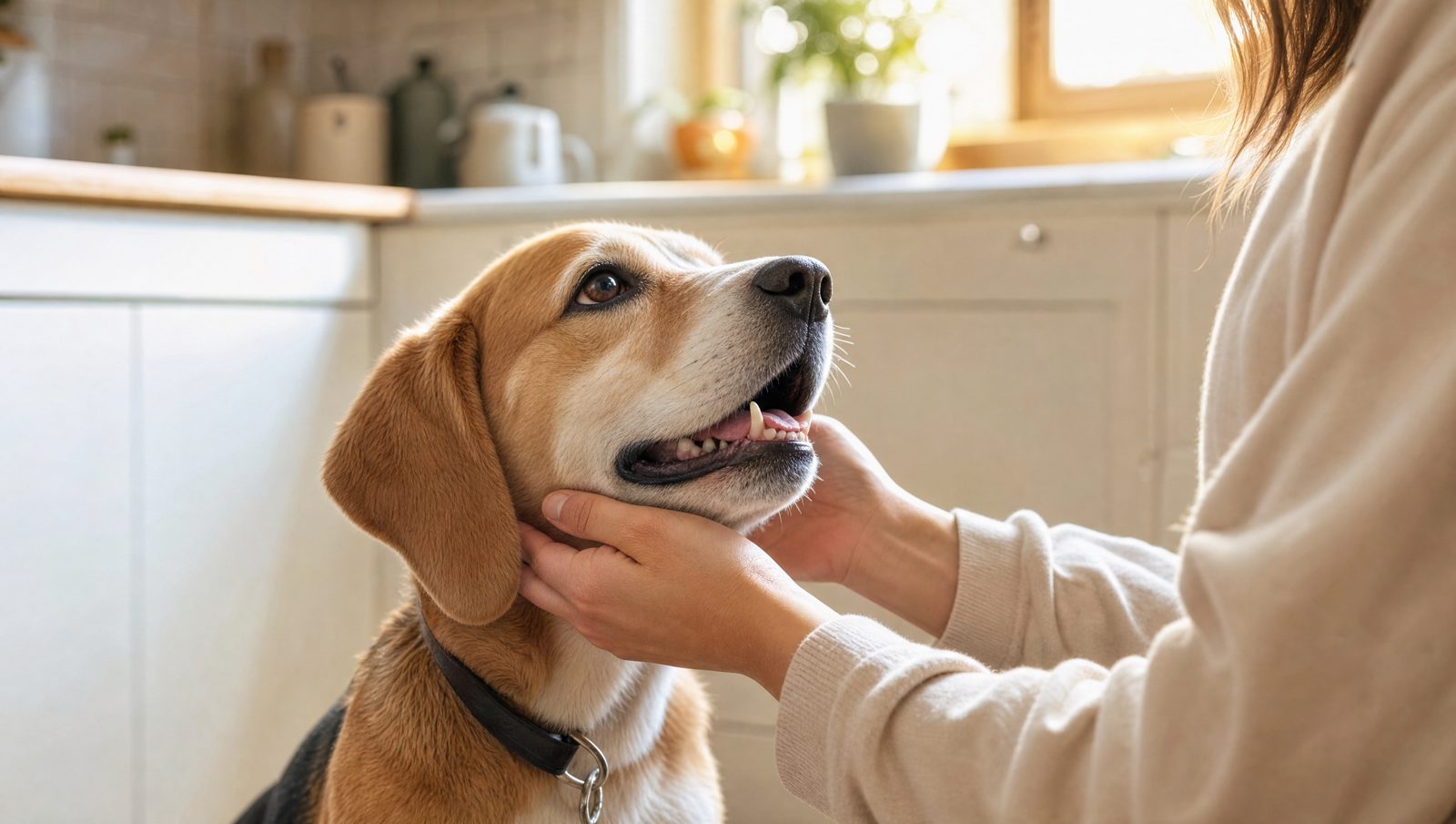

Make it a calm part of their day.
One gentle wipe, a little praise, done. Every order is covered by our 100-Day Money-Back Guarantee.
Explore the daily routine