

Winter Paw Care for Dogs: Salt, Snow and Ice
What salt, ice melt, snow and cold do to dog paws, how to protect them, a two-minute routine for after every walk, and the signs that mean call your vet.
The short answer
Winter paw care comes down to three habits: keep paws away from salt and de-icing chemicals where you can, protect them on the walk with booties or a balm if your dog accepts them, and wipe and dry every paw when you come inside. VCA says the wipe-down also stops your dog from licking chemical residue off its feet.
Key takeaways
- Sharp ice, clumped snow, dampness and deicing salts are the main winter hazards for paws, according to PetMD.
- VCA says salt-based deicers dry out paw pads and the skin between the toes, and are harmful if licked off.
- Some deicers contain ethylene glycol (antifreeze), which is poisonous to pets.
- Booties and balms are options, not requirements. Wiping and drying paws after the walk applies to every dog.
- Cracked, bleeding or limping paws are a reason to call your vet.
In this guide
What winter does to dog paws
PetMD lists the main dangers: sharp ice that can cut deeply, snow that forms painful clumps between the pads and in the fur around the feet, dampness that raises the risk of frostbite, and a lack of traction that can lead to slips and strains. Too much exposure can cause discomfort, dryness and cracks, and in extreme cases frostbite on the paw pads.
How cold is too cold varies by dog. PetMD says that at or below freezing, paws should be protected with boots, and that if there is ice or snow it can get trapped between the pads and cause wounds.
Salt and ice melt: the hidden hazard
VCA reports that over 730 million pounds of salt was used on US roadways in 2021 alone. Rock salt and other salt-based deicers are very drying to a dog’s paw pads and the delicate skin between the toes. They can also be toxic if eaten off the ground or licked off the paws once inside.
Some deicers include ethylene glycol (antifreeze), which VCA says is poisonous to pets. If you suspect your dog has swallowed a deicing product, call your vet right away.
Choosing a safer ice melt for your own walkway
VCA suggests avoiding rock salt and salt-based deicers around your home. Examples it gives of pet-safe deicers are potassium chloride or magnesium chloride (slow, but the safest) and calcium magnesium acetate (CMA). PetMD also says to use pet-friendly deicing salts so that a dog that licks its paws is protected.
Ways to protect your dog’s paws on the walk
| Option | What it does | Good to know |
|---|---|---|
| Booties | Minimize contact with salt crystals, antifreeze and chemical ice melt, and keep sand and salt out from between the toes (ASPCA) | Choose a snug, waterproof, breathable fit; latex or rubber can trap moisture (PetMD). Not every dog accepts them |
| Paw balm | Forms a barrier against dampness and chemicals and helps stop snow clumping between the pads (PetMD) | Does not protect from sharp ice; wipe off after the walk |
| Wipe-down at the door | Removes salt, chemicals and snow clumps before your dog can lick them off (VCA, PetMD) | Works with or without booties and balm |
| Staying on cleared paths | Less contact with ice and de-icer | Not always possible on city sidewalks |
Booties
VCA suggests booties if your dog will tolerate them, in styles such as balloon booties, waterproof sock boots or rain boots, sized by the manufacturer’s guidelines. PetMD says to remove the boots once you are inside so your dog does not get too warm or lick chemicals from the outside of them, and to clean the outside of the boots daily.
Balm
VCA compares paw balm to lip balm: a thin layer before the walk creates a barrier between the pads and salt-covered sidewalks. PetMD says to apply it on and between the pads, between the toes and on the fur at the sides of the feet, outdoors or in a garage so it does not get tracked through the house.
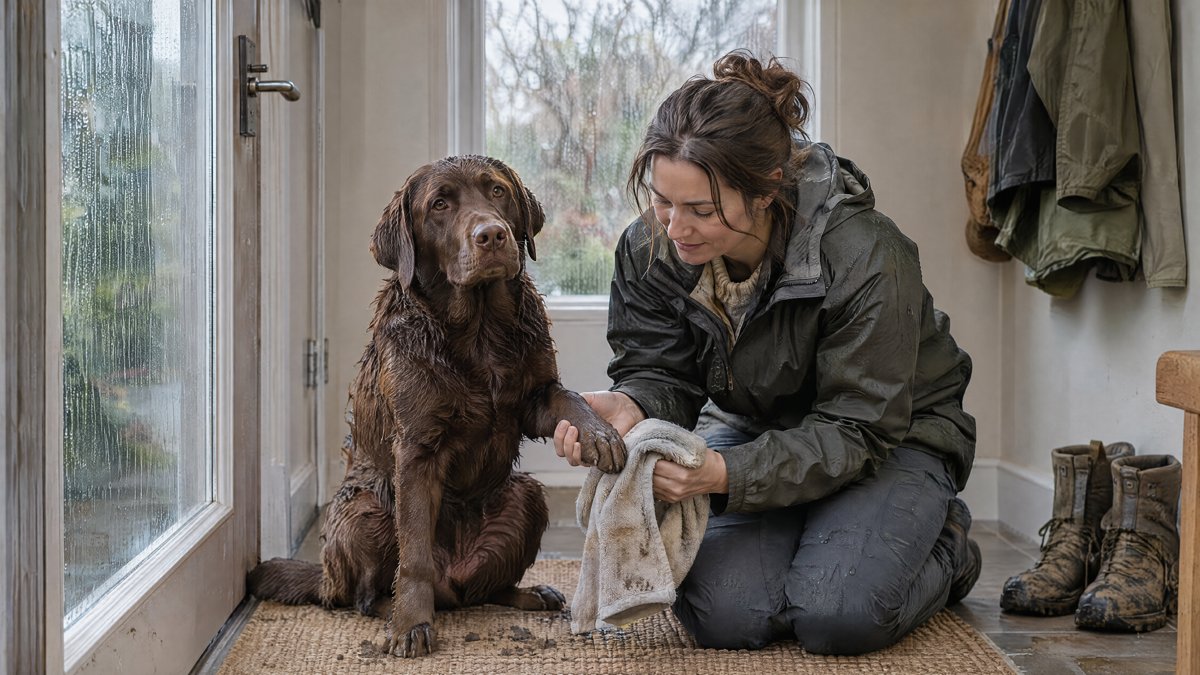
The two-minute routine after every winter walk
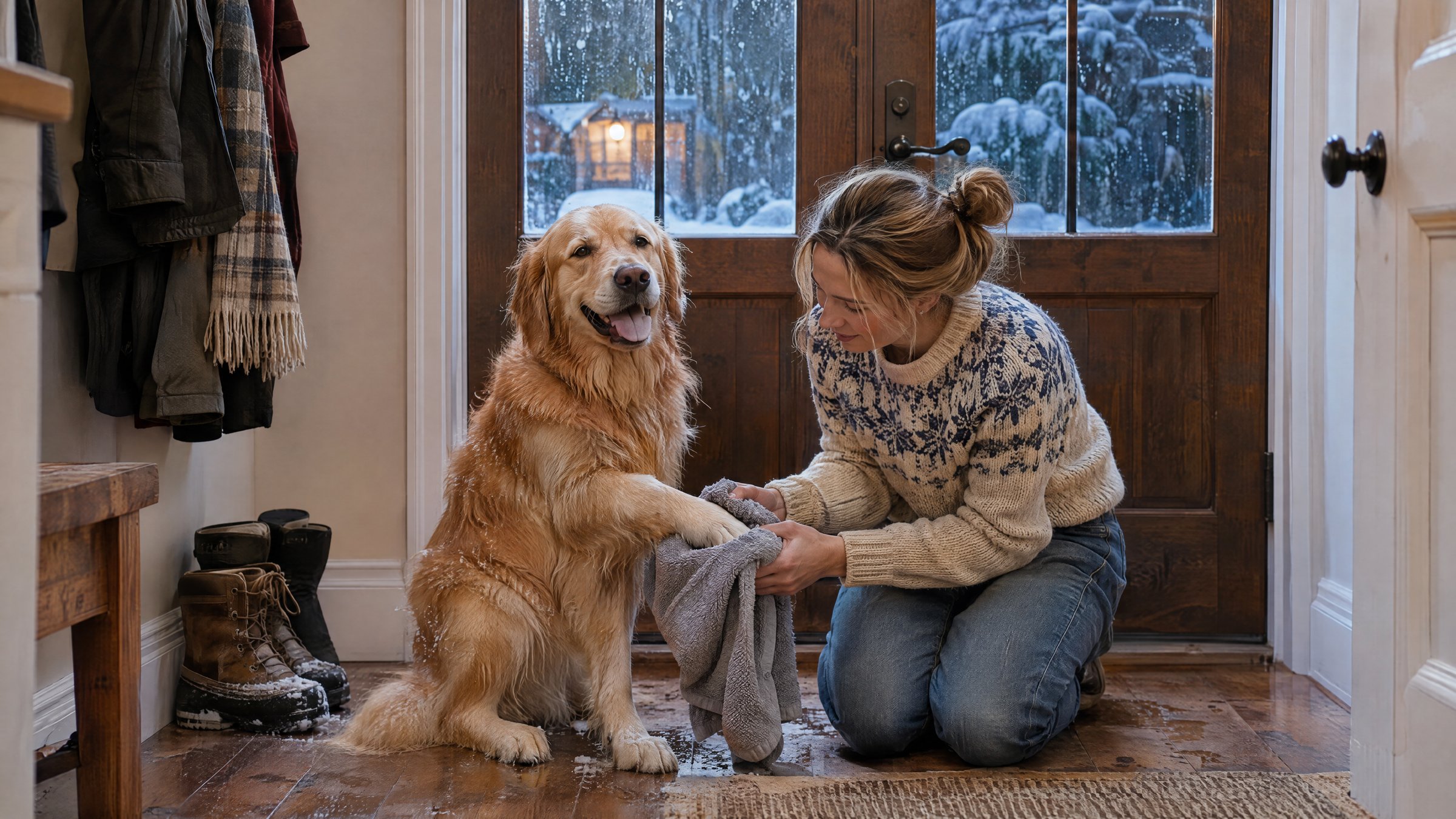
- Wipe before your dog walks through the house. Keep a towel by the door, as PetMD suggests.
- Clear any snow or ice clumped between the pads and toes.
- Clean off salt and chemicals with warm water, a cloth or a grooming wipe, as VCA advises.
- Dry thoroughly, including between the toes.
- Check the pads. ASPCA says to look for cracks in the pads or redness between the toes.
- Moisturize if the pads are dry. VCA suggests another thin layer of balm after wiping.
Paws that itch or get licked constantly can have other causes too. Our guide on why dogs lick their paws covers them, and how to clean your dog’s paws after a walk has the all-year routine.
How PawFoam fits into the routine
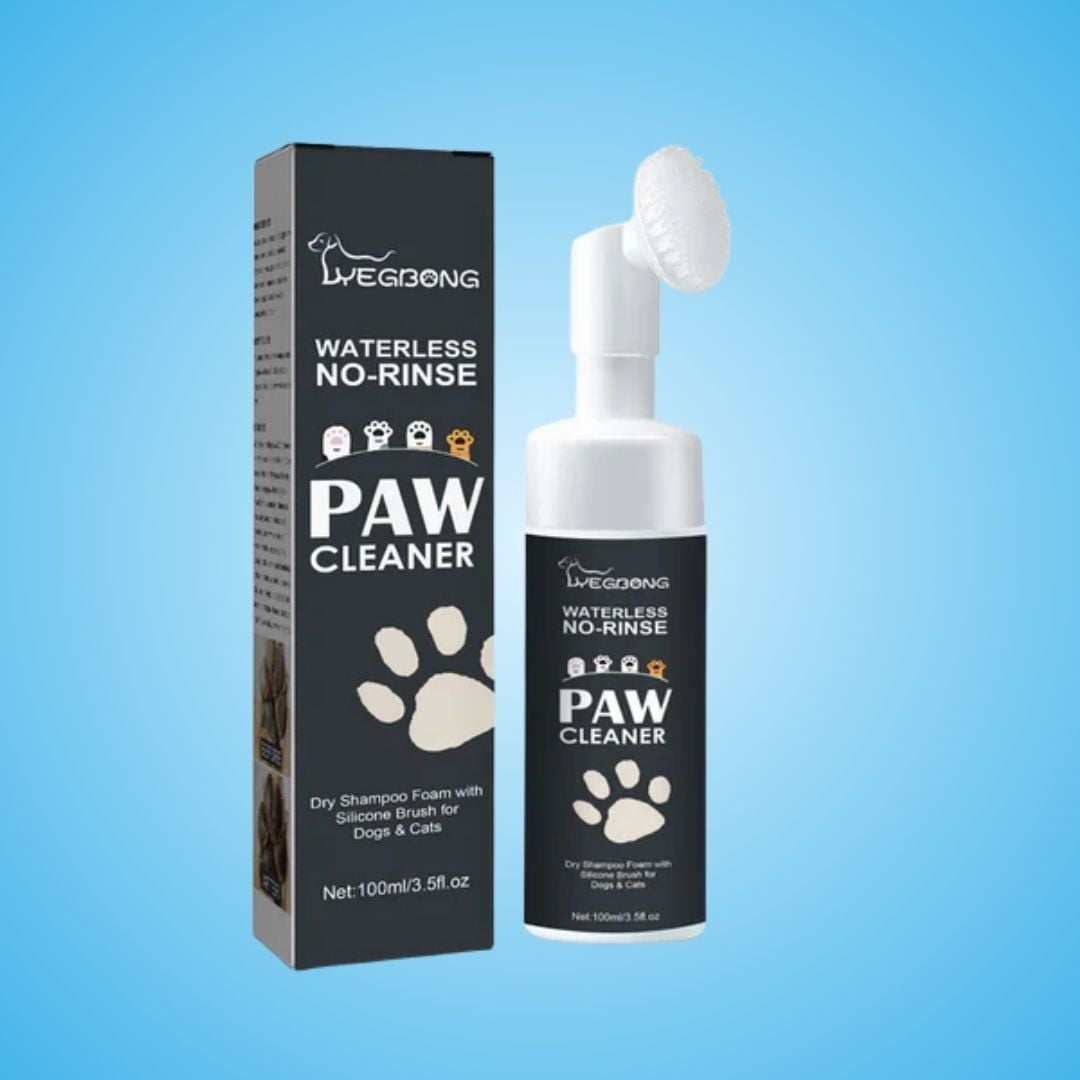
PawFoam is a no-rinse paw cleansing foam with a built-in textured brush head. Pump the foam onto the brush, scrub into the pads and toes for about 15 seconds per paw, then wipe dry with a towel. No rinse and no bath. It lifts mud, grit and buildup from between the pads, and leaves paws soft rather than stripped. It is made for daily use on dogs and cats, so it suits the winter door routine.
PawFoam is part of a daily-care routine. It is not a treatment for cracked pads, injuries, infections or skin conditions, and it does not replace booties or a vet visit. Introduce it gradually and talk to your vet if your pet has known sensitivities. Building a fuller routine? Read about cleaning your dog’s ears at home or visit the dog ear care hub.
When to see your vet
Home care cannot fix an injury. Contact your vet if you notice:
- Cracked or bleeding paw pads
- Limping or refusing to walk
- Constant licking or chewing of the paws
- Redness, swelling or a strong smell
- Any chance your dog licked or ate a de-icing product, or antifreeze
Your vet can check the paws, rule out infection or other causes, and suggest a plan for your dog.
Frequently asked questions
Do dogs need paw protection in winter?
PetMD says yes when your dog spends longer outside in the cold, because paws bear the brunt of winter hazards such as sharp ice, snow clumping between the pads, dampness and deicing salts. For the shortest trips outside, a good wipe-down afterward may be enough. Ask your vet what suits your dog.
Is road salt bad for dogs’ paws?
VCA says rock salt and other salt-based deicers are very drying to paw pads and the delicate skin between the toes, and can be toxic if licked off paws or eaten from the ground. That is why a wipe-down after every winter walk matters.
Should my dog wear boots in the snow?
VCA suggests booties if your dog will tolerate them, and PetMD calls them the most reliable way to protect paws in winter. PetMD adds that dogs do not need boots, and that latex or rubber boots can trap moisture. Choose a snug, waterproof, breathable fit, and skip them if your dog hates them.
How do I clean my dog’s paws after a winter walk?
VCA advises washing or wiping the paws with warm water, a cloth or grooming wipes to remove any chemicals picked up on the street, so your dog cannot lick residue off. Dry them well, and check for cracks or redness between the toes.
Does paw balm replace wiping?
No. VCA and PetMD both describe balm as a barrier, and both still say to wipe the paws after the walk. PetMD notes balm will not protect against sharp ice.
When should I call my vet about my dog’s paws in winter?
Contact your vet if the pads are cracked or bleeding, your dog limps or refuses to walk, the licking is constant, or you think your dog has licked a de-icing product. Antifreeze (ethylene glycol) is poisonous to pets, so treat any suspected exposure as urgent.
Sources
- VCA Animal Hospitals: How to keep your dog’s paws safe in winter
- PetMD: How To Protect Your Dog’s Paws in the Winter
- ASPCA: Walking Your Dog in a Winter Wonderland? Protect Your Pet’s Paws
Reviewed by the VetPets Care Team. This guide is educational and does not replace advice from your veterinarian.
Clean paws at the door, all winter.
A quick, gentle routine your dog will accept. Every order is covered by our 100-Day Money-Back Guarantee.
See PawFoam