

How to Dry a Dog After a Rainy Walk (Paws Included)
How to get a wet dog dry after a rainy walk without tangles: the towel method, how to dry paws and between the toes, when a dryer is worth it, and when to call your vet.
The short answer
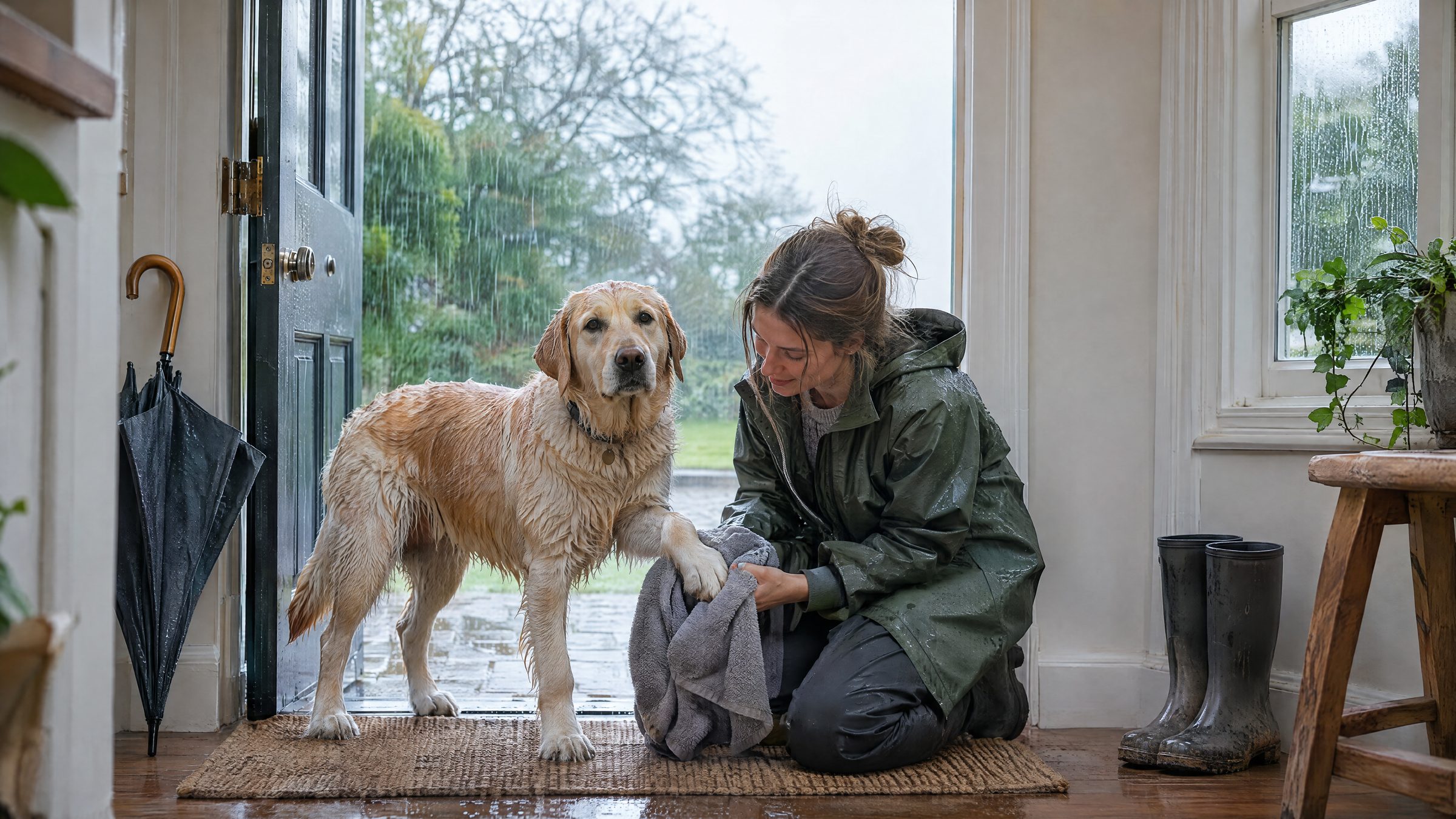
Press a dry towel into your dog's coat instead of rubbing it, then squeeze each paw and dry the pads and between the toes before your dog walks through the house. AKC says rubbing can cause tangles and mats, and PetMD's vet sources say to make sure the pad area is dry. Short coats usually need only a towel; thick or long coats may need a dog dryer to finish.
Key takeaways
- AKC says to dry any wet dog, including after a walk in damp weather, and that it matters more the more hair your dog has.
- Press the towel into the coat; vigorous rubbing can cause tangles and mats (AKC).
- Squeeze each paw with a clean towel and make sure the pads are dry (PetMD).
- Do not use a human blow dryer. AKC advises a dog dryer and avoiding heat, and keeping air away from the face and ears.
- Redness, sore patches, limping or constant scratching or licking are reasons to call your vet.
In this guide
Why it is worth drying a dog after rain
AKC puts it plainly: when your dog is wet, whether from a bath, swimming or a walk in damp weather, it is important to dry them thoroughly. A damp dog also leaves wet footprints on every floor, and PetMD's vet sources note that wet feet are slippery on hard floors for the dog too.
Coat type changes the job. AKC says short-coated dogs may take little time to dry, while corded, double-coated and long-coated dogs take more. The more hair your dog has, the more important it is to dry them well, because that helps keep tangles and mats from forming.
The towel method: press, do not rub
Your first instinct may be to rub the dog as fast as you can. AKC says that is not the best way: rubbing vigorously can cause tangles to develop and mats to form. Press the towel gently into the fur instead, so it soaks up water without tangling the coat.
AKC also suggests towels made for dogs. Microfiber dog towels are light and easy to use, and they absorb more water than an average bath towel.
If your dog does not like the towel
Many dogs are touchy about their feet, legs and face, even with a beloved owner. AKC suggests working at the dog's pace: let the dog sniff the towel, reward interest with praise and a treat, touch the towel to a spot the dog likes (such as the back), then build up slowly to more sensitive areas like the feet.
| Coat | Usually enough | Good to know |
|---|---|---|
| Short coat | A dog towel (AKC) | Quick, but still dry the paws and belly |
| Long or thick coat | Towel first, then a dog dryer to finish (AKC) | More hair means more important to dry well, to prevent tangles and mats |
| Just wet paws, no dirt | Squeeze each foot with a clean towel (PetMD) | Make sure the pad area is dry |
| Muddy or salty paws | Wipe between toes and pads, then a dry towel (PetMD) | That is where debris collects |
Drying paws and between the toes
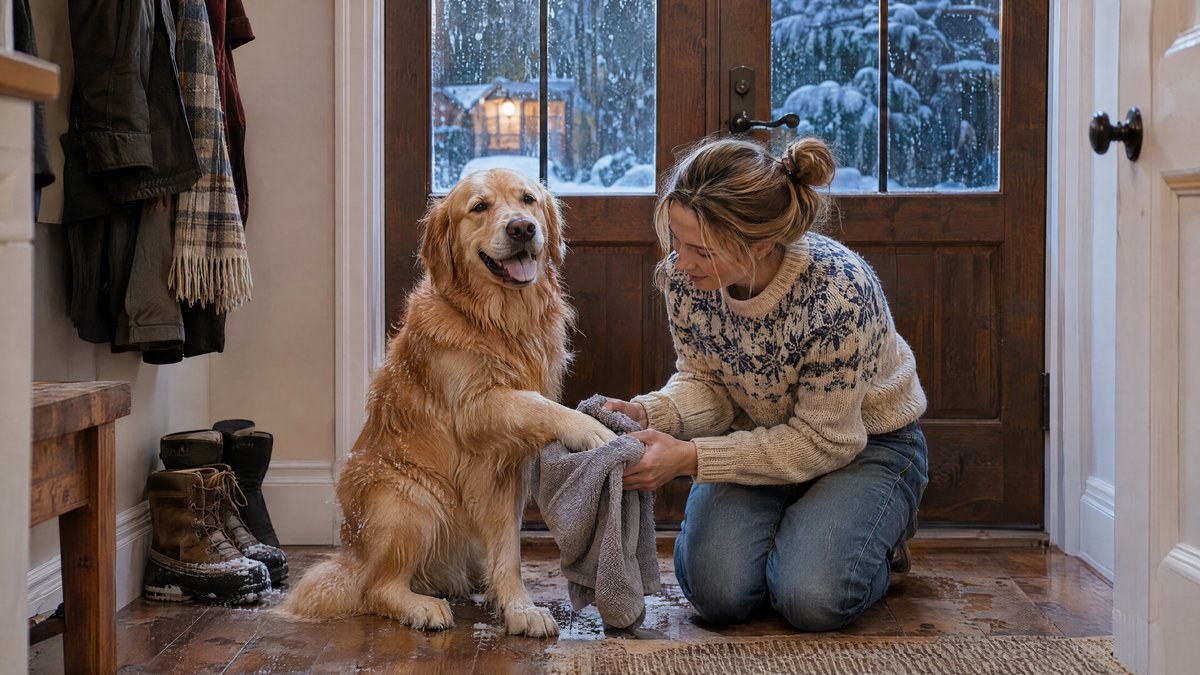
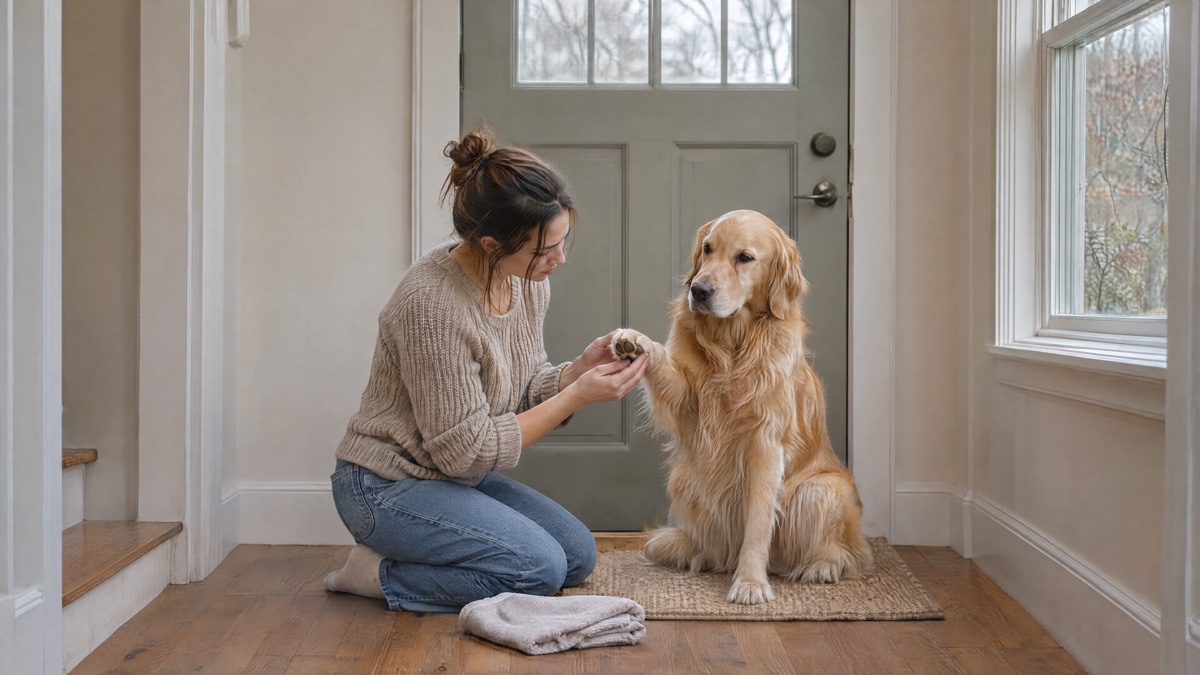
If your dog's feet are wet but no dirt, salt or chemicals touched them, PetMD's vet sources say you can simply dry them with a towel: make sure the pad area is dry, and squeeze each foot a couple of times with a clean towel to get most of the water off. They suggest the same after a rainy walk or a bath, so your dog does not track water through the house.
If there was mud or grit, wipe between the toes and pads first. As one vet told PetMD, that is where nasty stuff can accumulate. A paper towel or washcloth soaked in warm water works, and then you finish with a dry towel. Wipes should be labeled as safe for pets, because PetMD's vet notes many human wipes contain alcohol, petrochemicals or fragrance.
Longer-haired feet
For longer-haired breeds, PetMD's sources recommend keeping the hair between the pads and on the sides of the foot short so debris does not build up. They advise against trimming pad hair yourself, since the skin is delicate and it is easy to nick a pad. Ask your groomer or vet.
Paws that stay itchy or get licked a lot afterwards can have other causes. Our guide on why dogs lick their paws covers them, and how to clean your dog's paws after a walk has the full all-year routine.
Dryers and other tools: when they help
AKC says it can be hard to fully dry a dog with thick fur using only a towel. A dryer helps remove excess moisture from the fur and skin, which can prevent skin irritations. But do not use a human hair dryer: choose one made for dogs.
- Forced-air dog dryers blow water out of the coat. AKC says the airflow, not heat, does the drying, and that you should avoid heat on the coat because it might burn the skin.
- Keep air away from the face and ears. AKC says it could hurt those delicate areas.
- Go slowly. AKC suggests pairing the dryer with treats and starting from a distance on a low setting, and keeping sessions short and successful.
- Quick-drying sprays, drying bags and drying coats are other options AKC lists to speed things up, especially for dogs who dislike dryers.
The three-minute routine at the door
- Stop at the door. Keep a clean towel there so your dog is dried before walking through the house.
- Press the towel into the coat, working from the shoulders back. Do not rub.
- Squeeze each paw in the towel and make sure the pads are dry (PetMD).
- Clean between the toes and pads if there was mud, grit or salt, then dry again.
- Look at the paws. Check for redness, cuts or anything stuck between the toes.
- Finish thick coats with a dog dryer on low, if your dog accepts it, or let the coat dry in a warm room.
How PawFoam fits into the routine
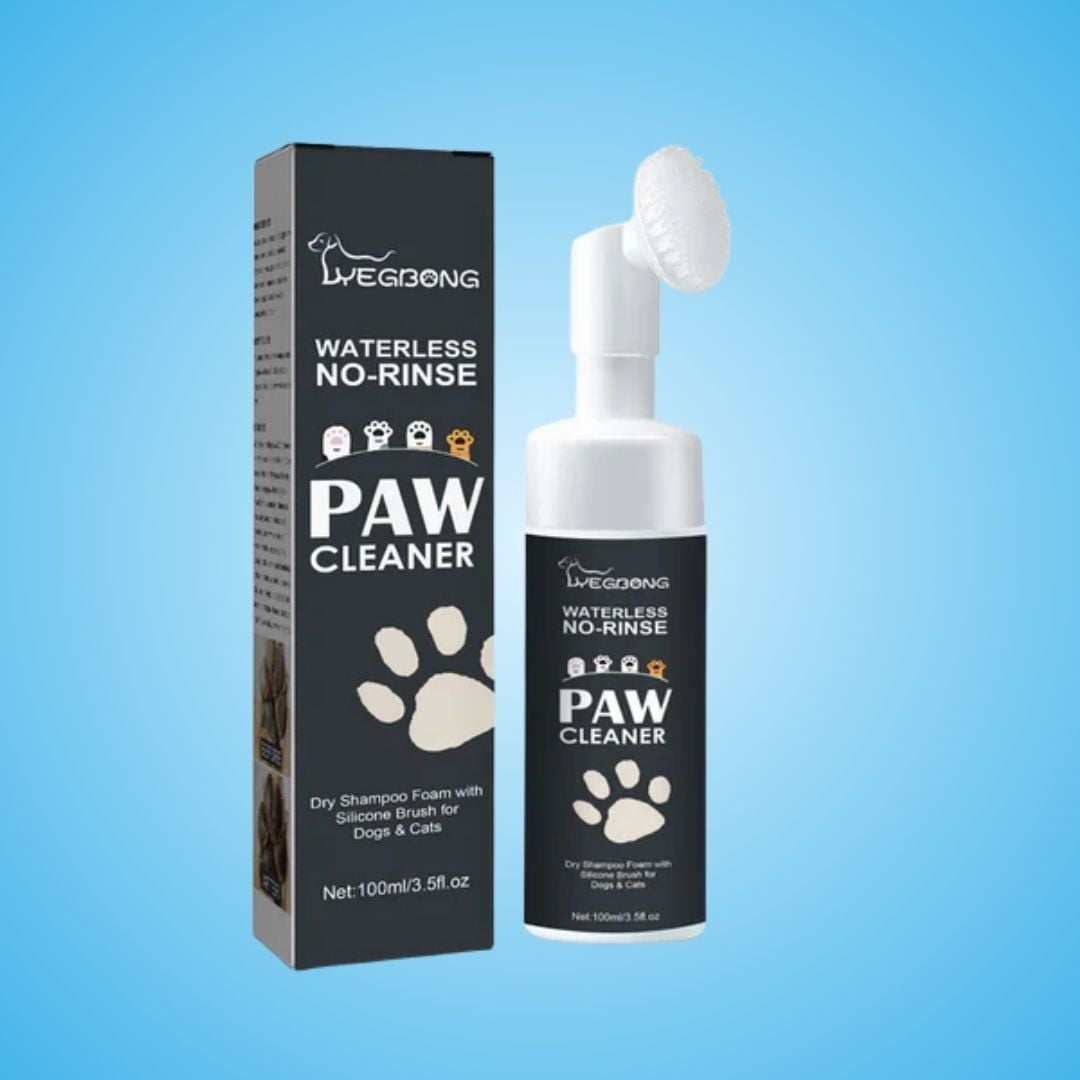
PawFoam is a no-rinse paw cleansing foam with a built-in textured brush head. Pump the foam onto the brush, scrub into the pads and toes for about 15 seconds per paw, then wipe dry with a towel. No rinse and no bath. It lifts mud, grit and buildup from between the pads, and leaves paws soft rather than stripped. It is made for daily use on dogs and cats, so it suits a rainy-day door routine: clean first, then towel dry.
PawFoam is part of a daily-care routine. It is not a treatment for cracked pads, injuries, infections or skin conditions, and it does not replace towel drying or a vet visit. Introduce it gradually and talk to your vet if your pet has known sensitivities. Not sure whether you need a cleaner or a balm? Read paw balm vs paw cleaner, or browse the paw care hub.
When to see your vet
Drying is routine care, not a way to treat a problem. Contact your vet if you notice:
- Redness, swelling, a sore patch or a strong smell on the skin or paws
- Constant licking, chewing or scratching after walks
- Limping, or a cut or cracked pad
- Hair loss or a coat that stays damp, tangled or matted
Your vet can check the skin and paws, rule out other causes, and suggest a plan for your dog.
Frequently asked questions
Do I need to dry my dog after every walk in the rain?
AKC says it is a good idea to dry off any wet dog, whatever its breed, size or coat type, and that applies after a walk in damp weather too. Short coats take little time. The more hair your dog has, the more it matters, because drying helps keep tangles and mats from forming.
Should I rub or pat my dog dry?
Press, do not rub. AKC explains that vigorous rubbing can cause tangles and mats in the fur, while pressing the towel gently into the coat lets it soak up water without creating tangles.
How do I dry my dog's paws?
PetMD's vet sources say to make sure the pad area is dry, and to squeeze each foot a couple of times with a clean towel to get most of the water off. If the paws also picked up dirt, salt or chemicals, wipe between the toes and pads first and finish with a dry towel.
Can I use my own hair dryer on my dog?
AKC says not to use a human blow dryer on a dog. It recommends a dryer made for dogs, and says to avoid heat on the coat because it might burn the skin. Keep any dryer away from the face and ears. Most short-coated dogs do fine with a towel alone.
Does a wet dog's coat really matter for the skin?
AKC says dryers help remove excess moisture from the fur and skin, which can prevent skin irritations, and that thicker or longer coats are harder to dry fully with a towel alone. If you see redness, a sore patch or constant scratching, ask your vet.
Can I trim the hair between my dog's pads to make drying easier?
PetMD's vet sources recommend keeping the hair between the pads short on longer-haired breeds so debris does not collect, but they do not recommend trimming pad hair yourself, because the skin is delicate and it is easy to nick a pad. Ask your groomer or vet.
Sources
- American Kennel Club: How to Dry Your Dog Completely
- PetMD: 7 Ways to Clean Your Dog's Paws
- American Kennel Club: How to Clean Your Dog's Paws
Reviewed by the VetPets Care Team. This guide is educational and does not replace advice from your veterinarian.
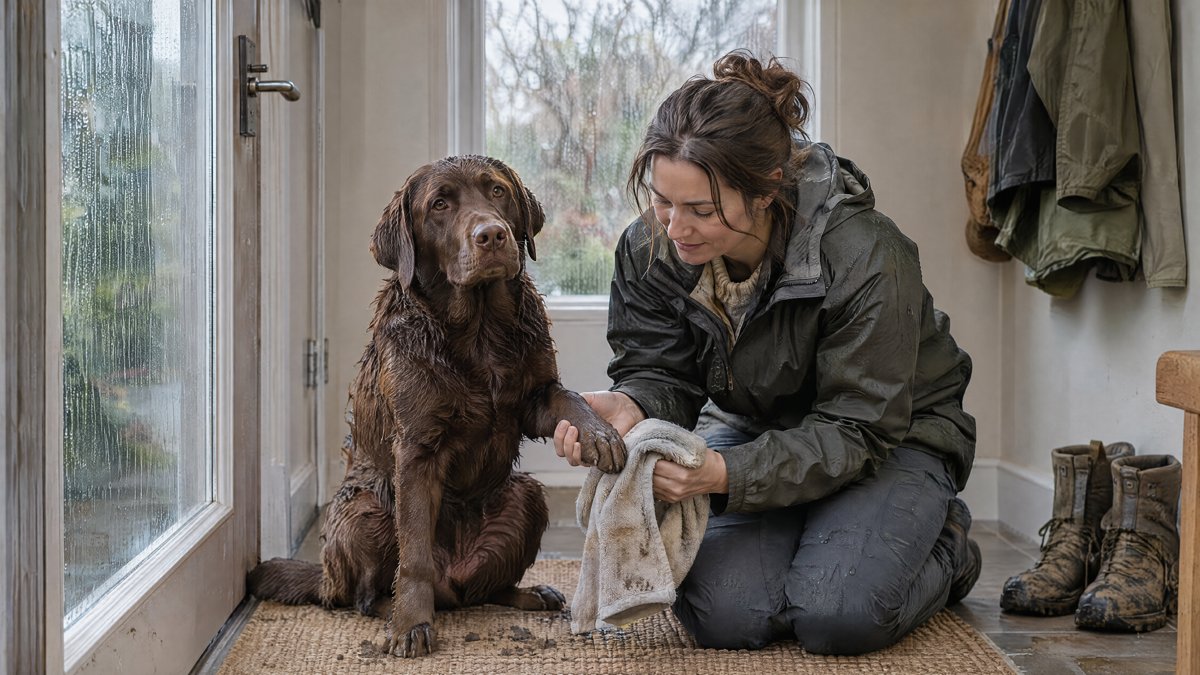
Clean, dry paws at the door.
A quick, gentle routine your dog will accept, rain or shine. Every order is covered by our 100-Day Money-Back Guarantee.
See PawFoam