





Dog Ear Wax: What’s Normal and What’s Not
A little wax is part of a healthy ear. Here is how to tell normal from a problem, how to wipe the outer ear safely, and when it is time to call your vet.
The short answer
Yes, a small amount of ear wax is normal in dogs. AKC says cleaning is only needed when buildup becomes noticeable or causes odor, and that healthy ears are pink, odor-free and comfortable to touch. Heavy wax, a bad smell, redness or a dog that keeps shaking its head is a job for your vet, not for home cleaning.
Key takeaways
- A little wax is normal. Healthy ears are pink, odor-free and comfortable to touch (AKC).
- Clean when you see buildup or smell an odor, not on autopilot. Over-cleaning can irritate the ear (Cornell, AKC).
- Increased wax, discharge, odor, redness, itching or head shaking can be signs of an ear infection (Cornell, Merck).
- A dark discharge often points to yeast or parasites, but can also come with bacterial infections (Merck). Only a vet can tell which.
- Skip cotton swabs, alcohol and hydrogen peroxide.
In this guide
What ear wax is and why dogs have it
Ear wax is a normal part of a dog’s ear. It is made in the ear canal and, together with a little dirt and loose skin, slowly moves out toward the opening. That is why a bit of wax on the inside of the ear flap, or a small smudge on a cotton pad, is not a cause for alarm.
Where owners get worried is the gap between “a little wax” and “something is wrong.” Our dog ear care hub covers the whole routine. This guide focuses on one question: how much wax is too much, and what to do about it.
What normal ear wax looks like
AKC says it is normal for dogs to have some ear wax, and that cleaning is only needed when buildup becomes noticeable or causes odor. It describes healthy ears as pink, odor-free and comfortable to touch, and a clean ear as not dirty or inflamed, with no yeasty or stinky smell.
Wax color varies from dog to dog, and we have not found a veterinary source that gives a reliable color chart, so we do not rely on one. Instead, use these four checks, which come straight from the vet sources below:
- Amount: a little, not a heavy coating or a plug
- Smell: little to none, not yeasty or stinky
- Skin: pink and calm, not red, swollen or scaly
- Comfort: your dog lets you touch the ear without pulling away
When wax is a sign of a problem
Merck lists the signs of an outer ear infection (otitis externa) as head shaking, foul odor, skin redness, swelling, scratching, ear discharge and scaly skin. Cornell adds discharge or increased wax, itching and discomfort when the ear is touched to its list of signs to watch for. Cornell also notes that some of these signs appear with allergic ear disease even when no infection is present.
On color, Merck says a dark discharge often indicates yeast or parasites, but it can also appear with bacterial or mixed infections. In other words, dark debris tells you to ask a vet, not to guess at the cause. To find out what is going on, a vet will usually take a sample of the discharge and look for bacteria, yeast or ear mites.
Cornell lists allergies, ear mites and certain breeds’ ear shape as common underlying causes of ear infections. If your dog has long, heavy ears, see our guide to ear care for floppy-eared dogs. If there is a smell, see why do my dog’s ears smell.
How to check your dog’s ears
A short weekly look is enough to learn your dog’s normal. Pick a calm moment and go through these steps.
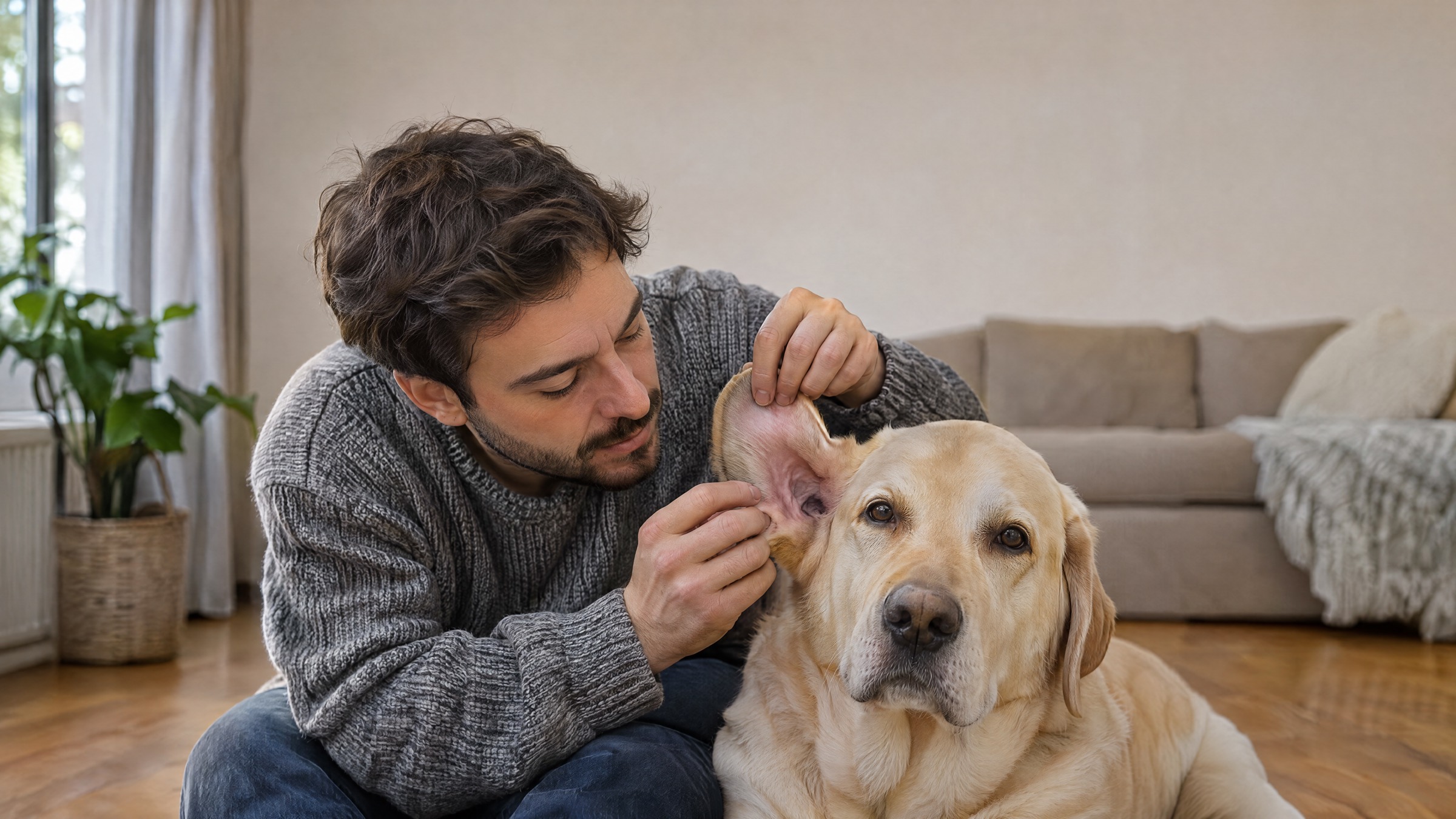
- Lift the ear flap gently and look at the inside of the flap and the visible opening.
- Look at the skin. Pink and calm is the target. Redness or swelling is a vet topic.
- Look at the wax. A little is fine. A lot of wax, crusting or discharge is worth a vet’s eyes.
- Smell. AKC says a mild odor or more head shaking than usual means it is probably time for a clean. A yeasty smell means call your vet.
- Watch your dog. Pulling away, scratching or crying out are signs of discomfort.
- Reward calm behavior with a treat so the check stays a good moment.
Cleaning the outer ear safely
If the check shows visible wax or dirt and the ear otherwise looks healthy, a gentle clean of the outer ear is reasonable. Both Cornell and AKC say not to over-clean, so only do it when something is there to remove.
| Do | Don’t |
|---|---|
| Use real cotton balls or pads, or gauze | Use cotton swabs (AKC, Merck) |
| Use a pet ear cleaner your vet recommends | Use products with alcohol or hydrogen peroxide (Cornell, AKC) |
| Wipe only what you can easily reach, from the inside of the flap outward | Push deep into the canal |
| Stop and call your vet if your dog is in pain | Clean an ear that looks red and inflamed or smells yeasty (AKC) |
Merck also says to avoid over-the-counter wax removers unless your vet approves them. For the full step-by-step, see how to clean your dog’s ears at home, and for timing, how often to clean your dog’s ears. Cornell gives every 1–2 weeks as a typical maintenance range for dogs prone to ear trouble. A dog with healthy, normal ears only needs a clean when dirt or debris shows.
How EarWipes fit into the routine
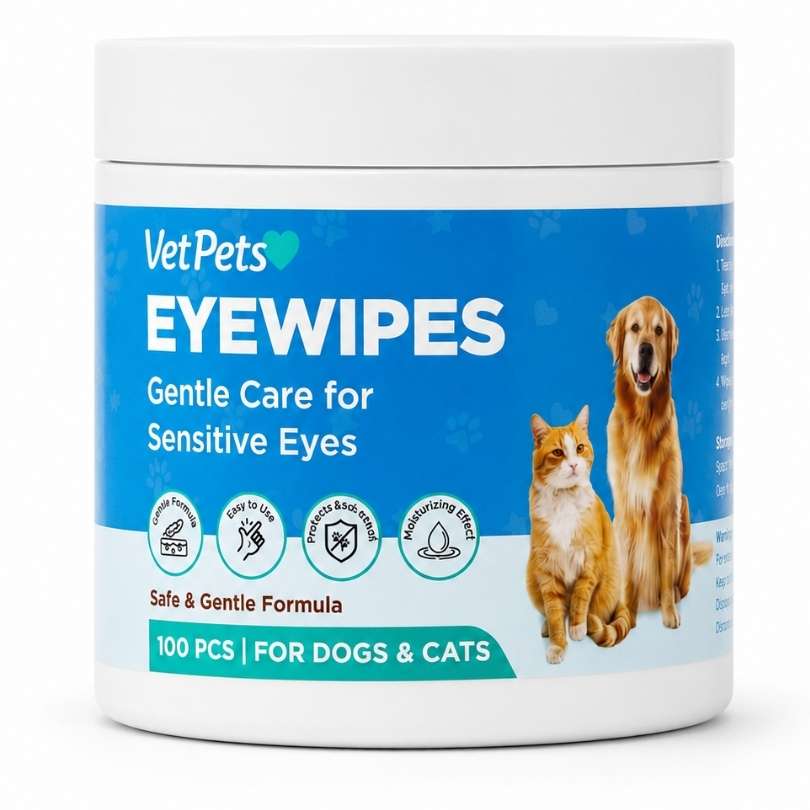
EarWipes are a finger wipe made for the outer ear. You slip one over a finger and wipe the ear flap and the part of the ear you can reach, to remove wax, buildup, debris and odor, with no liquid to pour. They suit the “small amount of visible wax” moment from your weekly check.
EarWipes are part of routine care. They do not reach the deep ear canal, they are not a treatment for an ear infection, and they do not replace a vet exam. Follow the directions on the pack for how often to use them.
When to see your vet
Wipes tidy the outer ear. They cannot diagnose or treat an infection. Contact your vet if you notice:
- A lot of wax, crusting or discharge, especially if it is dark
- A yeasty or foul smell
- Redness, swelling or scaly skin
- Repeated head shaking or scratching at the ear
- Pulling away or crying when the ear is touched
- Wax or odor that keeps coming back after cleaning
Merck notes that discharge and wax can stop ear medication from working, so vets usually clean and dry the ear before treating it. Painful ears often need a vet to do the cleaning, sometimes under anesthesia. Ask your vet how often your dog’s ears should be cleaned.
Frequently asked questions
Is it normal for dogs to have ear wax?
Yes. AKC says a small amount of wax is normal, and that cleaning is only needed when buildup becomes noticeable or causes odor.
What color should a dog’s ear wax be?
Our sources do not give a color chart, so we will not either. What they do describe is the overall picture: AKC says healthy ears are pink, odor-free and comfortable to touch. Merck notes that a dark discharge often points to yeast or parasites but can also appear with bacterial or mixed infections, so dark, heavy or smelly debris is a reason to call your vet.
How often should I clean my dog’s ears?
Cornell says a dog with healthy, normal ears only needs a routine clean if dirt or debris shows, because over-cleaning can irritate the ears. For maintenance in dogs prone to ear trouble it gives every 1–2 weeks as a typical range. Ask your vet what suits your dog.
Can I use a cotton swab to remove ear wax?
No. AKC and Merck both say to avoid cotton swabs. Use cotton balls or pads and only clean what you can easily reach.
Is dark wax always ear mites?
No. Merck says a dark discharge often indicates yeast or parasites, but it can also appear with bacterial or mixed infections. Only a vet can tell which, usually by looking at a sample of the discharge under the microscope.
Should I clean my dog’s ears before a vet visit?
Ask first. Merck says vets usually take samples of ear discharge to identify bacteria, yeast or parasites, so it is best to call your vet before cleaning an ear that looks or smells unwell.
Sources
- Cornell University College of Veterinary Medicine: How to Clean Your Dog’s Ears
- American Kennel Club: How to Clean a Dog’s Ears
- Merck Veterinary Manual, Pet Owner Version: Ear Infections and Otitis Externa in Dogs
Reviewed by the VetPets Care Team. This guide is educational and does not replace advice from your veterinarian.
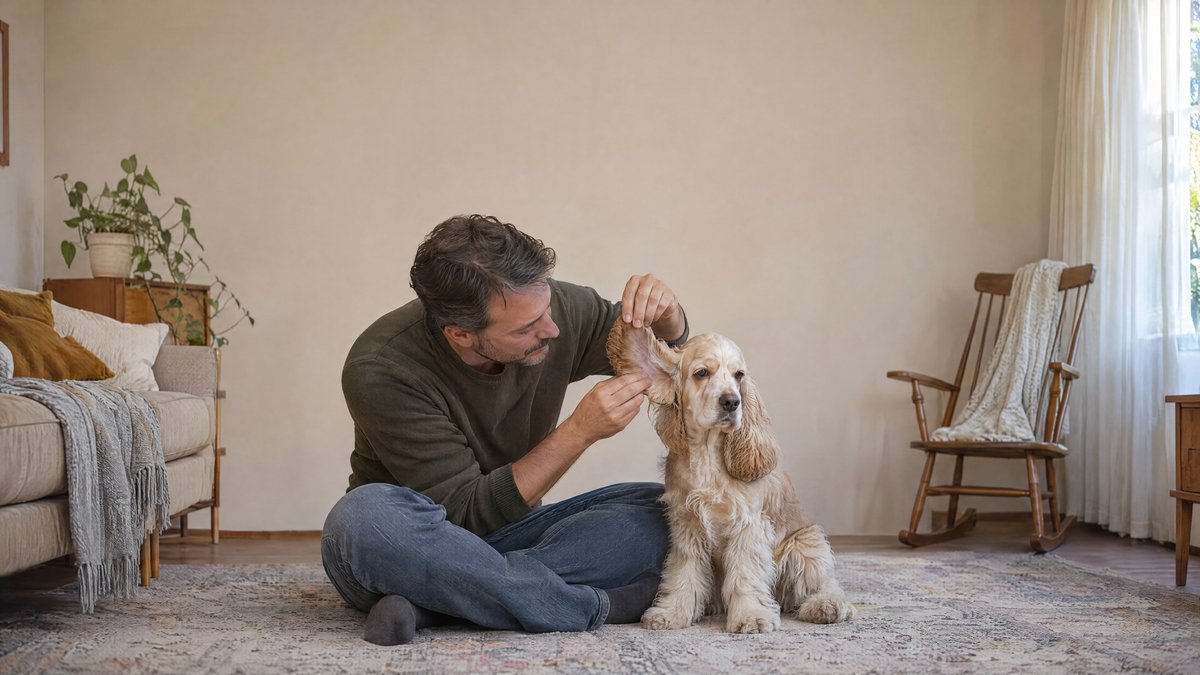
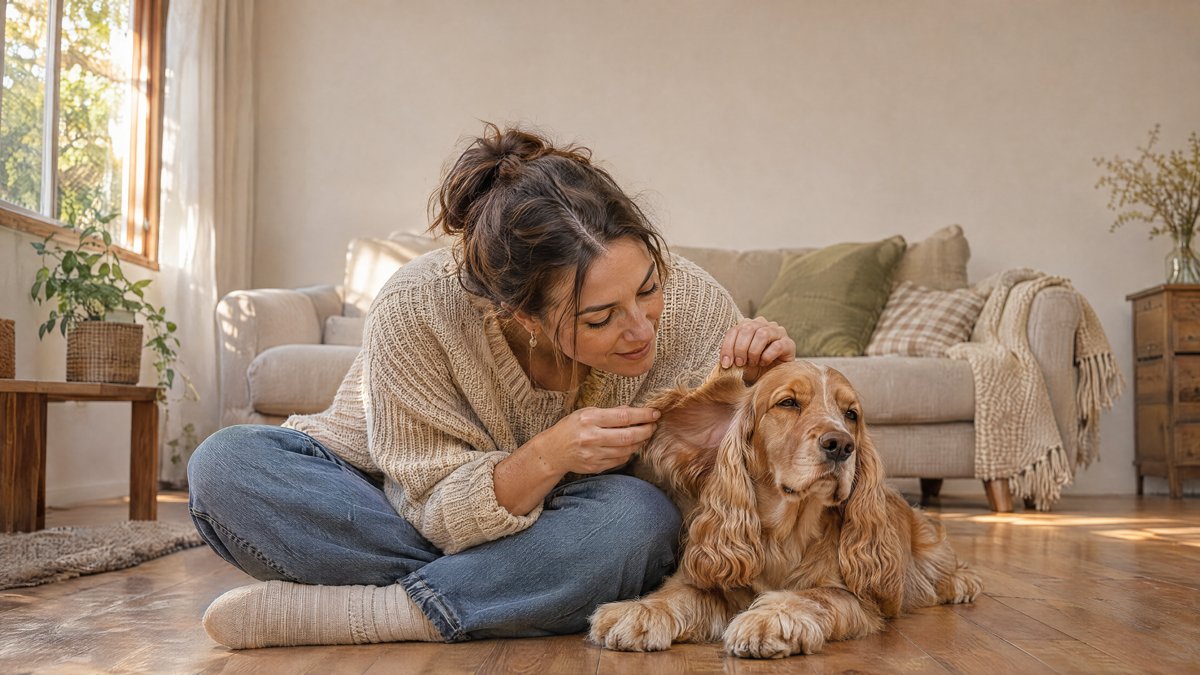

A quick look and a quick wipe, only when needed.
One small habit for healthy-looking ears. Every order is covered by our 100-Day Money-Back Guarantee.
See EarWipes