







A 5-Minute Dog Care Routine: Teeth, Eyes, Ears and Paws
You do not need an hour. A couple of minutes a day and one short weekly check cover the basics, and they teach you what normal looks like for your dog.
The short answer
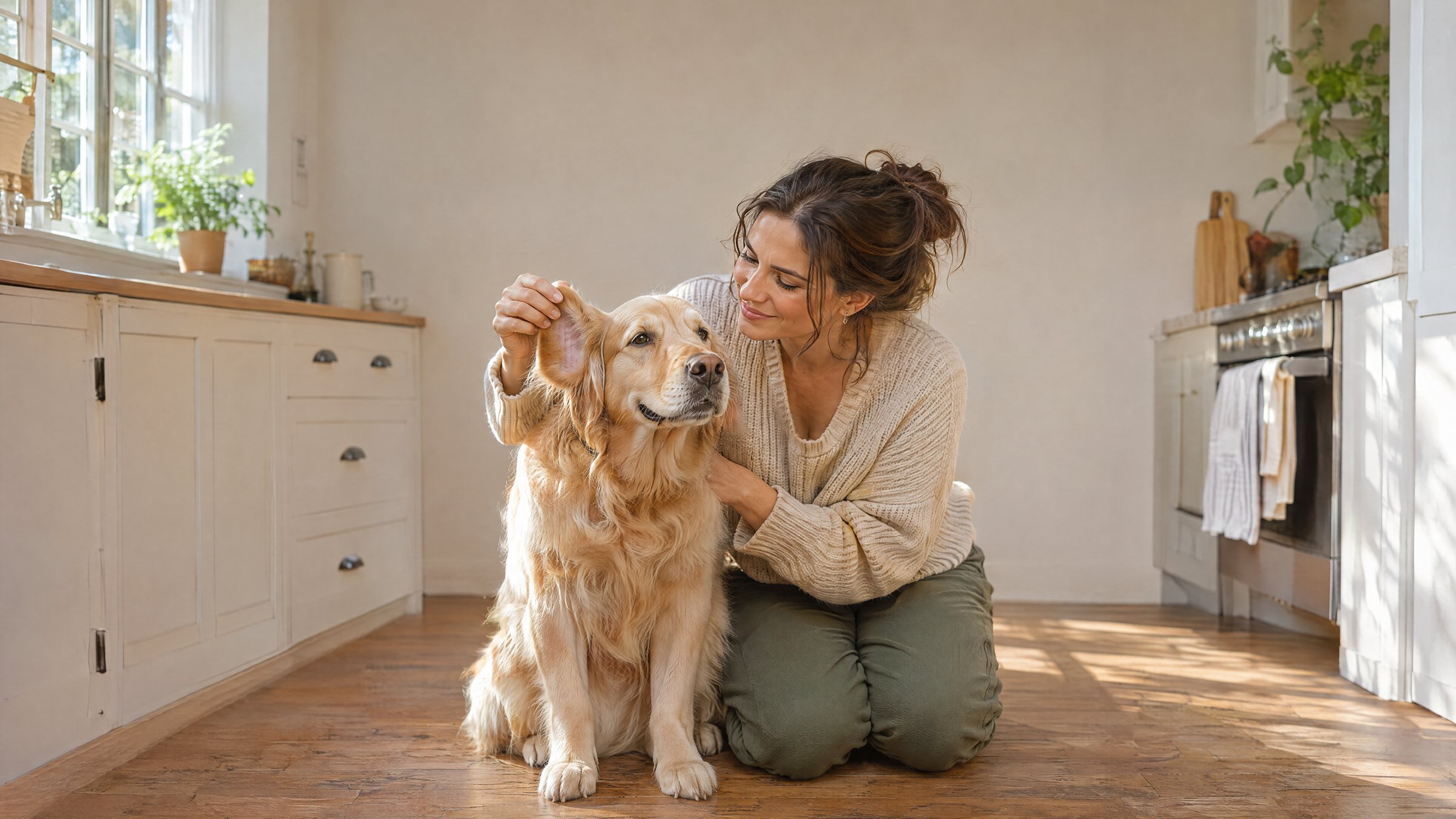
A simple routine is a quick tooth-brushing or wipe each day (AKC calls daily brushing ideal, and a few times a week still helps) plus one weekly check of the eyes, ears, teeth, paws and coat. Dogs for Good describes that weekly check as a five-minute job. Write down what you see, and call your vet about anything that changes.
Key takeaways
- Teeth are the one area where daily care is ideal. Cornell calls brushing the most effective home method for preventing dental disease.
- Eyes, ears, paws and coat are fine with a weekly look (Dogs for Good) and a clean when something is visible.
- Most dogs benefit from ear cleaning about once a month, but some need more (AKC). Only clean the visible outer ear.
- Keep a short record and tell your vet about changes, rather than waiting to see if they pass.
- Home care sits beside regular vet visits. It does not replace them.
In this guide
Why a short routine works
The hardest part of dog care is not the tools. It is doing something small often enough that it sticks. AKC notes that regular grooming sessions are a chance to check your dog’s coat, teeth, eyes, ears and nails for signs of potential problems.
Dogs for Good adds the other benefit: a regular check teaches you what is normal for your dog, so you spot changes early, and it helps your dog get used to being handled, which makes vet visits easier. So think of this routine as two things at once: care, and a habit of noticing.
The daily 2 minutes
Daily care is short on purpose. Pick the same moment each day, such as after the evening walk or before bed, so it becomes automatic.
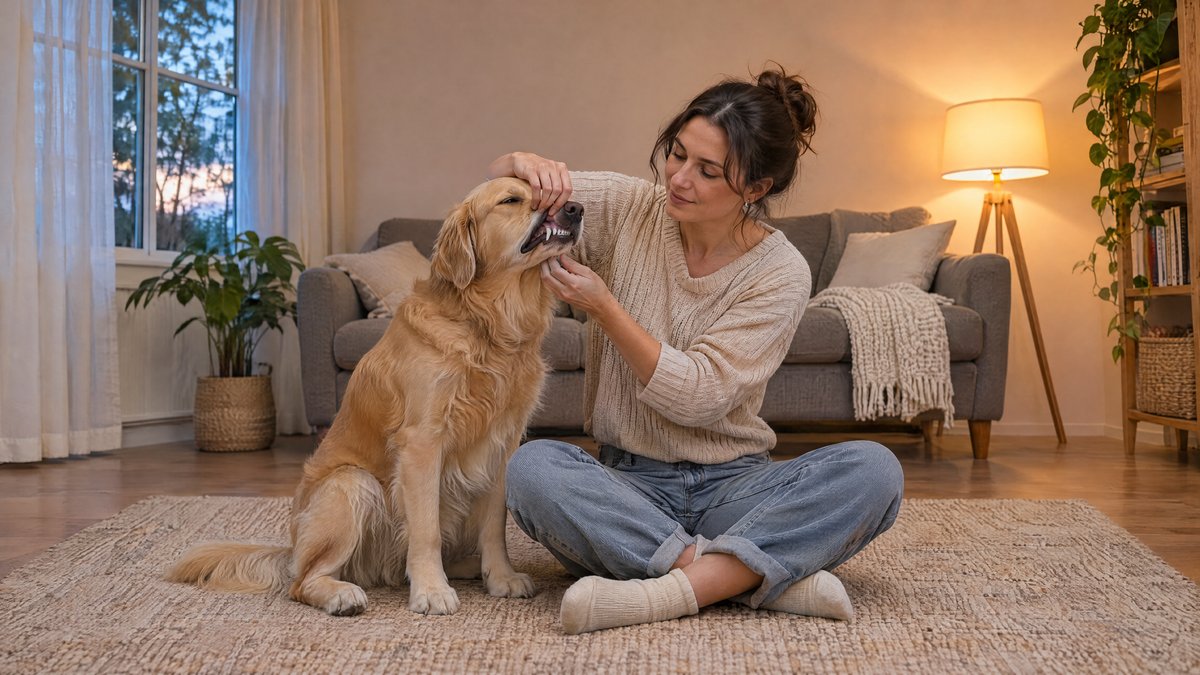
- Teeth (about a minute). AKC says brushing your dog’s teeth every day is ideal, though a few times a week still helps, and that plaque begins to build up within 48 hours. Use a dog-specific toothbrush and toothpaste, never human toothpaste.
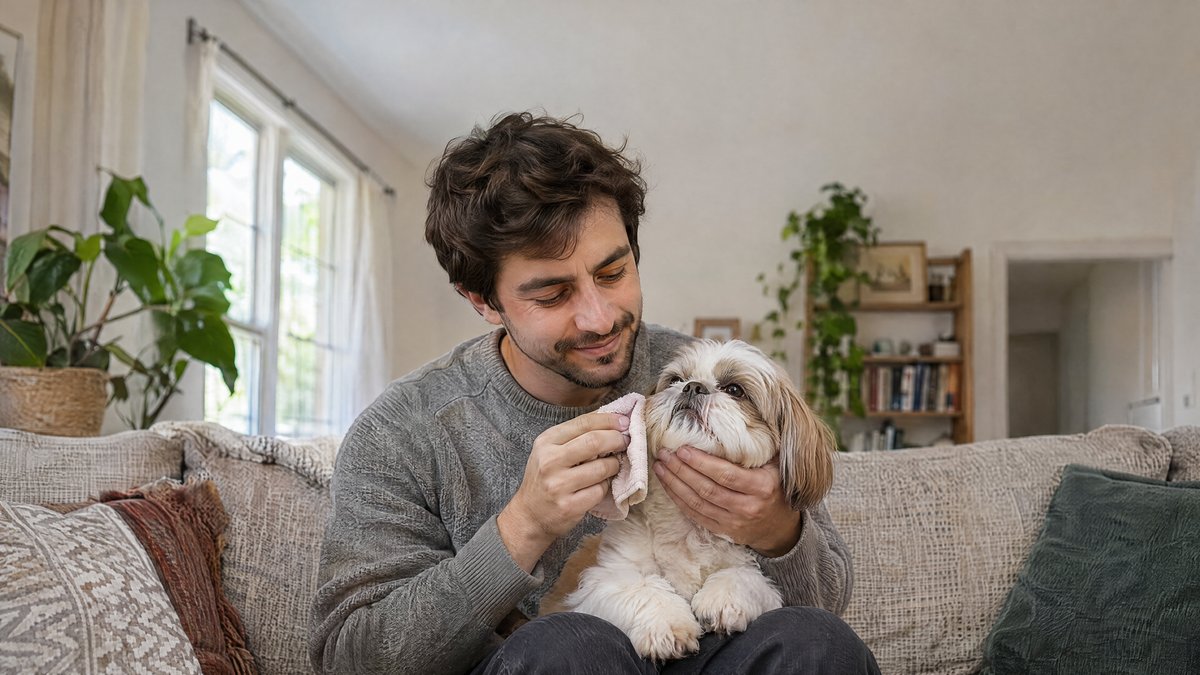
- A quick look at the eyes. Watch for redness, excessive discharge or squinting. If there is a little debris in the corners, AKC says to remove it gently with a soft cloth or cotton ball dampened with warm water, without rubbing across the eye.
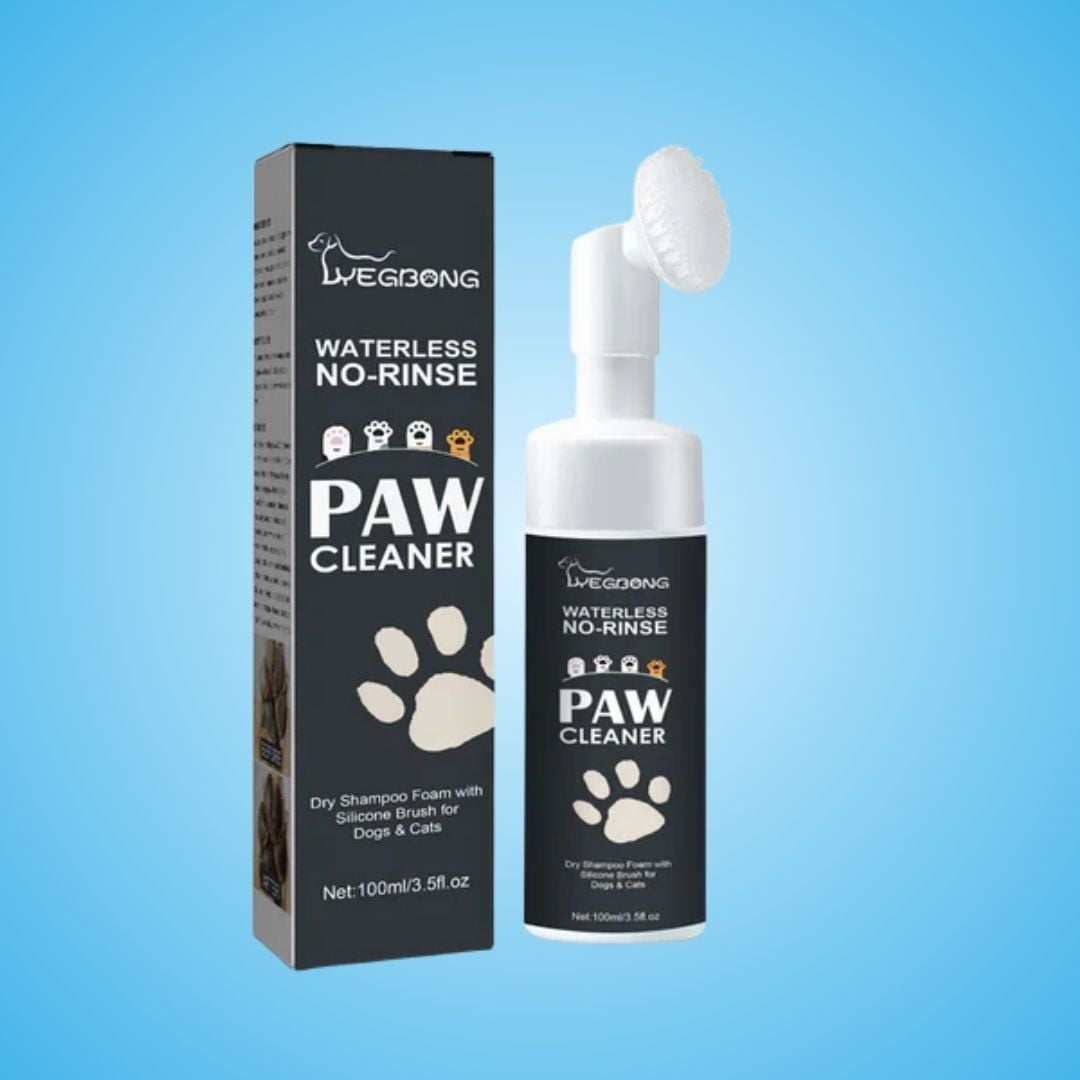
- A feet check after walks. Glance at the pads and between the toes for anything stuck. Our guide to cleaning your dog’s paws after a walk covers the how-to.
- A treat and a kind word. Ending on something your dog likes keeps the routine easy to repeat.
If your dog is not used to this, do not try everything at once. Start with a few seconds on one step and add the next after a few days. Our guide for dogs that hate teeth brushing shows a gentle way to build up.
The weekly 3-minute check
Once a week, go a little slower. Dogs for Good recommends performing a basic health check each week, keeping a record of your findings and reporting any areas of concern to your vet. Here is what “normal” looks like, based on their checklist.
| Area | Looks normal | Tell your vet |
|---|---|---|
| Eyes | Clear and bright, little or no discharge | Clouding, redness, squinting, heavy discharge |
| Ears | Clean skin, barely visible wax, no odor | Odor, head shaking, scratching, heat or sensitivity to touch |
| Teeth and gums | Clean teeth, pink gums (dark pigment can be natural) | Brown buildup, changes in gum color |
| Paws | No cracks or calluses on pads, nothing between toes | Cracks, brown staining from licking, foreign bodies |
| Coat and skin | Healthy coat, clean skin, little dander | Lumps, fleas or ticks, constant scratching |
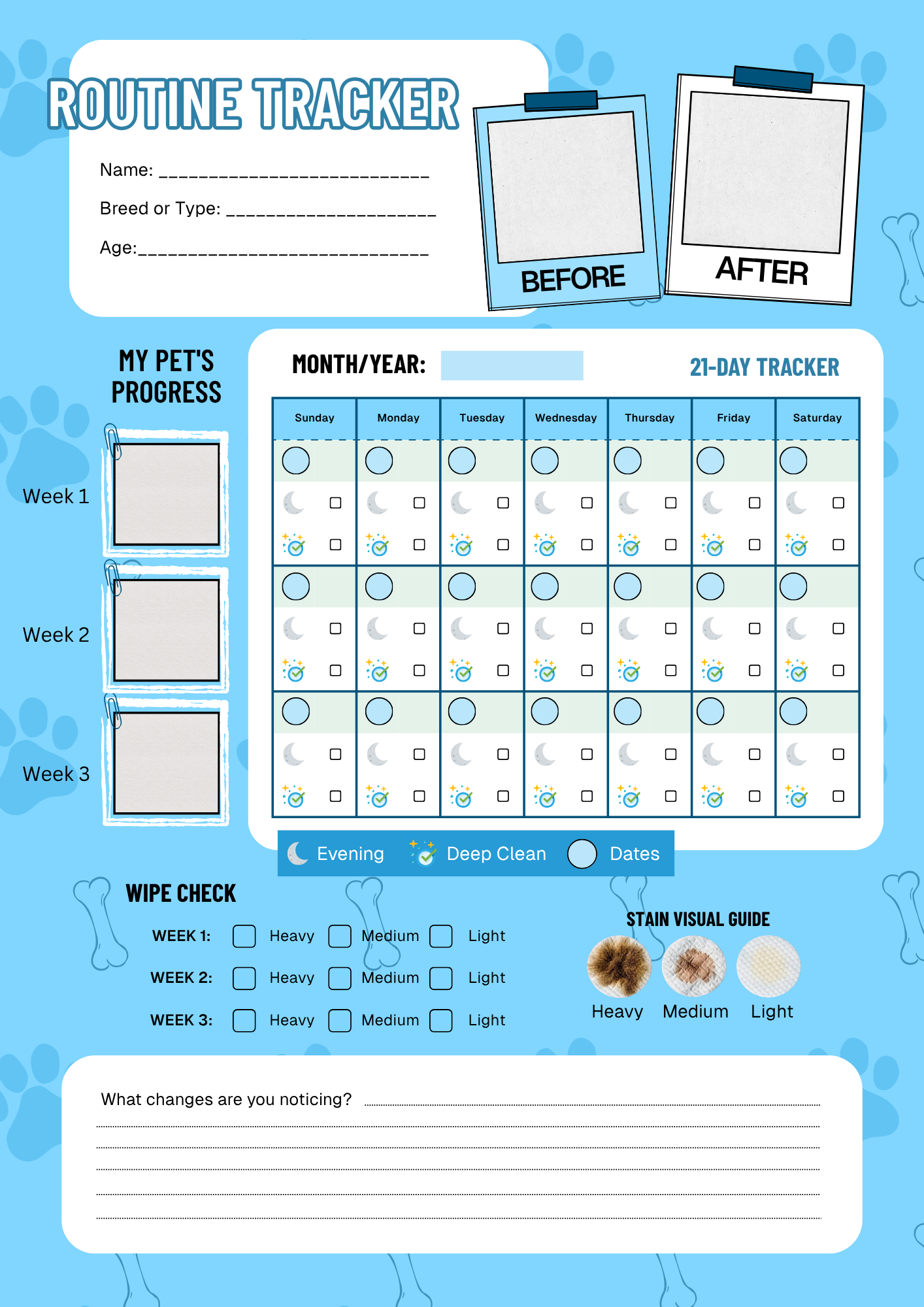
Do it at the same time each week so you notice what changed, and write one line in your phone. Do not worry about getting the “right” answer. Your job is to notice, and your vet’s job is to explain.
Teeth and gums
Cornell says brushing your dog’s teeth is the most effective method of home care for preventing dental disease. Dogs for Good describes healthy teeth as clean and white with very little brown coloring, and healthy gums as pink, noting that dark pigmentation is not unusual.
If brushing is a struggle, there are gentler options. Read how to clean your dog’s teeth without a toothbrush, and see how often to clean your dog’s teeth. AKC also notes that dental treats and chew toys may help support oral hygiene but should not replace regular brushing. Browning or a strong smell are covered in our signs of dental problems guide. Our dog dental care hub links to everything.
Eyes
Dogs for Good says eyes should look clear and bright, with no clouding or foreign objects, and no discharge other than an occasional clear or grey one. If you see a foreign object, do not try to remove it. AKC adds to use only products designed for dogs around the eyes and to avoid rubbing directly across the eye.
For the full method, see how to clean your dog’s eyes safely and the dog eye care hub.
Ears
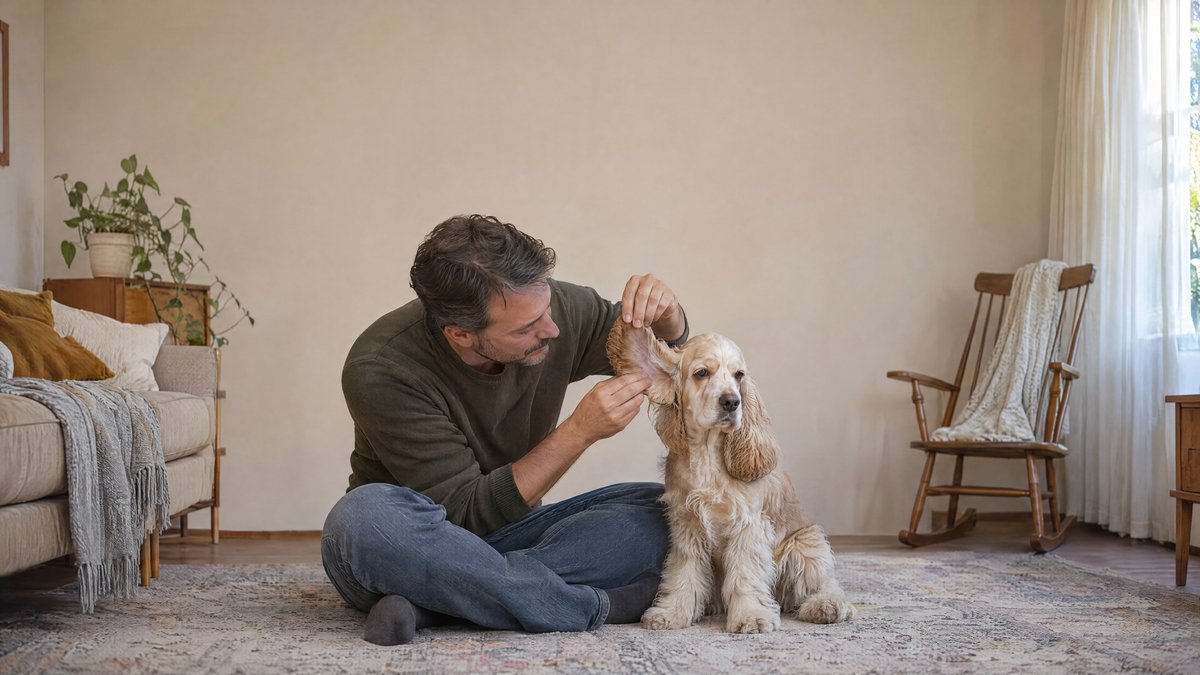
Dogs for Good describes normal wax as brown or golden and barely visible, with no odor. AKC says most dogs benefit from ear cleaning about once a month, although some need more, and to clean only the visible outer ear with a damp cloth or cotton ball, never inserting objects deep into the ear canal. AKC also warns that moisture trapped in the ears after swimming or bathing can contribute to ear problems, so dry the ears well when they get wet.
An odor, heavy debris, redness or repeated head shaking is a reason to call your vet rather than clean. Our guide to cleaning your dog’s ears at home has the steps, and the dog ear care hub has the rest.
Paws and nails
Dogs for Good says pads should have no cracks or calluses, and that you should regularly check between the toes for foreign bodies. Brown staining on the feet may be a sign of excessive licking. AKC says that if you can hear your dog’s nails clicking on the floor, they are likely too long, and that many dogs dislike nail trims, so early, gradual training helps. If trims are stressful, ask a groomer or your vet for help.
More on paws: why dogs lick their paws and the paw care hub.
Coat and skin
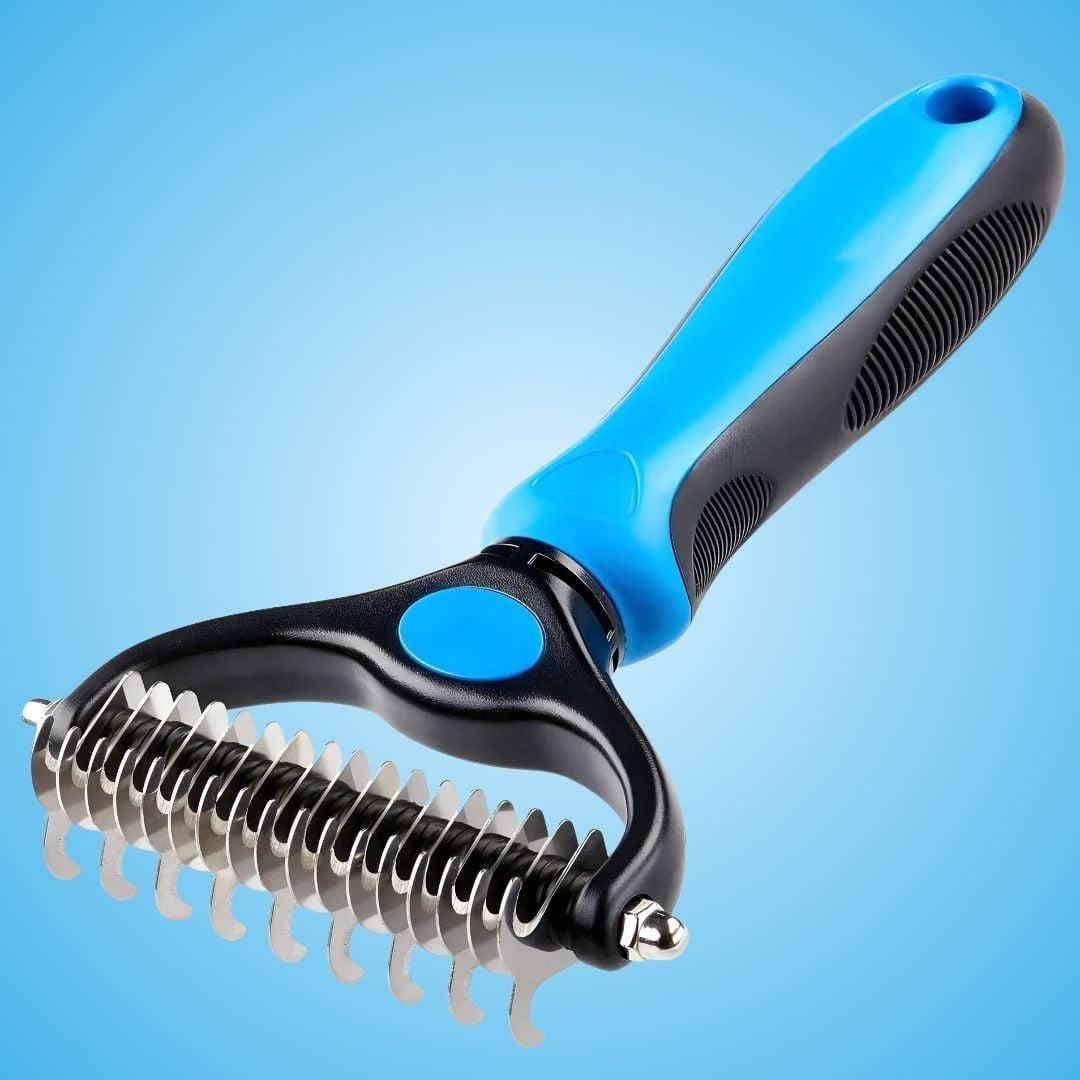
AKC says most dogs only need a few brushing sessions a week, though long-coated breeds often do best with daily brushing, and that bathing too often can strip natural oils from the skin and coat. While you brush, run a hand over the body. Dogs for Good lists lumps, fleas, ticks and constant scratching, itching or biting at certain spots as things to report to your vet.
Where VetPets fits into the routine
If you like having the right tool within reach, the VetPets FreshCare Complete Health Kit puts FreshWipes (teeth), EyeWipes (eyes) and EarWipes (ears) together, so the three steps above are in one box. They are simple wipes made for routine care, and you can also buy them separately: EyeWipes and EarWipes.
Or see the full FreshCare Complete Health Kit. These are hygiene products for everyday care. They are not a treatment for any condition and do not replace a vet exam. Follow the directions on each pack for how often to use it.
When to see your vet
A routine helps you notice problems. It cannot diagnose them. Contact your vet if you notice:
- Cloudy, red or squinting eyes, or heavy discharge
- An ear odor, discharge, repeated head shaking or pain when the ear is touched
- Brown buildup on teeth, a strong breath smell or a change in gum color
- Cracked pads, constant licking of the feet or something stuck between the toes
- New lumps, fleas or ticks, or constant scratching
- Any change in weight, appetite or behavior that worries you
Ask your vet how often your dog needs a check-up and professional dental cleaning. Tell them about your routine and your weekly notes.
Frequently asked questions
How long should a dog care routine take?
Dogs for Good describes a basic health check you do each week as a five-minute job. Daily care can be shorter: AKC says brushing teeth every day is ideal, and a quick look at the eyes and ears while you are at it adds only a minute or two.
Do I need to do all of it every day?
No. AKC says most dogs do not need daily grooming. Teeth are the one area where daily is ideal, and a few times a week still helps. Eyes, ears, paws and coat are fine with a weekly look, plus a wipe or clean when something is visible.
How often should I clean my dog’s ears?
AKC says most dogs benefit from ear cleaning about once a month, and some need more. Dogs for Good suggests checking ears weekly. Clean the visible outer ear only, never deep in the canal, and ask your vet what suits your dog.
Does brushing replace a dental visit?
No. AKC notes that as dogs age, tartar buildup may require professional veterinary cleaning. Cornell calls brushing the most effective home method for preventing dental disease, but it works alongside vet care, not instead of it.
What if my dog hates being handled?
Start with a few seconds and a treat, and build up slowly. Dogs for Good points out that a regular weekly check also helps your dog get used to being handled, which makes vet visits easier.
Should I keep notes?
It helps. Dogs for Good advises keeping a record of your weekly findings and reporting any areas of concern to your vet. A line on your phone is enough: date, anything new, anything that looks different.
Sources
- American Kennel Club: How to Groom Your Dog at Home
- Dogs for Good: Five minute dog health check
- Cornell University College of Veterinary Medicine: Brushing your dog’s teeth
Reviewed by the VetPets Care Team. This guide is educational and does not replace advice from your veterinarian.
Small habits, every day.
One routine for teeth, eyes and ears. Every order is covered by our 100-Day Money-Back Guarantee.
See the FreshCare Kit